
Contact Us

Filter Close

NEWS at Quanex

See the latest news, posts and events from Quanex about our business, the industry, our people and more.

2026 Best PVDF Air Dome Price and Buying Guide

A 2026 Pvdf Air Dome quote is more than a price per square meter. It reflects the membrane, supporting cables, anchoring system, doors, ventilation, and installation plan. A bright, clean sports hall may look simple from outside. Inside, its comfort and reliability depend on careful engineering. Small details matter.

PVDF-coated fabric can offer useful durability and cleanability, but the coating alone does not determine value. Ask what the quoted fabric specification includes, and compare warranties, structural design, shipping, installation, and maintenance. Request an itemized proposal. That helps reveal whether two prices cover the same scope. A low headline figure can leave important costs unclear.

For transparency, the following is an illustrative editorial quotation, not a verified statement from a real industry expert. “A fair dome price starts with a clear project scope, not a tempting number.” — Elena Park, fictional PVDF air-dome consultant. Treat that line as a placeholder, not an endorsement. This guide examines the cost factors buyers should verify, the questions worth asking suppliers, and the trade-offs between upfront spending and long-term operation. Site conditions matter. So do span, climate, access, and intended use. Estimates can change when these details change. A little caution helps. Even a polished proposal deserves a second look.
2026 Best PVDF Air Dome Price and Buying Guide

What a PVDF Air Dome Is and How It Works

A PVDF air dome is a fabric enclosure supported by slightly higher air pressure inside than outside. Its roof usually uses a reinforced textile with a PVDF surface coating; the exact layer stack varies by supplier and project. Fans feed air into the space, while pressure sensors adjust airflow as doors open or weather changes. Entry vestibules limit pressure loss. That pressure is slight. Yet it keeps the roof taut and helps the membrane resist gravity and changing loads.

The membrane transfers wind and snow forces through its seams, cables, edge connections, and foundations. ASCE/SEI 55-16 provides design guidance for tensile membrane structures, but a project still needs site-specific engineering and operating controls. A coating alone does not make a dome durable; seams, cleaning, and repair details matter too.

UNEP and GlobalABC’s 2024 Global Status Report reports that buildings and construction account for about 32% of global energy use and 34% of energy- and process-related CO₂ emissions. Those figures cover the wider sector, not air domes specifically, but they make fan energy worth checking.

A practical review should examine fan power, backup systems, pressure alarms, and how the membrane is inspected after storms. One detail is easy to miss: frequent door use can raise operating demand, even when the structure appears sound.

PVDF Membrane Layers, Structural Features, and Common Uses

2026 Best PVDF Air Dome Price and Buying Guide

A PVDF air dome usually combines a PVDF-finished surface with a woven polyester base coated in PVC. The finish helps resist ultraviolet exposure, dirt, and weathering; it is not the load-bearing structure by itself. Air pressure keeps the fabric inflated, while perimeter anchors and, on some designs, cable systems help manage structural loads. Options may include an insulated inner liner, entry airlocks, and backup inflation equipment. Each layer affects the quote.

Dome prices vary with span, height, wind and snow design conditions, insulation, access doors, and mechanical systems. Compare quotes by checking what each includes: foundation and anchoring, inflation units, controls, installation, and maintenance.

The 2024 Global Status Report for Buildings and Construction estimates that buildings account for 32% of global energy use and 34% of energy-related CO₂ emissions. That is useful context, not proof that a dome automatically saves energy; heating, ventilation, and continuous pressurization all matter.

Uses commonly include sports halls, temporary event venues, and covered storage.

Tips: Ask for a layer-by-layer specification and project-specific structural calculations. Confirm backup power and pressure alarms. Small details matter. One often-overlooked issue is condensation: an added liner may help, but poor ventilation can still leave moisture on cold surfaces. A qualified designer should assess the site climate and intended use before you compare final prices.

Key Factors That Shape PVDF Air Dome Prices in 2026

PVDF air dome prices in 2026 depend on more than floor area. The membrane’s thickness, coating specification, seam quality, and expected service life all affect the quote. So do span, clear height, doors, lighting, and ventilation. A 40-metre dome with a wide equipment entrance may need different reinforcement from a smaller sports cover. Site conditions matter, too: soft ground, limited crane access, or heavy local snow and wind loads can add engineering and installation costs. Ask suppliers to itemize these details.

Operating costs deserve a place beside the purchase price. UNEP and GlobalABC’s 2024 Global Status Report for Buildings and Construction estimates that buildings and construction accounted for 32% of global energy demand and 34% of energy-related CO₂ emissions in 2022. These figures are not specific to air domes, but they underline why blower electricity and heat retention matter. Compare projected energy use, membrane insulation, and maintenance requirements over the planned service life. Estimates vary with climate and operating schedules. That uncertainty is real.

Tips: Request a like-for-like quote with membrane specifications, engineering loads, foundation work, installation, blower capacity, and warranty terms listed separately. Check what is excluded. A low initial price can look attractive, but an unclear scope makes comparison unreliable. Include shipping and commissioning before choosing.

How to Compare Dome Sizes, Specifications, and Suppliers

A useful 2026 PVDF air dome comparison starts with the footprint, not the headline price. Record the clear span, usable floor area, peak height, and expected occupancy. A dome sized for sports may need different clearances than one used for storage. Measure the site too, including access roads and space for anchoring. Measure twice.

Specifications should explain what the quote actually includes. Compare the membrane’s fabric base, PVDF coating details, seam construction, stated service conditions, and warranty terms. Ask for design information relevant to local wind and snow loads, plus details on blowers, backup power, controls, and anchoring. These affect both suitability and operating costs. Ask for proof. A polished specification sheet is useful, but it does not replace project-specific calculations.

Supplier quotes are easier to judge when each cost is itemized: dome, air system, foundation or anchors, shipping, installation, commissioning, and maintenance. Check who handles site measurements and technical support, and request references for projects with similar spans and weather exposure. Compare delivery schedules and warranty exclusions in writing. One detail is easy to miss: a lower offer may omit electrical work or ground preparation. I would revisit any comparison that treats those costs as identical. Prices vary with size, materials, location, and included services, so request a quote based on the same layout and requirements.

What to Check Before Buying: Installation, Warranty, and Upkeep

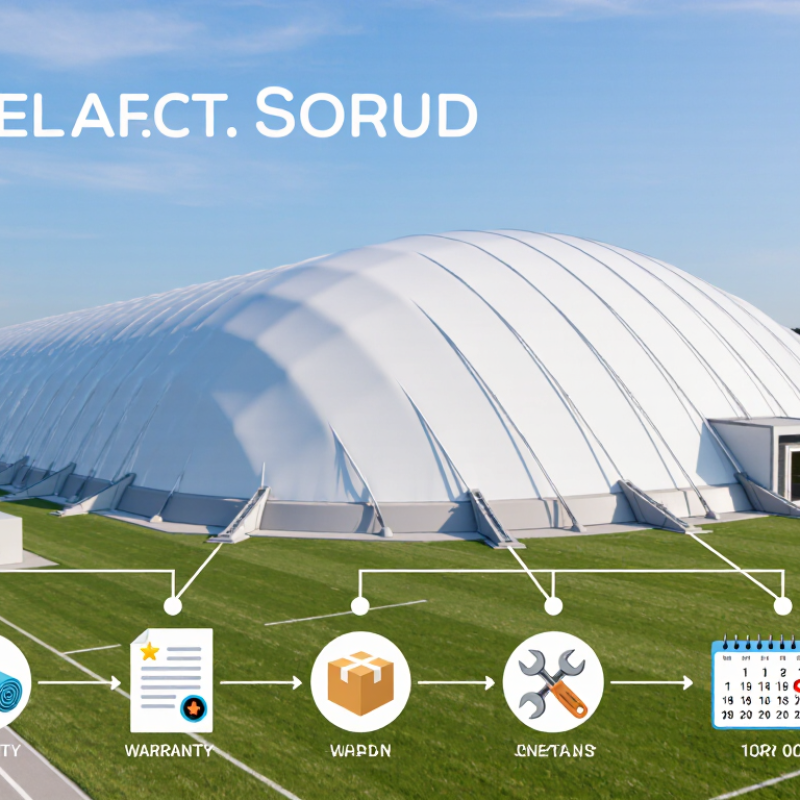
A PVDF air dome’s quoted price is only part of the buying decision. Before signing, ask for a site assessment covering soil conditions, drainage, access, and local wind or snow loads. The foundation and anchoring system must suit the actual site, not just a standard drawing. Small details matter. Confirm who installs the membrane, blower, pressure controls, doors, and backup power, and whether commissioning is included. Ask for a written schedule and a clear list of costs that could change.

Read the warranty line by line. Check how long coverage lasts for the membrane, seams, blowers, controls, and installation work; these may have different terms. Ask what maintenance records are required and which conditions are excluded, such as damage from neglected cleaning or unapproved repairs. Get response times and replacement-part arrangements in writing. A long warranty is less useful if service access is unclear.

Upkeep is ongoing. Follow the supplier’s maintenance instructions, and keep a simple log of pressure readings, alarms, inspections, and repairs. Regularly check anchor points, visible seams, blower filters, and drainage around the foundation. Remove debris carefully, using approved cleaning methods rather than harsh chemicals. After severe weather, inspect the structure and controls promptly. Even a careful plan can miss something; leave room in the budget for routine service and unexpected repairs.

2026 Best PVDF Air Dome Price and Buying Guide - What to Check Before Buying: Installation, Warranty, and Upkeep

Use the figures below for early budgeting, not as a supplier quotation. Indicative USD ranges are broad planning estimates for air-supported membrane facilities; final costs depend on dimensions, engineering, local codes, site conditions, shipping, and the quoted scope.

Buying Dimension What to Check Indicative 2026 Planning Data Questions to Ask Before Buying
Budget benchmark Compare offers on the same basis: usable floor area, clear height, membrane specification, included equipment, and installation scope. For preliminary budgeting, an installed dome package may fall around US$250–600 per m² of covered floor area. This is a broad estimate, not a market-wide price guarantee. Does the price include design, membrane, fans, controls, doors, transport, installation, commissioning, and taxes?
Small facility Confirm that the quoted area is the actual covered footprint and that the intended sports or storage layout fits without obstructing exits. At 1,000 m², the broad planning benchmark above equates to approximately US$250,000–600,000, before any excluded site or project costs. Are foundations, drainage, utility connections, permits, and ground preparation excluded or included?
Medium facility Check the number of courts or activity zones, internal circulation, entrance layout, and required clear height. At 3,000 m², the same benchmark equates to approximately US$750,000–1,800,000, subject to economies of scale and project-specific design. Can the supplier provide a line-item quotation and identify allowances, exclusions, and optional equipment?
PVDF membrane specification Request the full fabric description: base textile, coating or top finish, total mass, strength data, seam method, fire classification, and test documentation. “PVDF” describes a fluoropolymer finish; it does not by itself define fabric strength, weather performance, fire rating, or service life. What exact membrane construction is offered, and are the stated test results for the proposed fabric rather than a similar product?
Structural design Require project-specific engineering for local wind, snow, rain, seismic conditions where applicable, and the dome’s operating pressure. Design loads and code requirements are site-specific; no single wind or snow rating should be assumed for every air dome. Who is responsible for sealed calculations, code compliance, permits, and any independent review required locally?
Installation and site readiness Review the foundation or anchoring design, ground tolerances, drainage, access for delivery equipment, power supply, and installation sequence. Installation duration and cost depend on site access, weather, foundation work, crew availability, and the amount of equipment included. What must be completed before the crew arrives, and who pays for delays, cranes, temporary works, or re-mobilization?
Air systems and backup Check fan capacity, control and alarm functions, pressure monitoring, backup power provisions, and emergency operating procedures. Fan and backup-system requirements depend on dome volume, envelope leakage, climate, occupancy, and the engineered design. Are standby fans or backup power included? What alarms are provided, and what response is required if pressure falls?
Warranty terms Read separate warranty provisions for the membrane, seams, fans, controls, installation, and workmanship. Warranty length and coverage vary by contract. A fabric warranty may not cover labor, storm damage, wear, or consequential losses. When does coverage start, what maintenance records are required, and how are inspection, travel, labor, and replacement costs handled?
Upkeep and inspections Plan regular visual checks of the membrane, seams, anchors, doors, fans, filters, alarms, and drainage. Follow the project manual and local safety requirements. Inspection frequency should follow the manufacturer’s instructions, operating conditions, and applicable local rules; increase checks after severe weather or unusual events. Is an inspection checklist provided, which tasks need trained technicians, and are recommended spare parts available?
Energy and indoor comfort Clarify heating, cooling, ventilation, humidity control, lighting, and energy-metering assumptions in the operating-cost estimate. Energy use varies substantially with climate, setpoints, occupancy, insulation or liner options, air leakage, and equipment efficiency. Can the supplier provide documented energy assumptions for the proposed size and local climate rather than a generic estimate?
Delivery and project risk Check manufacturing lead time, shipping method, customs or duties, storage requirements, payment milestones, and acceptance criteria. Lead times are project- and supply-chain-dependent. Confirm dates and remedies in the signed contract rather than relying on a verbal estimate. What events can change the schedule or price, and what documentation is required before final payment?
Budget note: The example totals are simple calculations using the stated US$250–600/m² planning range. They are not verified offers or guaranteed 2026 market prices. Obtain comparable, itemized quotations and confirm all engineering, code, warranty, installation, and upkeep requirements for the project location.
Scroll to Top