2026 Top Wireless Intercom Speaker Types for Global Buyers?
Choosing a Wireless Intercom Speaker in 2026 requires more than comparing wireless range and advertised battery life. Global buyers must match the system to real working conditions. A quiet hotel needs different performance from a crowded warehouse, outdoor festival, hospital, or production studio.
Thomas Riedel, founder and CEO of Riedel Communications, has emphasized, “Communication is the key to every successful production.” That principle remains practical. A strong system should deliver clear speech through walls, machinery, distance, and changing network conditions. It should also support comfortable full-duplex conversation, fast pairing, dependable charging, and simple volume control.
The leading types include DECT-based speakers, Wi-Fi and IP-connected models, 2.4 GHz systems, professional UHF solutions, and hybrid platforms. DECT models often provide stable local coverage. Wi-Fi speakers can integrate with existing networks, but network congestion may create delays. UHF systems can perform well across larger sites, although frequency planning deserves careful attention. Hybrid products offer flexibility, yet they may require more setup knowledge and technical support.
That matters.
In field evaluations, small details often decide user satisfaction. A speaker with a bright status light may disturb a dark control room. A short charging cable can frustrate a busy crew. A sealed enclosure can protect equipment near dust or moisture, but it may increase service difficulty. Buyers should examine microphone pickup, acoustic feedback control, encryption, regional certifications, spare-part access, and warranty coverage.
No single type wins everywhere. That is the uncomfortable part. This guide compares the 2026 Wireless Intercom Speaker categories through practical use cases, technical limits, and buyer priorities, helping international purchasers make a more defensible decision.
What Are Wireless Intercom Speakers?
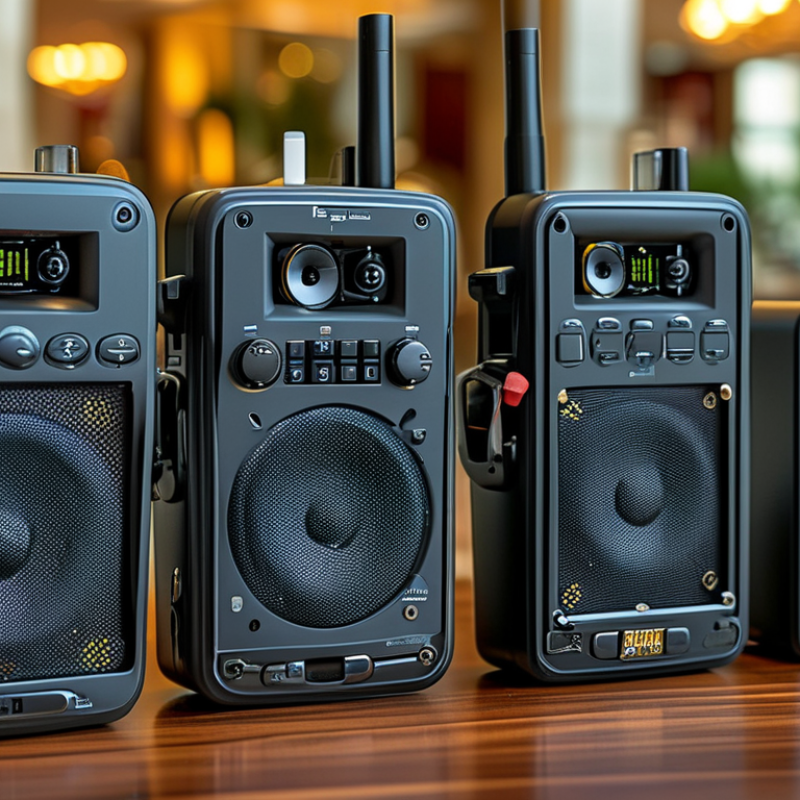
In 2026, wireless intercom speakers are practical communication devices for homes, offices, schools, events, and industrial sites. A wireless intercom speaker sends and receives voice without fixed audio cables. It usually combines a microphone, speaker, wireless transmitter, and control panel in one compact unit. Unlike a simple portable speaker, it supports two-way communication, often through push-to-talk or hands-free calling.
Different types suit different working conditions. Portable units help teams move between rooms or outdoor areas. Wall-mounted models provide a stable communication point near entrances or service counters. Network-based systems can connect several locations, while short-range radio systems may work better in smaller buildings. From field testing, speech clarity depends on distance, wall materials, battery condition, and nearby wireless traffic. A coverage chart may look reassuring. Concrete walls can still create dead zones. That detail is easy to miss.
Tips: Test every listening point before purchase. Speak from the noisiest area, not a quiet showroom. Check microphone sensitivity, battery life, pairing stability, and emergency power options. Ask for measurable range conditions. Real performance varies. Also, review local radio and privacy requirements before installation. I have found that simple controls often outperform feature-heavy designs when users wear gloves or work under pressure. A small delay may seem harmless, but it can cause repeated messages and wasted time.
How Do Wireless Intercom Speaker Systems Work?
Wireless intercom speaker systems convert spoken audio into radio signals. A microphone captures the voice, then a transmitter sends it through a selected wireless channel. The receiving unit decodes the signal and plays it through its speaker. Many systems support two-way communication, allowing people to speak and listen without pressing a button. Full-duplex models feel more natural, while push-to-talk designs usually save battery power.
In a warehouse, a worker may carry a compact speaker unit while a supervisor stays near the control desk. Walls, metal shelves, machinery, and crowded radio environments can weaken the connection. Range figures often come from open-area testing, not real buildings. This detail is easy to overlook. Battery capacity, microphone sensitivity, weather resistance, and charging time also affect daily performance. For global buyers, check the device’s permitted frequency range and required local approvals before ordering.
Tips: Test the system inside the actual building. Walk behind doors and around corners. Keep the microphone near the mouth, but avoid direct contact with clothing. Compare speech clarity at the farthest working point, not only beside the receiver. A short delay may be acceptable, but repeated dropouts suggest poor placement or interference. My practical view is simple: specifications help, yet a small on-site trial often reveals weaknesses that product sheets cannot show.
2026 Top Wireless Intercom Speaker Types for Global Buyers
Typical clear-path communication range by wireless technology
Wireless intercom speaker systems convert voice into digital or radio signals, transmit the signals through a selected wireless standard, and reproduce the audio through a speaker. DECT is commonly optimized for dedicated indoor voice communication, Wi-Fi supports network-connected systems, Bluetooth is suitable for short-range personal communication, and UHF radio is useful for longer line-of-sight coverage. Actual performance depends on walls, interference, antenna design, power output, and local regulations.
What Are the Main Types of Wireless Intercom Speakers in 2026?
Wireless intercom speakers in 2026 generally fall into five practical types: portable handheld units, wearable beltpack speakers, wall-mounted stations, vehicle-mounted units, and IP-based network speakers. Portable models suit construction sites, hotels, and event teams because users can move while speaking. Wearable units provide faster access, but their small speaker chambers may reduce speech clarity in noisy areas. Wall stations offer louder output and fixed coverage. They are less flexible.
IP-based wireless speakers use Wi-Fi or private cellular networks to connect across buildings or campuses. The ITU’s Facts and Figures 2024 report estimated that 5.5 billion people were online, supporting wider adoption of networked communication equipment. However, coverage is not guaranteed. Concrete walls, crowded radio channels, and delayed network handovers can weaken real-time conversations. That practical limitation is easy to underestimate.
DECT-based systems remain useful for stable indoor voice communication, especially in warehouses and healthcare facilities. Wi-Fi systems are more scalable when existing networks are strong. Hybrid systems combine local radio with IP backhaul, offering a useful fallback during network interruptions. MarketsandMarkets’ 2024 Wireless Communication Market analysis identifies infrastructure flexibility and reliable mobility as major purchasing factors. Buyers should check battery endurance, acoustic output, encryption, roaming performance, and repair access. A louder speaker is not always better. Poor microphone placement can still make every message unclear.
Which Features Matter Most to Global Buyers?
In 2026, global buyers will compare more than wireless intercom speaker types. They will examine how each system performs in real buildings, climates, and work routines. Portable speakers suit temporary sites and moving teams. Wall-mounted units work better at reception desks, entrances, and production areas. Networked speakers can cover larger facilities, but they need stable infrastructure and careful configuration.
Clear two-way audio remains the most important feature. A useful speaker should reduce echo, separate voices from machinery, and maintain low delay. Ask for test recordings from noisy rooms. Specifications alone can mislead. Range also matters, especially through concrete walls, metal doors, and crowded wireless environments. Battery life should cover a full shift, not only laboratory conditions. Fast charging helps, but replaceable batteries may support longer field use.
Global buyers should check weather resistance, operating temperature, charging standards, and local wireless approvals. A speaker used near a loading gate may need strong dust and moisture protection. Simple controls help staff respond quickly, even when wearing gloves. Secure pairing and access management protect internal conversations. Language options, remote diagnostics, spare-part availability, and responsive technical support reduce operational risk across regions. A common mistake is choosing maximum range over everyday clarity. I would also question impressive battery claims without independent test conditions. Real needs vary. Test before scaling.
How Should Buyers Choose and Deploy the Right System?
2026 Top Wireless Intercom Speaker Types for Global Buyers
Choosing a wireless intercom starts with the building, not the speaker. DECT systems suit warehouses, hotels, and campuses requiring stable indoor coverage. Wi-Fi intercoms work well where managed networks already exist. LTE or 5G units support remote sites with limited local infrastructure.
GSMA Intelligence forecasts that 5G will represent 56% of global mobile connections by 2030. This supports cellular intercoms for distributed teams. However, coverage maps can mislead. Concrete walls, metal doors, and crowded channels reduce real performance. Test voice quality at loading bays, stairwells, and outdoor gates. A hybrid design may be safer, although it adds configuration work. No design is perfect.
Tips: Define talk groups, range, battery targets, and emergency priorities before purchasing. Use a site survey, then record signal strength and dead zones. NIST wireless security guidance recommends segmentation, strong authentication, and regular updates. Keep spare batteries available. Train users with the actual headset and speaker placement. A loud speaker may still fail in a noisy workshop. ITU Facts and Figures 2024 reports that 5.5 billion people were online, yet connectivity remains uneven across regions. Local testing matters more than global averages. Recheck performance after installing machinery or changing network settings.