Contact Us

Filter Close

NEWS at Quanex

See the latest news, posts and events from Quanex about our business, the industry, our people and more.

7 Best Sliding Door Security Screens for Global Buyers?

A sliding door security screen is not merely a mesh panel placed across a doorway. It is a tested barrier, a ventilation solution, and a daily point of contact between indoor life and the outside world. For global buyers, that distinction matters. The FBI’s 2023 Crime Data Explorer recorded an estimated 847,522 burglary offenses in the United States, although national figures cannot predict risks in every market. Climate, building design, installation quality, and local crime patterns all change the buying decision.

This guide reviews seven sliding door security screen options for different regional needs. We examine stainless-steel mesh, perforated aluminum, grille designs, locking systems, corrosion resistance, visibility, child safety, and maintenance. Relevant benchmarks include Australia’s AS 5039:2023 and AS 5041 testing framework, along with Europe’s EN 1627:2021 burglar-resistance classifications. These standards should not be treated as interchangeable. They test different products, assemblies, and performance conditions.

The strongest screen is not always the thickest one. A heavy frame may complicate everyday opening, especially on older tracks. Fine mesh can improve airflow, yet it may demand careful cleaning near beaches or dusty roads. Manufacturer claims also need scrutiny. A product can look secure in a showroom and perform poorly when fitted with weak anchors or an unsuitable lock. This shortlist aims to connect published testing with practical experience. It also admits an uncomfortable point: no screen removes every security risk. Good selection reduces exposure, but installation and consistent use still decide much of the outcome.
7 Best Sliding Door Security Screens for Global Buyers?

What Makes a Sliding Door Security Screen Effective?

An effective sliding door security screen should resist forced movement without making daily use difficult. In field inspections, I look closely at the frame, corners, rollers, and lock points. Weak corners can undermine strong mesh. A rigid metal frame should fit the opening with minimal gaps. The mesh should be firmly fixed, not simply stretched across the frame. Small openings also improve ventilation while reducing opportunities for tampering.

Lock quality matters, but alignment matters just as much. A well-made lock can fail when the door sags or the track collects grit. The screen should slide smoothly, stop firmly, and remain secure when pulled from several angles. I prefer designs with protected locking hardware and reinforced meeting rails. Clear visibility is useful too. Homeowners can see visitors before opening the main door.

Weather resistance deserves careful attention for global buyers. Coastal air, heavy rain, and intense sunlight can expose poor coatings quickly. Look for corrosion-resistant materials and documented testing from a credible independent source. Installation should follow measured site conditions, not a rushed template. That detail is often missed. Regular cleaning, track checks, and fastener inspections extend service life. Still, no screen is perfect. Buyers should question exaggerated claims and compare test evidence with their own climate, doorway design, and everyday habits.

Key Types of Security Screens for Sliding Doors

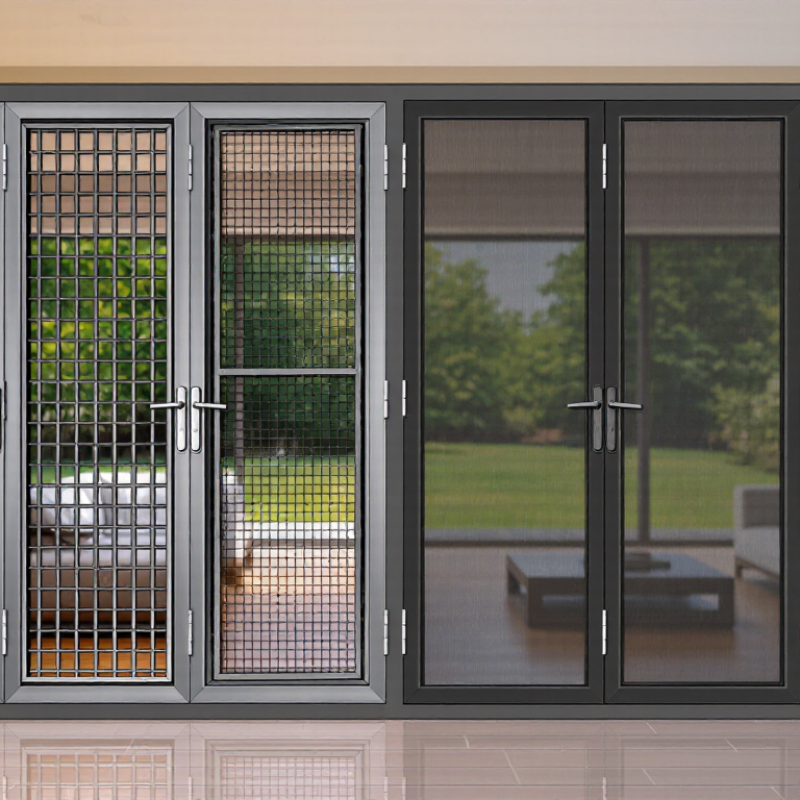
Sliding door security screens vary widely in strength, visibility, ventilation, and daily convenience. Woven stainless-steel mesh offers clear outdoor views and strong airflow. It suits coastal homes, but poor-grade mesh can corrode. Perforated metal panels provide more privacy and resist forced impact. They feel heavier, though. Bar grilles create a visible physical barrier and allow excellent ventilation. However, wider openings may reduce protection against smaller objects.

Retractable screens support easy passage and can disappear beside the frame. They are convenient for busy patios, but their security depends heavily on the locking system and track design. Fixed sliding security doors usually provide better resistance. Look for anti-lift tracks, reinforced corners, multi-point locks, and independently tested materials. Australian Standard AS 5039 covers security screen door performance, while AS 5041 describes related testing methods. These references help buyers compare claims across markets.

The FBI Crime Data Explorer recorded an estimated 847,522 burglary offenses in the United States during 2023. That figure does not prove a screen prevents every intrusion. It does show why entry-point design deserves careful attention. A 2024 Grand View Research report also identifies durability, airflow, and product security as important factors influencing the global security door market. In practice, I would inspect the frame fit, corner joints, drainage holes, and lock alignment before choosing a screen. Small installation gaps matter. No screen is perfect. Some buyers focus on thick mesh and overlook the weak sliding track. That is an easy mistake to reconsider.

Seven Top Security Screen Options for Global Buyers

Global buyers need security screens that suit different climates, door sizes, and installation habits. The seven strongest options include stainless-steel mesh, perforated aluminum, expanded metal, fixed grille panels, sliding mesh doors, retractable screens, and reinforced pet-resistant screens. Each option balances visibility, airflow, strength, and appearance differently.

Stainless-steel mesh offers fine visibility and strong resistance to cutting attempts. Perforated aluminum is lighter and can handle humid coastal air when properly finished. Expanded metal provides a rugged appearance and useful ventilation. Fixed grille panels suit entrances that rarely need full opening, while sliding mesh doors work well on balconies and wide patios. Retractable screens save space, although their moving parts require more care. Pet-resistant screens use thicker mesh for homes with active animals.

Check the frame corners closely. Weak joins can reduce an otherwise strong design. A reliable screen should include corrosion-resistant fasteners, smooth rollers, secure locks, and a frame that stays rigid during operation. Measure the opening in several places, because older walls are rarely perfectly square. Local climate data and building requirements also matter, especially in areas with salt air, heavy rain, or strong wind.

No screen is perfect. A heavy grille may feel safer but reduce daylight. A fine mesh may look cleaner but cost more to repair. Ask for material specifications, testing evidence, installation guidance, and warranty terms before ordering internationally. Clear documentation builds more trust than impressive product language.

How to Compare Materials, Features, and Protection Levels

7 Best Sliding Door Security Screens for Global Buyers?

How to Compare Materials, Features, and Protection Levels

Choosing a security screen starts with the frame, not the mesh. Aluminum is lightweight and resists corrosion, but steel usually offers greater rigidity. Stainless steel mesh can provide strong visibility and airflow. Perforated metal delivers a more solid barrier, though it may reduce ventilation. The FBI Crime Data Explorer estimated 847,522 burglary offenses in the United States during 2023. That figure supports careful entry-point planning, but it does not prove one screen suits every property.

Protection depends on several connected details. Look for a reinforced frame, tamper-resistant fasteners, multi-point locking, and anti-lift rollers. Hinges should remain protected when the door is closed. Ask for test evidence against recognized standards, such as EN 1627 resistance classes or ASTM forced-entry testing. These standards are not interchangeable. A high rating on one system may not equal the same rating elsewhere. No screen is invulnerable. Installation quality can quietly weaken expensive materials.

Tips: Request the full test report, not a sales summary. Check mesh size, wire diameter, frame thickness, lock protection, and corrosion testing. Compare coastal, humid, and dry climates separately. A budget screen may look convincing in a showroom, yet flex near the lock under pressure. That detail is easy to miss. Also measure the existing track carefully; poor alignment can create a small lifting gap. Reflect before choosing appearance over verified resistance.

7 Best Sliding Door Security Screens for Global Buyers? - How to Compare Materials, Features, and Protection Levels

Screen Type Primary Material Typical Mesh or Panel Key Features Protection Level Ventilation & Visibility Best Use Global Buying Considerations
316 Stainless-Steel Woven Mesh Marine-grade 316 stainless steel Fine woven mesh, commonly around 0.8–1.2 mm wire diameter Corrosion resistance, rigid frame, keyed or multipoint locking, replaceable rollers High Very good airflow and outward visibility when mesh is tightly woven Coastal homes, apartments, tropical climates, high-traffic entrances Confirm stainless-steel grade, frame alloy, salt-spray testing, lock cylinder type, and replacement-part availability
304 Stainless-Steel Woven Mesh 304 stainless steel Woven security mesh, generally lighter than 316-grade systems Good strength-to-weight ratio, corrosion-resistant finish, sliding or retractable options Medium to High Excellent airflow and daylight transmission Urban houses and commercial buildings in normal or moderately humid environments Check mesh attachment method, galvanic compatibility between metals, powder-coating quality, and local corrosion conditions
Perforated Aluminum Security Screen Powder-coated aluminum sheet and frame Perforated panel with small, evenly spaced openings Lightweight construction, low maintenance, stable panel, broad color selection Medium to High Good ventilation; visibility depends on perforation size and viewing angle Hot climates, lightweight sliding doors, renovation projects Verify aluminum thickness, panel resistance testing, powder-coating specification, and maximum door-panel dimensions
Expanded-Metal Security Screen Expanded steel or aluminum Diamond-pattern expanded metal panel High rigidity, visible physical barrier, welded or mechanically fixed frame High Moderate airflow and visibility; more visually prominent than woven mesh Ground-floor properties, warehouses, workshops, and areas requiring a robust barrier Ask about steel grade, rust protection, weld quality, panel weight, track load, and transport packaging
Retractable Stainless-Steel Mesh Stainless-steel mesh with aluminum cassette and tracks Flexible or concertina-style mesh, depending on system design Space-saving operation, removable or retractable screen, low visual obstruction when open Medium Very good when deployed; completely open access when retracted Balconies, wide openings, patios, and interiors where appearance is important Check bottom-track design, anti-lift protection, mesh tension, cleaning access, and suitability for frequent operation
Heavy-Duty Steel Bar Grille Galvanized or powder-coated carbon steel Vertical or horizontal bars with narrow spacing Strong deterrence, reinforced frame, heavy-duty rollers, high resistance to impact Very High Excellent airflow; visibility remains good but the bars are visually prominent High-risk sites, service entrances, commercial premises, and industrial applications Confirm structural anchoring, corrosion treatment, door weight, local egress rules, and whether emergency release is required
Aluminum Sliding Insect Screen with Security Upgrade Aluminum frame with reinforced fiberglass or metal mesh Fine insect mesh or light-duty metal mesh Low cost, simple installation, insect control, optional keyed latch and reinforced corners Low to Medium Excellent ventilation and visibility Low-risk residential openings where insect protection is the primary requirement Do not treat standard insect screens as forced-entry products; verify mesh type, latch strength, frame reinforcement, and intended use

Comparison note: Protection levels are general product-category guidance, not a substitute for independent forced-entry testing. Buyers should request test reports, installation details, lock specifications, corrosion data, and compliance requirements for the destination country.

Installation, Maintenance, and International Buying Considerations

A strong sliding door security screen starts with accurate measurement, not attractive photographs. Check the opening width at the top, middle, and bottom. Floors often vary by several millimetres. Installers should confirm the track is level, the rollers move smoothly, and the latch engages fully without force. A small gap can reduce security and invite insects. Certified testing to standards such as AS 5039 and AS 5041 can provide useful evidence, but certificates must match the actual screen design.

Maintenance is simple, although many owners neglect it. Vacuum the lower track monthly, rinse salt from coastal frames, and inspect hinges, locks, mesh, and fasteners twice yearly. Lubricate only where the manufacturer permits; oil can collect dust inside tracks. Ventilation also matters. The International Energy Agency reported in 2023 that buildings used about 30% of global final energy. A secure screen that supports natural airflow may reduce reliance on cooling, but airflow claims should be measured, not assumed.

Tips: Request a complete packing list, installation guide, spare-parts policy, and test documentation before payment. UNCTAD’s Review of Maritime Transport 2023 states that ships carry over 80% of world merchandise trade, so international delivery can involve delays, moisture, and damaged packaging. Confirm customs dimensions, local fastener compatibility, and warranty coverage. I would avoid buying from photos alone. A perfect fit is never guaranteed without site measurements and a careful review of local building requirements.

Scroll to Top