
Contact Us

Filter Close

NEWS at Quanex

See the latest news, posts and events from Quanex about our business, the industry, our people and more.

7 Tips for Choosing Wholesale Bags for Chemicals

Choosing Wholesale Bags For Chemicals is not simply a purchasing decision. It is a risk-control decision involving material compatibility, load stability, moisture protection, labeling, and traceability. Smithers’ report, The Future of Flexible Intermediate Bulk Containers to 2028, highlights continuing demand for stronger, more specialized bulk packaging. Its findings also emphasize performance consistency and sustainable design. Those points matter when a bag must hold fine powder, absorbent granules, or moisture-sensitive compounds in a busy warehouse.

Packaging educator Walter Soroka described packaging as “the science, art, and technology of enclosing and protecting products.” That principle remains practical here. A supplier should verify woven polypropylene strength, inner liner quality, electrostatic controls, stitching, and tested filling limits. The UN Recommendations on the Transport of Dangerous Goods should guide decisions where regulated materials are involved. However, compliance documents alone are not enough. A clean certificate cannot replace a factory audit, sample testing, or a real handling trial. Sometimes, buyers overlook the bag’s discharge design. That small mistake can create dust, delays, and unnecessary exposure.

The seven tips ahead examine how to compare suppliers, specifications, certifications, and total costs. They also question assumptions that appear sensible but may fail in actual operations. For example, the cheapest bag may require extra liners, damaged pallets, or slower unloading. A careful selection process should consider the bag’s full journey—from filling and stacking to transport and final discharge. Performance must be visible, measurable, and repeatable. Safety deserves more than a checklist.
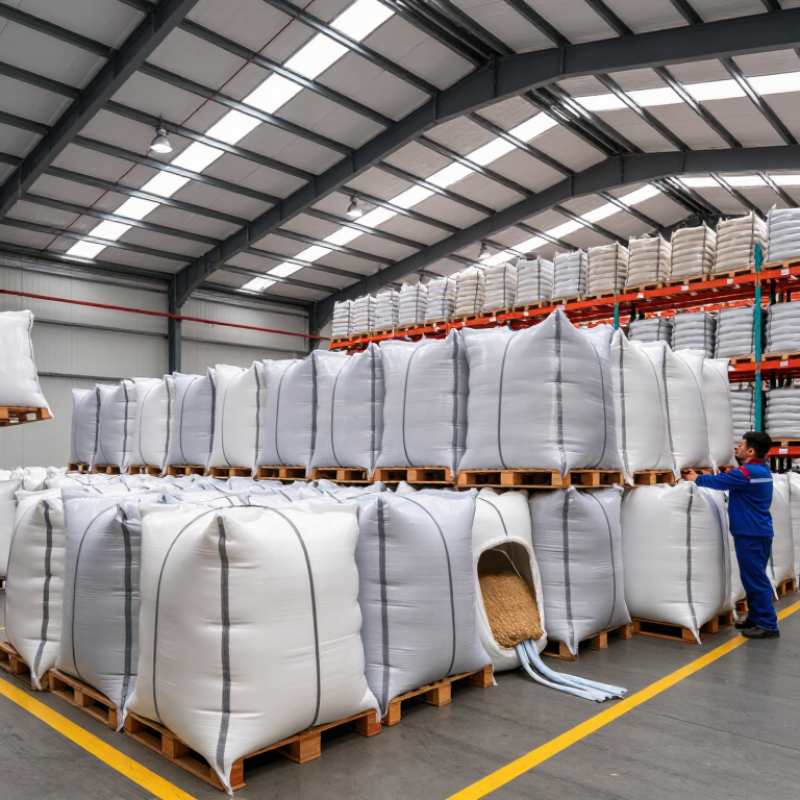
7 Tips for Choosing Wholesale Bags for Chemicals

Classify Chemical Hazards with SDS Data and GHS’s 9 Pictograms

Choosing wholesale chemical bags should begin with the Safety Data Sheet, not a supplier’s catalogue image. Read Section 2 for hazards and GHS pictograms. Check Sections 7, 9, 10, and 14 for storage, properties, stability, and transport details. GHS uses nine pictograms: explosive, flammable, oxidizing, compressed gas, corrosive, acute toxicity, irritant, serious health hazard, and environmental hazard. The symbol changes the packaging decision. A corrosive liquid may require a chemically resistant liner, while an oxidizer can demand strict separation from combustible bag materials.

Use seven practical checks before ordering: chemical compatibility, liner construction, seam strength, closure design, moisture resistance, static-control needs, and label traceability. Ask for written compatibility evidence. A small sample filled for several days can reveal swelling, brittle film, seepage, or odor transfer. It is not a perfect test. Temperature and concentration may change the result. Review the SDS again when the formulation changes. The European Chemicals Agency’s 2023 enforcement report found non-compliance in 44% of 2,407 inspected products, showing why label and hazard verification deserve attention. Store bags away from heat, sunlight, and incompatible chemicals. Keep the pictogram visible on the outer package. Workers should match the label with the current SDS before handling. Sometimes, the cheapest bag is the least economical choice.

GHS Pictograms to Consider When Choosing Wholesale Chemical Bags

The Globally Harmonized System (GHS) uses nine pictograms to communicate chemical hazards. This simplified grouping shows four pictograms primarily associated with physical hazards, four with health hazards, and one with environmental hazards. Always use the product’s Safety Data Sheet (SDS) and Section 2 hazard information to confirm the required bag material, liner, closure, labeling, and handling controls.

Match Bag Designs to UN FIBC Codes 13H3, 13H4, and ISO 21898

Choosing wholesale chemical bags requires more than comparing fabric weight or price. UNEP’s Global Chemicals Outlook II projects chemical production could nearly double between 2017 and 2030. Packaging demand will grow with it. However, growth does not justify careless specification. Match the bag to its UN FIBC code and the chemical’s handling risks.

Under UN packaging rules, 13H3 means woven plastic fabric with a liner. Code 13H4 adds a coating and an inner liner. That difference matters. A liner helps control powder leakage and contact with the fabric. A coating adds another barrier against moisture and fine particles. ISO 21898 also emphasizes construction, lifting safety, testing, and working-load information. Ask suppliers for documented safe working load, safety factor, seam design, and test records. Do not rely on a product photograph.

Choose 13H3 for dry powders that need internal containment but limited external protection. Consider 13H4 when humidity, dust migration, or surface contamination could create problems. Confirm compatibility with acids, alkalis, oxidizers, and solvents. Chemical resistance varies by polymer and liner material. UN test requirements can include drop, stacking, and top-lift tests. The required performance depends on the packing group and design. A common mistake is selecting a higher code without checking discharge equipment. It may fit poorly. I would recheck filling speed, outlet dimensions, and warehouse stacking before placing a large order. Price is useful data, but rarely the most important one.

7 Tips for Choosing Wholesale Bags for Chemicals - Match Bag Designs to UN FIBC Codes 13H3, 13H4, and ISO 21898

Tip Chemical-Bag Design Focus Relevant UN FIBC Code Typical Construction What to Verify Before Purchase
1. Start with the regulatory classification Confirm the chemical’s UN number, proper shipping name, hazard class, packing group, filling ratio, and transport mode before selecting the bag. 13H3 or 13H4 may be suitable only when permitted by the applicable dangerous-goods packaging instruction. Flexible intermediate bulk container made from woven plastics, generally polypropylene, with or without an inner liner. Request the supplier’s UN design-type test certificate and confirm that its rating covers the intended contents and packaging group.
2. Match the liner and coating to chemical compatibility Use a liner when the product needs improved containment, reduced dusting, or protection from moisture and contamination. Select liner material through compatibility testing. 13H3: woven plastics, uncoated, with liner.
13H4: woven plastics, coated, with liner.
13H3 uses an uncoated woven-plastic outer body plus a liner; 13H4 adds a coating to the woven-plastic body plus a liner. Check chemical permeation, swelling, brittleness, extractables, temperature range, liner seams, and fit around the filling and discharge spouts.
3. Choose the correct electrostatic-control design For flammable powders, vapors, or combustible-dust environments, specify the required FIBC electrostatic type and grounding procedure. 13H3 and 13H4 identify construction and liner status; they do not by themselves identify the electrostatic FIBC type. The bag may require conductive, dissipative, or static-protective features depending on the risk assessment and applicable standard. Define grounding points, resistance limits, safe filling and discharge procedures, and whether the installation requires a Type C or Type D arrangement.
4. Size the bag for safe handling and filling Select a volume and safe working load that support stable stacking, forklift handling, and the actual bulk density of the chemical. The UN code does not replace the bag’s marked safe working load, test rating, or handling instructions. Common design options include four lifting loops, corner loops, filling spouts, discharge spouts, and baffle panels. Verify safe working load, safety factor, test load, dimensions, lifting method, bulk density, maximum fill level, and stacking conditions.
5. Specify dust-tight closures and suitable spouts Use a controlled filling inlet, secure closure, and discharge outlet that limit dust release and prevent accidental opening during transport. 13H3 and 13H4 can be configured with different closure and spout designs, subject to the approved design type. Possible features include a top inlet with flap or drawstring closure, bottom discharge spout, liner tie, and secondary closure. Check dust leakage, closure security, discharge control, liner attachment, compatibility with the filling equipment, and operator protection measures.
6. Use ISO 21898 as the performance reference Use a recognized specification for design, testing, marking, handling, and quality control rather than selecting a bag only by appearance or price. ISO 21898 is a performance and specification standard for FIBCs; it is not a replacement for the UN packaging approval requirements. The specification can cover body fabric, seams, lifting features, filling and discharge systems, liners, testing, and marking. Ask for documented test procedures and results for lifting, topple, tear, drop, compression or stacking, seam strength, and material identification where applicable.
7. Build traceability into wholesale purchasing Use consistent specifications and batch records so every shipment can be linked to the approved design and inspection results. The completed UN marking must correspond to the approved packaging design; do not alter construction without approval review. Each production batch should be identifiable by specification, manufacturing date or lot, capacity, safe working load, and required handling information. Inspect fabric, seams, loops, spouts, liners, dimensions, markings, cleanliness, and packaging condition; retain certificates and inspection records.

Important: Final selection must be confirmed against the current dangerous-goods regulations, the chemical safety data, the approved UN design type, and the operating conditions at the filling, storage, and discharge sites.

Set Safe Working Loads with 5:1 or 6:1 FIBC Safety Factors

Choosing wholesale bags for chemicals requires more than checking volume and price. The safety factor must match the handling risk. A 5:1 FIBC is designed to withstand five times its stated safe working load during specified tests. A 6:1 FIBC provides a higher margin, but it is not automatically suitable for every chemical application.

Set the safe working load from verified test data, not from appearance. Check the bag’s construction, lifting loops, liner, seams, and discharge design. Chemical compatibility matters too. A strong fabric can weaken after contact with moisture, solvents, heat, or fine powders. Review the chemical’s safety data and request documented testing from the supplier. Test conditions should reflect filling, lifting, transport, and discharge.

Do not treat the ratio as a guarantee against poor handling. Uneven filling, sharp equipment, dragging, or repeated use can reduce real performance. Inspect each bag before lifting. Look for torn loops, stretched seams, damaged fabric, and distorted corners. Experienced teams often select 6:1 for demanding or uncertain conditions, but that choice needs technical justification. A larger factor may increase cost without solving a compatibility problem. That part is easy to overlook. Recheck the decision when the chemical, filling weight, or handling equipment changes.

Choose Liners and Fabrics by Chemical Compatibility and 160–170°C PP Limits

Choosing wholesale bags for chemicals requires more than checking size and price.

Start with the chemical’s SDS, concentration, temperature, moisture, and storage duration. Then compare those details with the liner resin and woven fabric. The inner liner often controls direct contact. The outer PP fabric mainly provides strength and handling protection. That distinction is easy to miss. Do not assume a PP bag suits every chemical.

For dry powders, a suitable liner may reduce moisture pickup and dust release.

For liquids, inspect seam construction, closure design, and leak resistance. Chemical compatibility can change with heat, pressure, and concentration. Ask for permeation data or conduct a controlled sample test.

Fill a small trial bag, observe it, and check weight, odor, brittleness, swelling, and discoloration over time. A chart is useful, but it is not proof. Test before scaling.

Polypropylene deserves special attention near 160–170°C.

This range is close to PP’s melting region, not a safe operating target. Continuous exposure should remain well below that range, according to the actual resin grade and bag design. Short contact with hot material can still weaken seams or distort the liner.

Confirm filling temperature, cooling time, and maximum storage temperature with the manufacturer. Request resin data, tensile results, and lot traceability. I would also inspect a returned bag after use. It may reveal heat damage that a new sample hides.

When uncertain, choose a lower-temperature process or another engineered material after documented testing.

Audit Wholesale Suppliers Through Batch Tests, Traceability, and UN Certification

Choosing wholesale bags for chemicals requires more than comparing prices and fabric weight. Audit each supplier through batch tests, traceability, and UN certification. Ask for recent test reports covering tensile strength, seam performance, drop resistance, stacking, and chemical compatibility. The report should identify the bag construction, test method, production batch, and laboratory.

UN certification matters, but it is not a universal guarantee. It applies to a tested packaging design, specific materials, and defined transport conditions. Check the UN marking against the certificate and confirm whether your chemical’s density, packing group, and filling method match the test scope. The European Chemicals Agency reported that 18% of 2,407 products inspected in its 2023 enforcement project were non-compliant. Packaging controls deserve similar attention.

Traceability should reach the factory floor. A reliable supplier can connect each bag to resin records, sewing dates, inspection results, and shipment documents. Request retained samples from every production batch. Test them independently when the chemical is aggressive or moisture-sensitive. This costs more, sometimes inconveniently so. Yet one weak lifting loop can damage product, equipment, and confidence. A clean certificate may still hide inconsistent production. Treat audits as ongoing evidence, not a one-time approval. Recheck suppliers after material changes, new subcontractors, or unexplained variation in bag weight.

Scroll to Top