
Contact Us

Filter Close

NEWS at Quanex

See the latest news, posts and events from Quanex about our business, the industry, our people and more.

10 Best Faux Wood Wall Panels for 2026

Faux Wood Wall Panels can give a room the warmth of timber without requiring solid-wood boards. In 2026, options range from lightweight peel-and-stick planks to rigid panels designed for more permanent installation. Their finishes can resemble pale oak, weathered barnwood, or deep walnut, while textures vary from subtle grain to pronounced ridges. The right choice depends on more than appearance.

This guide introduces ten panel options and the details worth checking before you buy. Compare panel dimensions, surface materials, installation methods, warranty terms, and care instructions. A sample can reveal color shifts under your own lighting, and a close look can show whether the printed grain feels convincing. Check product specifications for moisture limits, especially near sinks or showers; “water-resistant” does not automatically mean suitable for every wet area. Measure the wall carefully, and account for outlets, corners, and trim. Small details matter.

There are trade-offs. Some budget panels look convincing from across the room but less natural up close, while thicker products may need more cutting effort. No finish suits every space. Use this list as a starting point, then verify current specifications with each manufacturer. Installation requirements and product availability can change, so confirm details before ordering.
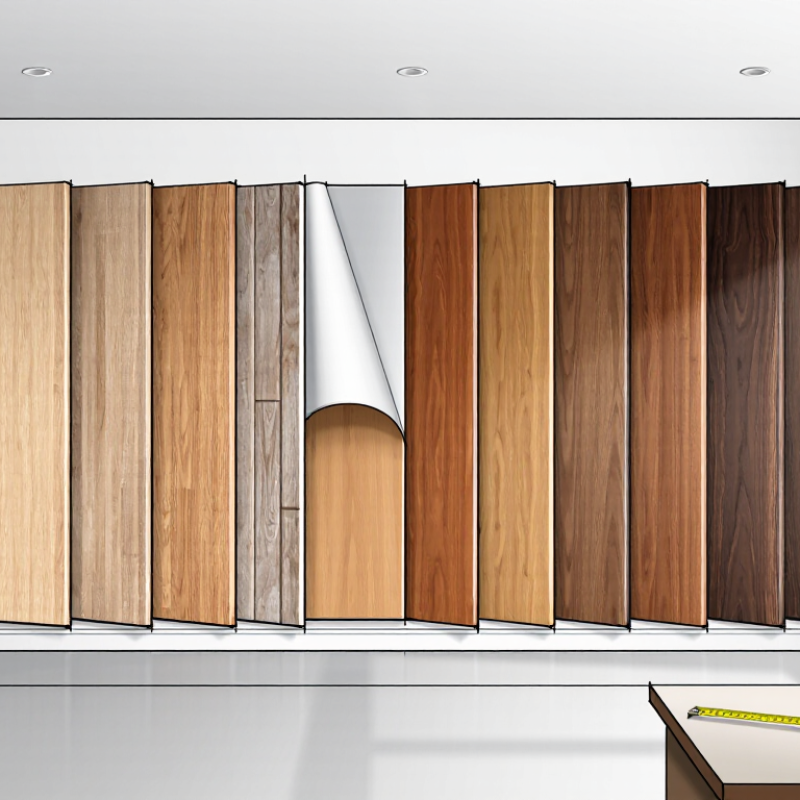
10 Best Faux Wood Wall Panels for 2026

What Faux Wood Wall Panels Are and How They Are Made

Faux wood wall panels are decorative wall coverings designed to suggest timber without being solid wood. Their core may be PVC, wood-plastic composite, fiberboard, or molded mineral material. Not solid timber. The surface gains its wood-like appearance through embossed grain, printed films, laminates, or textured coatings. Some panels combine several methods, such as a printed oak pattern beneath a clear protective layer.

Manufacturing depends on the core. Plastic and wood-plastic panels are typically extruded or molded, then textured and finished. Fiberboard panels are formed by pressing wood fibers with binders under heat and pressure. Decorative films can add knots and color variation, though repeated patterns may still look noticeably artificial across a large wall. That limitation is easy to miss in small product samples.

The U.S. Environmental Protection Agency’s 2018 construction and demolition debris report estimated 600 million tons of such waste, with about 90% coming from demolition. This figure covers many building materials, not faux wood panels alone, but it highlights why panel composition and end-of-life options deserve attention. Grand View Research valued the broader global wall-panels market at about $13.7 billion in 2023. That market figure includes panel types beyond faux wood, so it should not be read as a category-specific sales estimate.

Main Types of Faux Wood Wall Panels Available in 2026

Faux wood wall panels come in several forms, and the material affects their look, weight, and care. MDF and HDF panels use printed or embossed grain for a consistent timber effect. They suit dry living spaces, but edges can swell if moisture reaches them. PVC panels resist splashes and wipe clean easily, making them practical for laundry rooms or bathrooms. Check the product’s room-use specifications before installing.

WPC panels combine wood fiber with plastic, often creating a sturdier, textured surface. Lightweight polyurethane panels add raised grain or carved details without the weight of solid boards. Peel-and-stick vinyl panels are thin and quick to fit, though uneven walls may reveal bubbles or lifted corners. Slatted faux wood panels, sometimes backed with felt, bring a linear feature-wall look. The backing and panel finish both matter.

I would compare samples in the actual room. Grain can look convincing under soft light and oddly repeated beside a bright window. Not every wall agrees. Measure carefully, inspect joints, and ask how the surface handles cleaning and heat. Some panels look less natural up close; that trade-off is easy to miss in a small online photo. Installation requirements also vary, so read the instructions before choosing a panel.

10 Best Faux Wood Wall Panels for 2026 — Main Types of Faux Wood Wall Panels Available in 2026

A practical comparison of common wood-look panel types. “Best” depends on the room, moisture exposure, installation method, and the finish you want.

Panel type Typical construction Best suited for Key advantages Things to consider
1. PVC wood-look panels Rigid or hollow-core PVC formed or printed with a wood-grain finish. Bathrooms, laundry rooms, basements, and other areas where wipe-clean surfaces are useful. Lightweight, moisture-resistant, and generally easy to clean. Check the product’s fire rating and installation instructions. The surface can look more uniform than natural timber.
2. Wood-plastic composite (WPC) panels A composite made from wood fiber or flour and thermoplastic, usually with a textured or printed wood appearance. Feature walls and some sheltered exterior applications, when the product is specifically rated for them. Often more dimensionally stable and moisture-tolerant than untreated solid wood. Formulations and outdoor suitability vary. Allow for movement as directed by the manufacturer.
3. Laminated MDF panels Medium-density fiberboard with a decorative wood-look laminate or printed surface. Interior living rooms, bedrooms, offices, and dry feature walls. Provides a smooth, consistent surface and can offer a broad range of wood patterns. MDF is not intended for prolonged wet exposure; protect cut edges and follow room-use guidance.
4. HDF wood-look panels High-density fiberboard with a printed, laminated, or embossed decorative finish. Interior walls where a relatively thin, firm panel is preferred. Dense construction can provide a crisp, even finish and detailed surface patterns. Like other fiberboard products, it can be affected by moisture. Confirm thickness, weight, and fixing requirements.
5. Polyurethane 3D panels Molded polyurethane panels with raised grain, knots, or plank-like relief. Interior accent walls where a dimensional, carved-wood effect is desired. Lightweight and capable of reproducing pronounced surface details. Relief can collect dust, and the finish may need painting. Verify fire-performance information and approved uses.
6. Polystyrene foam panels Lightweight expanded or extruded polystyrene with a printed, coated, or embossed wood-look face. Decorative indoor projects where low panel weight is useful. Easy to handle and often simple to cut with suitable tools. Can dent more easily than denser materials. Check adhesive compatibility, heat limits, and fire-safety details.
7. Peel-and-stick vinyl panels Thin vinyl or vinyl-faced sheets with a pressure-sensitive adhesive backing and wood-look print. Smooth, clean interior surfaces and small decorative updates. Can be installed without mechanical fasteners on suitable, prepared surfaces. Surface preparation is important; uneven, dusty, damp, or textured walls can reduce adhesion. Usually less substantial than rigid panels.
8. Fiber-cement wood-grain panels Cement-based panels reinforced with cellulose fibers and finished with a molded or embossed wood grain. Exterior cladding or other applications where the product is rated and installed for exposure conditions. Noncombustible as a material and resistant to rot and insect damage. Panels are heavier and can be brittle at edges. Cutting, dust control, fastening, and weather detailing require care.
9. Aluminum composite wood-look panels Thin aluminum skins bonded to a core, with a printed or coated wood-effect surface. Contemporary interiors and specified exterior architectural applications. Light for its panel area, dimensionally stable, and available in consistent finishes. Core composition, fire classification, and outdoor performance differ by product; verify specifications for the intended use.
10. Acoustic PET wood-look slat panels Decorative slats with a wood-look finish mounted on an acoustic backing, often made from recycled PET felt. Interior media rooms, offices, and living spaces where a slatted look and sound absorption are desired. Combines a linear wood-style appearance with an absorptive backing that can reduce sound reflections. Acoustic performance depends on the full assembly and installation. These panels are not a substitute for soundproof construction.

Selection note: Confirm the panel’s intended indoor or outdoor use, moisture and fire ratings, substrate requirements, and installation method before purchase. Product performance varies by construction and finish.

How to Evaluate Faux Wood Wall Panels for Different Spaces

Faux wood wall panels should suit the room, not just look convincing in a product photo. Check the panel’s material, thickness, and installation method before comparing grain patterns. A small sample helps reveal whether the color turns orange or gray under your actual lighting. Look closely at seams, too. Repeating prints can become obvious across a wide wall.

In kitchens, bathrooms, and laundry rooms, moisture resistance matters more than a perfectly rustic finish. Confirm the manufacturer’s care instructions and whether the panels are rated for the conditions in your space. “Water-resistant” does not always mean suitable for a shower or a spot behind a sink. That distinction is easy to miss. In bedrooms or living rooms, consider texture and reflectivity; raised grain can cast strong shadows beside a window.

For hallways and busy family rooms, assess scratch resistance and how easily a damaged panel can be replaced. Ask how the panels attach to your wall, and check whether the surface needs extra preparation. Uneven walls may show gaps at the edges. Also review applicable fire and indoor-air-quality documentation rather than relying on appearance or vague claims. A slightly imperfect color match between batches is possible, so ordering enough material at once can prevent a frustrating patchwork effect.

10 Best Faux Wood Wall Panels for 2026: Features and Uses

10 Best Faux Wood Wall Panels for 2026: Features and Uses

Faux wood panels vary in weight, texture, moisture resistance, and installation method. Reclaimed-look MDF suits dry living rooms, while PVC and wood-plastic composite panels are often easier to clean in kitchens or mudrooms. Acoustic slat panels can soften echo, though they do not replace proper soundproofing. Peel-and-stick veneer is convenient for small updates; laminate, solid-core composite, polyurethane, and lightweight foam options offer different balances of durability, detail, and cost. Exterior-rated composite panels are intended for outdoor use, but indoor products should not be used outside. Check the specifications.

Tips: Measure wall height and width, then account for outlets, corners, and trim. Request a sample. Texture and color can look different under warm evening light. Confirm cleaning instructions and fire-performance information before buying.

Choose panels to suit the room, not just the product photo. For a busy hallway, a tougher, wipeable surface may matter more than deep grain. In a bedroom, thinner decorative panels can add warmth without overwhelming the space. Check whether the wall is flat and dry; uneven surfaces may show gaps or complicate installation. Some panels need adhesive, while others use fasteners or interlocking edges. Installation is not always as simple as advertised. A sample layout can reveal awkward seams before you cover the whole wall.

Installation, Care, and Long-Term Performance of Faux Wood Panels

Faux wood panels can look convincing, but installation determines whether seams stay neat. Check that the wall is dry, flat, and strong enough for the panel system. Mark studs and outlets before cutting; a misplaced cut is hard to disguise. Follow the product’s specified fasteners, adhesive, and expansion gaps rather than assuming every panel installs alike. The USDA Forest Products Laboratory’s Wood Handbook explains that wood responds dimensionally to moisture changes. Composite and polymer panels behave differently, so check their own installation instructions.

Care is usually simple: dust with a soft cloth and wipe marks with a lightly damp one. Avoid soaking edges or using abrasive cleaners, which may damage printed or coated surfaces. The U.S. EPA recommends keeping indoor relative humidity below 60%, ideally between 30% and 50%, to limit moisture problems. That is useful guidance, not a guarantee against damage. Inspect seams, corners, and areas behind furniture every few months. Sunlight can also affect some finishes over time.

Tips: Keep a spare offcut for testing cleaners and matching repairs. Photograph the wall before installation to record wiring and framing. One limitation is worth noting: a damaged panel may not blend perfectly, even when its pattern looks repeatable.

Faux Wood Wall Panels: Coverage by Nominal Panel Size

Panel coverage helps estimate how many panels are needed before installation. Values show the area of each rectangular panel size; actual product dimensions may vary.

Coverage is calculated as width × height: 2 × 4 = 8 sq ft, 4 × 8 = 32 sq ft, and 4 × 10 = 40 sq ft. Measure the wall and check the product’s listed dimensions before ordering.

Scroll to Top