What Is the Best Powder Coated MDF Furniture in 2026?
Choosing the best Powder Coated MDF furniture in 2026 means looking beyond color and price. The right piece should suit its room, daily use, and care routine. A smooth finish can make a cabinet or desk feel crisp and contemporary. But the finish is only one part of the decision.
MDF furniture needs a coating process designed for the board and its heat sensitivity. Ask manufacturers how they prepare edges, apply the coating, and check adhesion. Inspect a sample closely. Look for even color, clean corners, and no rough spots around drilled holes. Small details matter.
Construction matters, too. Check the thickness of panels, the quality of hinges, and how drawers move when loaded. In kitchens or bathrooms, consider humidity and follow the maker’s care guidance. Powder coating does not make every MDF item waterproof. That distinction is easy to miss.
There is no single best option for every home. A compact, wall-mounted cabinet may be ideal for one buyer, while a sturdy desk suits another. Compare warranties, assembly instructions, and replacement-part support. A polished showroom sample can still leave questions about long-term wear. I would want clear answers before buying. This guide explains the features worth weighing, the trade-offs to notice, and how to choose a piece that fits real life—not just a product photo.
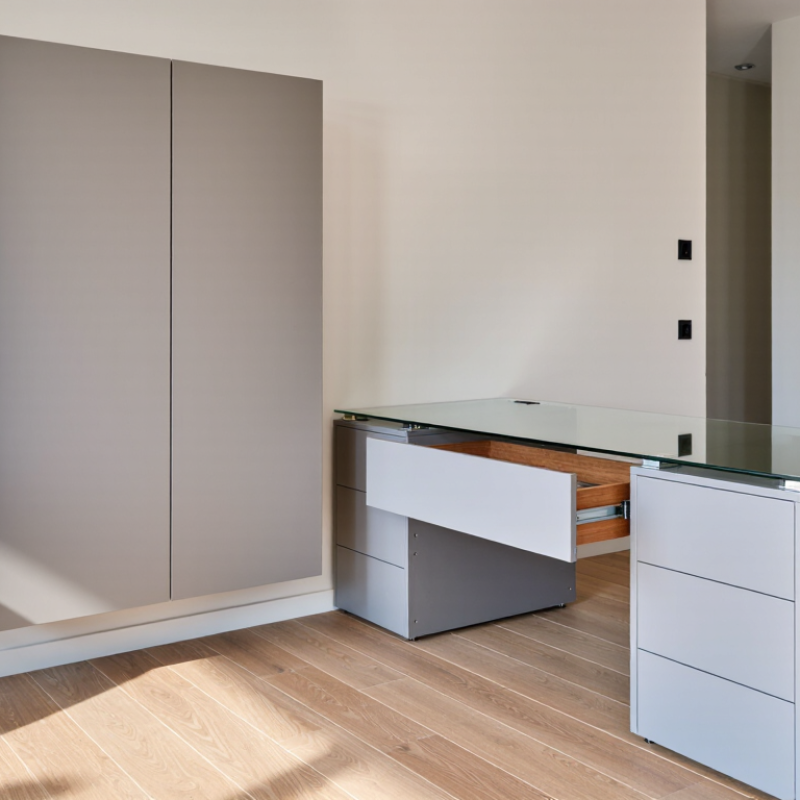
What Powder-Coated MDF Furniture Is and How It Is Made
Powder-coated MDF furniture combines a smooth engineered-wood panel with a dry, durable surface finish. MDF is made from fine wood fibers and resin pressed into dense sheets. Its even surface can take color consistently, without the strong grain patterns found in solid wood. A clean finish starts with careful sanding and sealed edges.
The coating process needs more care than simply spraying powder onto a board. Unlike metal, MDF does not conduct electricity, so manufacturers use a coating system designed for wood-based panels. Depending on the process, this may involve a prepared surface, a conductive layer, and controlled heat to melt and cure the powder. Temperature matters: too much heat can affect the panel or its adhesive. It is a technical detail, but an important one.
Edges and drilled holes deserve close attention. They can absorb moisture more readily than the broad faces, so sealing and consistent coating help protect them during daily use. A finished panel should also be checked for even coverage, adhesion, and chips around corners. Powder coating can create a tough, easy-to-clean surface, but it does not make MDF waterproof. I would be cautious around sinks or persistent dampness. Small flaws still matter.
How to Compare Powder-Coated MDF Finishes and Build Quality
For 2026, compare the finish and the MDF core separately. Under raking light, a good powder-coated surface should look even, with no pinholes, rough edges, or thin patches around drilled holes. Run a fingertip along corners; sharp, chipped edges can signal weak edge preparation. Ask whether the board grade and thickness are documented. ANSI A208.2-2022 classifies MDF by performance properties, so a grade name is more useful than a vague “premium” claim. Check that shelves feel firm under load, too. A smooth finish cannot compensate for a sagging panel.
Request coating test results, not just showroom samples. ASTM D3359 rates cross-cut adhesion from 0B to 5B; a 4B result means less than 5% of the coating area is affected by small flakes at the cuts. That is a useful comparison point, not a guarantee against every kind of wear. For gloss, ASTM D523 measures reflectance at specified angles. Compare pieces tested at the same angle, since a satin surface can look different under bright kitchen lights. Ask about edge sealing and moisture testing as well. MDF can swell when water reaches exposed edges. I would inspect a sample closely, even when its paperwork looks convincing; tests do not show every flaw in everyday use.
Which Furniture Types Benefit Most from Powder-Coated MDF
Cabinet doors, wardrobe fronts, and drawer faces benefit most from powder-coated MDF. Their broad, flat surfaces show an even finish, and they avoid the chipping often seen around frequently handled edges. This finish also suits desks, shelves, and retail display panels, where smooth surfaces wipe clean easily. A 2023 Grand View Research report valued the global powder coatings market at USD 15.8 billion, reflecting broad industrial adoption—not proof that every MDF application performs equally well.
Look closely at the edges. MDF absorbs moisture there, so sound sealing and careful curing matter; powder coating cannot fix a weak substrate. For bathroom cabinets or damp utility spaces, choose moisture-resistant MDF and confirm the coating system is rated for the intended conditions. Small details count. A poorly sealed screw hole can become the first failure point. Powder-coated MDF is less suited to outdoor furniture or pieces exposed to standing water. The U.S. Environmental Protection Agency describes powder coatings as low in volatile organic compounds compared with many solvent-based finishes, but that benefit does not remove the need for ventilation and process controls during manufacture. I would not assume a “durable finish” means a durable piece: panel thickness, edge treatment, and hardware still deserve scrutiny.
How to Choose the Best Powder-Coated MDF Furniture in 2026
Choosing the best powder-coated MDF furniture starts with the panel, not the finish. Check the MDF grade, thickness, and emissions documentation. The U.S. EPA’s TSCA Title VI sets formaldehyde emission limits at 0.11 ppm for MDF and 0.13 ppm for thin MDF. Ask whether the product was tested by an accredited laboratory; a vague “low-emission” claim is not enough. ANSI A208.2 also provides a useful reference for MDF grades and performance requirements.
Then inspect the coating where wear begins: corners, drilled holes, and exposed edges. The surface should look even, without pinholes, rough patches, or thin spots. Ask the seller about the curing process and the finish’s scratch and moisture resistance. Powder coating can create a durable surface, but it cannot make MDF waterproof. Keep it away from standing water. Check the underside, too. A neat top can hide unfinished edges. I would not judge quality by color or gloss alone; those details are easy to notice, but less useful than edge sealing and clear care instructions. Good specifications matter. So does how the piece will be used.
How to Care for Powder-Coated MDF Furniture Over Time
Caring for powder-coated MDF furniture is mostly about keeping moisture and abrasion away from the surface and edges. Dust it weekly with a soft, dry microfiber cloth. For fingerprints, use a barely damp cloth with diluted, pH-neutral soap, then dry the area immediately. Avoid scouring pads, abrasive powders, steam, and unapproved solvents; they may dull or damage the coating. Keep cups on coasters, and wipe spills before liquid reaches seams or exposed edges. Small habits matter.
Humidity deserves attention. The USDA Forest Products Laboratory’s Wood Handbook (FPL-GTR-282, 2021) lists equilibrium moisture content at about 9.2% for wood at 70°F and 50% relative humidity, rising to about 15.5% at 80% humidity. Those figures describe wood, not every MDF panel, but they show why persistently damp rooms can stress wood-based furniture. Keep pieces away from wet walls, bathrooms, and direct heat. Check edges and joints every few months for swelling or chips. Repairing a small defect early is sensible; still, matching the original finish perfectly can be difficult. Don’t over-wet the cloth.