


NEWS at Quanex
See the latest news, posts and events from Quanex about our business, the industry, our people and more.
How to Choose the Best LED Light Panels for Your Business?
Choosing the right Led Light Panels is not simply a brightness decision. It is a business performance decision. The wrong panel can create glare, uneven desks, visible flicker, or unnecessary replacement costs. A good choice begins with the room’s purpose, ceiling height, work surfaces, operating hours, and control requirements.
The International Energy Agency and United Nations Environment Programme report that lighting uses about 15% of global electricity. Efficient LED systems can reduce energy demand, but efficiency alone does not guarantee a successful installation. The U.S. Department of Energy’s Solid-State Lighting research reports emphasize efficacy, color quality, controls, and long-term reliability. These factors deserve equal attention. Look for tested lifetime ratings, suitable color rendering, low flicker, and verified photometric data. DLC or ENERGY STAR recognition can support comparison, although certification should not replace independent judgment.
Lighting researcher Dr. Mariana Figueiro has described light as “the most powerful environmental stimulus influencing human behavior and physiology.” Her observation matters in offices, retail spaces, classrooms, and healthcare environments. A panel that looks bright in a showroom may feel harsh after eight working hours. Measure light at desk height. Check glare from glossy screens. Review whether 3500K or 4000K supports the space’s atmosphere. There is no perfect specification sheet. Budget pressure can also distort decisions. A cheaper panel may bring higher maintenance costs later. This guide examines Led Light Panels through practical performance, verified standards, installation conditions, and lifecycle value. Some recommendations will remain conditional. That is realistic. The best panel depends on how your business actually uses light.
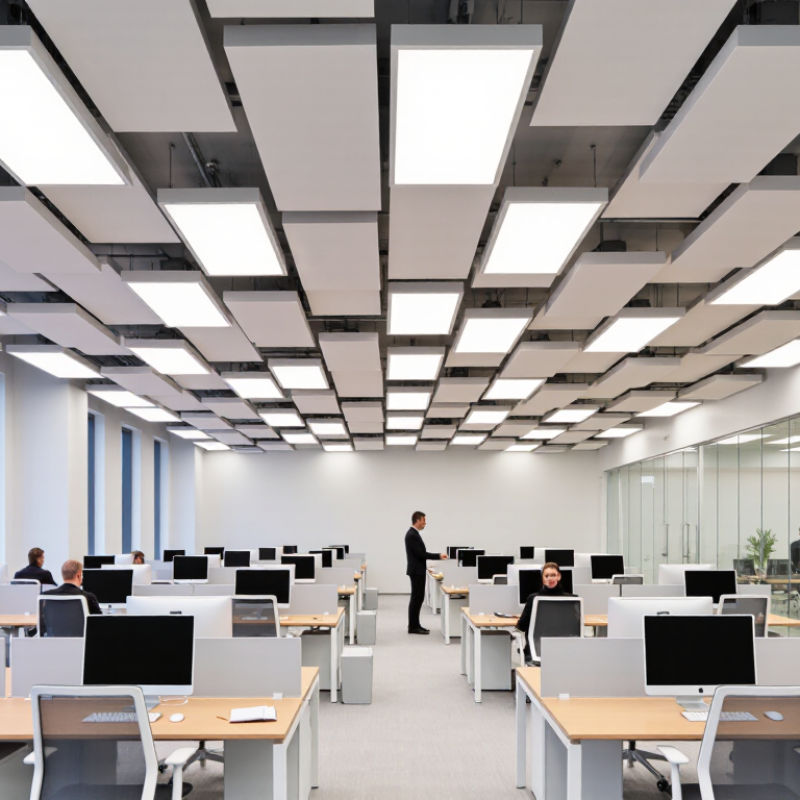
Define Your Business’s Lighting Goals and Space Requirements
Choosing LED light panels starts with defining what the space must help people do. Start with people. A warehouse aisle needs clear visibility, while a design studio needs accurate colors and controlled glare. Write down tasks, operating hours, ceiling height, and existing daylight before comparing fixtures. Measure the room, not just its floor area. A 20-square-meter office with dark walls may require more useful light than a brighter room of the same size. Target illuminance should follow the work and applicable local guidance, rather than a seller’s broad claim. For offices, professionals often consider roughly 300–500 lux, then adjust after an on-site assessment. Color rendering matters when staff inspect samples, food, artwork, or printed materials. Cool light can feel alert, but it may look harsh in a quiet reception area. Test the light.
Space requirements also include mounting, access, and control. Confirm that panel dimensions match the ceiling grid, and check plenum depth before ordering. Leave safe access for drivers and maintenance. A low ceiling can turn a powerful panel into a glare problem. Diffusers, wider beam distribution, and dimming may help, though each choice affects cost and performance. Count circuits and verify electrical compatibility with a qualified professional. Emergency lighting and fire-safety rules need separate review. I have seen layouts fail because designers counted panels but ignored shadows from shelving and partitions. Measure twice. That mistake is easy to repeat. Mark furniture on a simple floor plan, then observe the space during morning, afternoon, and evening. Human comfort is harder to predict from a catalogue alone. Record complaints after installation, especially flicker, reflections, and dark corners, and revise the plan when evidence disagrees with the original estimate.
How to Choose the Best LED Light Panels for Your Business? - Define Your Business’s Lighting Goals and Space Requirements
| Business Area | Primary Lighting Goal | Recommended Illuminance | Suggested Color Temperature | Minimum Color Rendering | Recommended Panel Characteristics | Typical Spacing Guidance | Control and Planning Considerations |
|---|---|---|---|---|---|---|---|
| Open-Plan Office | Reduce eye strain and provide even task lighting for computer-based work. | 300–500 lux on the working plane | 3500–4000 K | CRI 80 or higher | Low-glare, edge-lit or back-lit panels with a diffused lens and uniform light distribution. | Usually 1.2–2.4 m between panels, depending on mounting height and output. | Use occupancy sensors, daylight dimming near windows, and separate switching zones. |
| Meeting and Conference Room | Support presentations, discussion, video calls, and comfortable facial visibility. | 300–500 lux | 3000–4000 K | CRI 80 or higher | Dimmable panels with low flicker and controlled glare to reduce reflections on screens. | Arrange panels outside the main screen reflection path where possible. | Install scene controls for meetings, presentations, cleaning, and video conferencing. |
| Retail Sales Floor | Make products easy to identify while maintaining a visually attractive shopping environment. | 500–750 lux | 3000–4000 K | CRI 90 or higher for merchandise presentation | High-uniformity panels for general lighting, supplemented by adjustable accent lighting. | Coordinate panel layout with shelving, display cases, aisles, and customer circulation. | Use independent zones so displays, aisles, and checkout areas can be controlled separately. |
| Reception and Lobby | Create a welcoming first impression while providing clear visibility at the front desk. | 200–300 lux for general areas; up to 500 lux at desks | 2700–3500 K | CRI 80 or higher | Soft, diffused panels with a comfortable appearance and minimal visible glare. | Place panels to avoid harsh reflections on reception counters and glossy surfaces. | Combine general panels with decorative or accent lighting where required by the interior design. |
| Classroom or Training Room | Provide balanced illumination for reading, writing, presentations, and interaction. | 300–500 lux | 3500–5000 K | CRI 80 or higher | Low-glare, dimmable panels with good uniformity and low flicker. | Align rows of panels with desks and avoid placing bright sources directly in front of projection screens. | Include separate controls for teaching areas, presentation walls, and circulation paths. |
| Healthcare Administrative Area | Support accurate paperwork, comfortable patient interaction, and a clean visual environment. | 300–500 lux; higher levels may be needed for detailed tasks | 3500–4000 K | CRI 90 or higher where color recognition is important | Sealed, easy-to-clean panels with low glare, low flicker, and consistent color quality. | Use an even grid layout and avoid strong contrast between workstations and circulation areas. | Confirm infection-control, cleaning, emergency-lighting, and local electrical requirements before installation. |
| Warehouse and Storage Area | Improve aisle visibility, picking accuracy, and employee safety while limiting energy use. | 150–300 lux; select higher levels for detailed picking tasks | 4000–5000 K | CRI 70 or higher; CRI 80 preferred for product identification | High-output, durable panels or industrial luminaires suitable for dust, temperature, and mounting conditions. | Base the layout on rack height, aisle width, mounting height, and obstruction levels. | Use occupancy or motion sensors in low-traffic aisles and verify emergency egress lighting separately. |
| Manufacturing and Assembly Area | Support safe movement, quality inspection, and accurate assembly work. | 300–750 lux, depending on task detail | 4000–5000 K | CRI 80 or higher; CRI 90 for color-critical inspection | Impact-resistant, low-flicker fixtures with appropriate ingress protection for the environment. | Position fixtures to minimize shadows from machinery, operators, and overhead structures. | Assess heat, dust, moisture, vibration, hazardous-area classification, and maintenance access. |
| Restaurant or Café | Balance food presentation, customer comfort, staff visibility, and atmosphere. | 100–300 lux for dining; 300–500 lux for service areas | 2700–3500 K | CRI 80 or higher; CRI 90 preferred for food presentation | Dimmable panels with warm, comfortable light and sealed surfaces in areas exposed to grease or moisture. | Coordinate panel locations with tables, counters, kitchen equipment, and decorative lighting. | Use separate circuits for dining, bar, kitchen, storage, cleaning, and late-night operation. |
| Fitness and Wellness Facility | Provide energetic, safe, and visually comfortable lighting for exercise and movement. | 300–500 lux | 3500–5000 K | CRI 80 or higher | Low-flicker, glare-controlled panels with secure mounting and suitable moisture resistance. | Maintain consistent illumination across equipment zones and avoid glare in mirrors. | Consider dimming scenes, occupancy control, humidity, cleaning chemicals, and ceiling vibration. |