
Contact Us

Filter Close

NEWS at Quanex

See the latest news, posts and events from Quanex about our business, the industry, our people and more.

10 Tips for Buying Aluminium Windows and Doors

Choosing aluminium windows and doors is not only a style decision. The right choice can improve daylight, comfort, and everyday use, while a poor fit may bring drafts, noise, or difficult maintenance. This guide introduces ten practical checks, from frame quality and glazing options to hardware, warranties, and installation. Small details matter.

Building-performance consultant Steve Easley is known for emphasizing how building components work together. A useful paraphrase of that approach is: “Treat the whole opening as a system, not just a frame.” That means considering the wall, seals, glass, drainage, and installer alongside the aluminium profile. A slim frame may look elegant in a showroom, yet performance depends on more than appearance. Ask for product specifications, inspect corner joints, and check how the supplier handles water management and thermal breaks.

The best option depends on the building and its climate. A coastal home, a busy street-facing apartment, and a shaded renovation may need different glazing and finishes. Compare written performance data rather than relying on broad claims. Feel the handle, test the opening action, and look closely at the seals. Looks are not enough.

No checklist can replace a careful site assessment. Even a reputable product can disappoint if measurements or installation are rushed. There is a trade-off, too: larger glass areas bring more daylight, but may increase heat gain or reduce privacy. The following tips help buyers ask sharper questions before committing to Window Door Aluminium products, while leaving room to verify details with a qualified local professional. One point may still be easy to miss: the installer matters as much as the catalogue.
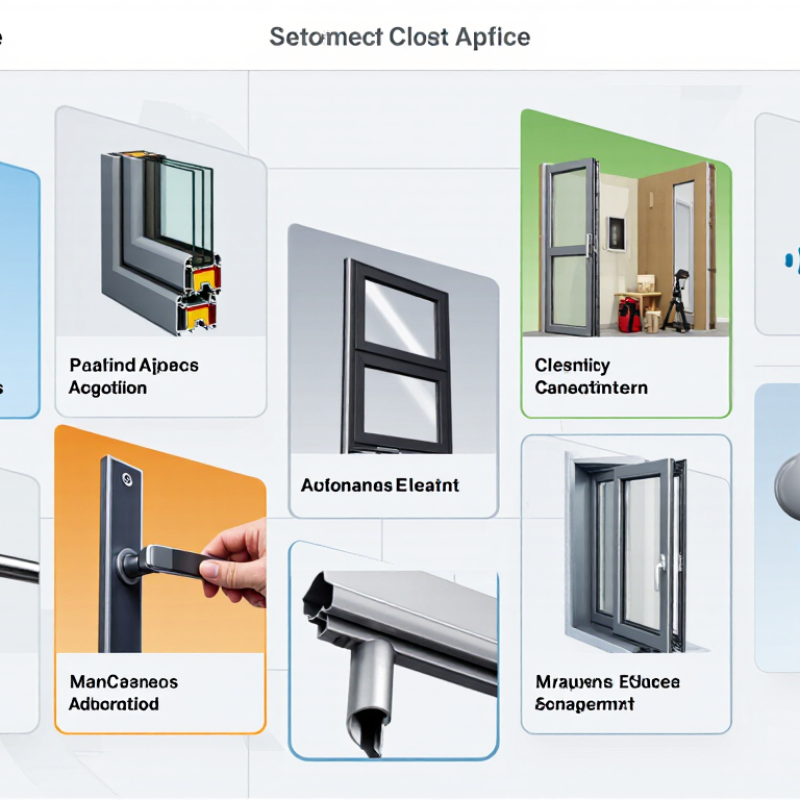
10 Tips for Buying Aluminium Windows and Doors

Set Climate and Code Requirements; Compare NFRC U-Factor Ratings

Before choosing aluminium windows and doors, check the climate conditions they must handle. A windy coastal site, a cold inland winter, and a hot, sunny façade create different demands. Look up the energy and safety requirements that apply to your project with the local building department. Rules can vary by location and building type. Do not rely on a product description alone.

Compare NFRC U-factor ratings for complete window or door assemblies, not just the glass. U-factor measures heat transfer; a lower rating generally means less heat passes through. Compare products using the same units and rating method. A number without its test context can mislead. Check the label or certified documentation, and confirm the rating suits your climate and code requirements.

Aluminium frames are strong and slim, but metal conducts heat readily. A thermal break separates interior and exterior frame sections, helping reduce heat flow. Ask whether the published U-factor includes the frame, glass, and spacers. Measure carefully, too. Installation gaps can undermine good ratings, even when the product itself performs well. It is easy to focus on one impressive number and miss the details around it. Review the whole assembly with your installer before ordering.

Select Frame Alloy: 6063-T5/T6 Is Common in Architectural Extrusions

When comparing aluminium window and door frames, check both the alloy and its temper. The Aluminum Association’s Aluminum Standards and Data lists typical minimum tensile strengths for 6063 extrusions near 145 MPa for T5 and 205 MPa for T6. These figures are not universal guarantees: required values can vary with section thickness and product specification. Check the supplier’s test documents against ASTM B221, which covers aluminium-alloy extruded bars, rods, wire, profiles, and tubes.

T5 is artificially aged after cooling from extrusion; T6 receives solution heat treatment before artificial aging. In practical terms, T6 generally offers higher strength, while T5 may suit many standard architectural profiles. Neither label tells you whether a narrow stile, corner joint, or heavy sliding sash is adequately designed. Ask for the profile’s wall thickness and the specified temper, not just “6063.” Small detail. Also check the finish and drainage design: temper does not prevent surface corrosion or water entering a frame. I would be cautious about choosing T6 automatically; stronger material cannot compensate for poor geometry, weak hardware, or an unsupported span. Ask the fabricator to confirm that the alloy, temper, and profile meet the project’s loads.

10 Tips for Buying Aluminium Windows and Doors — Select Frame Alloy: 6063-T5/T6 Is Common in Architectural Extrusions
No. Buying Tip What to Check Why It Matters
1 Confirm the frame alloy and temper Ask for documentation identifying the aluminium alloy and temper. 6063-T5 and 6063-T6 are commonly used for architectural extrusions; confirm the specified grade meets the project requirements. The alloy and temper affect mechanical properties and suitability for the intended profile. T5 and T6 describe different heat-treatment conditions, so they should not be treated as interchangeable without checking the specification.
2 Review profile design and wall thickness Check profile drawings, dimensions, reinforcement details, and the supplier’s structural calculations for the proposed opening sizes and design loads. Performance depends on the complete profile and assembly, not the alloy designation alone. Larger spans, wind loads, and hardware locations may require different profile designs.
3 Choose thermal-break construction where appropriate For conditioned buildings, ask whether the frame includes a thermal break and request whole-window thermal performance data for the selected configuration. A thermal break reduces heat flow through the frame, but the finished window’s performance also depends on glazing, frame geometry, spacers, and installation.
4 Specify the surface finish Compare the proposed anodized or painted finish with the project specification. Confirm the required finish standard, coating or film thickness, colour, and any applicable corrosion testing. Finish type and quality influence appearance, weathering, and corrosion resistance. Requirements should reflect the exposure conditions, especially in coastal or industrial environments.
5 Match the glazing to the building Review glass thickness, insulated-glass-unit build-up, safety-glass locations, low-emissivity coatings, and solar-control needs with the project designer. Glazing affects thermal comfort, daylight, solar heat gain, sound reduction, and safety. The appropriate combination depends on climate, orientation, and local code requirements.
6 Request tested performance ratings Ask for test reports or certified ratings for air leakage, water penetration, structural performance, and thermal transmittance for the relevant product configuration. Ratings apply to tested assemblies and conditions. Confirm that the tested size, operation type, glazing, and configuration are comparable to the units being purchased.
7 Check hardware and operating type Confirm the opening style, hardware materials, locking points, handle operation, and any stated cycle or load ratings. Check that hardware is compatible with the selected frame and sash. Suitable hardware supports reliable operation, security, and service life. Operating style also affects ventilation, cleaning access, and space requirements.
8 Inspect drainage and weather seals Review section drawings for drainage paths, weep openings, gaskets, and sealing details. Confirm that openings will remain clear after installation. Effective water management helps direct incidental moisture to the exterior. Poorly designed or obstructed drainage can contribute to water entry and damage.
9 Verify fabrication quality and tolerances Request shop drawings and inspect sample units or production checks for corner joints, alignment, finish consistency, glazing support, and dimensional tolerances. Accurate fabrication helps the windows and doors fit the openings and operate as intended. Clear drawings reduce coordination issues before production.
10 Plan installation and obtain product documents Confirm opening preparation, anchorage, perimeter sealing, installation responsibilities, maintenance instructions, and written warranty terms before ordering. Installation affects the performance of the complete assembly. Product records and clear maintenance guidance help support inspection, repairs, and future service.

Inspect Thermal Breaks: Aluminum Conductivity Is About 160–200 W/m·K

Aluminium conducts heat quickly, typically around 160–200 W/m·K, depending on the alloy and conditions. That matters. Without a thermal break, the frame can carry outdoor cold indoors and indoor warmth outward.

A thermal break is an insulating strip separating the inner and outer aluminium sections. It slows heat transfer, but it does not make the entire window insulating by itself.

Ask to inspect a cutaway sample rather than relying only on a brochure diagram. Look for a continuous separator through the frame, including corners and meeting rails. Check that it is firmly joined, with no visible cracks or loose sections. Small details count.

Request whole-window U-factor data, since glazing, spacers, seals, and frame design all affect performance. Compare figures tested under the same standard and window configuration.

Condensation near a frame can indicate a cold surface, but indoor humidity and ventilation also play a part. Condensation alone is not proof of a faulty thermal break.

It is tempting to judge quality by strip width; that is an incomplete shortcut. A wider strip may help, yet workmanship and the complete assembly matter too.

Compare Glazing and Ratings Under AAMA/WDMA/CSA 101/I.S.2/A440

When comparing aluminium windows and doors, check the complete product’s rating under AAMA/WDMA/CSA 101/I.S.2/A440, commonly called NAFS. The standard evaluates air leakage, water penetration, and structural performance. It applies to tested window or door configurations, not just the glass. Look at the product class and Performance Grade (PG), then confirm they suit your building’s exposure and intended use.

Glazing deserves a separate comparison. Ask for the glass make-up, including pane thickness, Low-E coating, and gas fill, where specified. Compare U-factor and solar heat gain coefficient for energy performance; these figures are not substitutes for NAFS ratings. Near a busy road, also check acoustic data such as STC or OITC. Small details matter. A laminated pane may help with sound, but the frame, seals, and installation affect the result too.

Match the rating to the actual unit size and opening style. A tested configuration may not represent a larger door or a different hardware setup. Request the relevant test documentation, and compare like with like. It is easy to fixate on the highest PG number; that may not be the right choice for a sheltered wall. One detail is often missed: poor installation can undermine otherwise strong product performance. Even careful comparisons have limits. A rating is useful evidence, not a promise about every site condition.

10 Tips for Buying Aluminium Windows and Doors

Compare Glazing and Ratings Under AAMA/WDMA/CSA 101/I.S.2/A440

Lower U-factor means less heat transfer through the glazing. Values shown are approximate examples for the glass center only; actual performance varies by glass, coatings, gas fill, and construction. AAMA/WDMA/CSA 101/I.S.2/A440 ratings apply to the tested window or door assembly, not to glazing alone—compare the product’s certified performance data, including air leakage and water penetration.

Check Installation, Drainage, Hardware, Finish, and Warranty Details

When comparing aluminium windows and doors, inspect how they will be installed, not just how they look in a showroom. Ask whether the frame will be level, securely fixed, and sealed where it meets the wall. Small gaps matter. Poor installation can lead to drafts, leaks, or difficult operation, even with a well-made frame. Check the drainage design too: water should pass through clear channels and exit outside, not collect along the sill. Ask how installers keep those openings free of sealant and debris.

Tips: Request a written installation scope. Confirm who checks the sill’s slope and clears drainage outlets. Test a sample unit by opening and closing it several times; sticking or uneven movement deserves a closer look.

Inspect handles, locks, hinges, and rollers for smooth movement and solid fixing. Hardware should suit the door’s weight and expected use. Look closely at the finish in natural light, especially corners and cut edges, where chips or uneven coating may be easier to spot. Ask how to clean it without damaging the surface. Read the warranty for its duration, covered parts, exclusions, and claim process. Ask whether installation issues are covered separately. A vague answer is a reason to pause. I would not assume that every concern is serious, but I would get unclear promises in writing before placing an order.

Scroll to Top