Top 10 Galvanized Wire Manufacturers in China
China is a major source of galvanized wire for construction, fencing, agriculture, and general manufacturing. Buyers can choose from suppliers with different production capacities, coating options, and export experience. The right fit depends on the job. A fencing project may need flexible wire in consistent coils, while industrial use can demand tighter control over diameter and tensile strength.
This guide to the Top 10 Galvanized Wire Manufacturers in China offers a practical starting point for comparing potential suppliers. It considers product range, manufacturing capability, quality documentation, customization, and communication—not just advertised prices. A reliable Galvanized Wire Manufacturer should be able to explain coating thickness, wire diameter tolerances, available coil weights, and packaging details. Ask for current test reports and sample specifications, then compare them with your project requirements. Small details matter.
The profiles can help narrow the field, but they cannot replace direct checks. No list is definitive. Company capabilities and product specifications may change, and a polished catalog does not prove consistent quality. Before placing an order, confirm production lead times, inspection arrangements, shipping terms, and how the supplier handles nonconforming goods. Where possible, assess a sample under realistic working conditions. This takes extra time, but it can reveal issues that a quotation cannot. Use the ranking as a guide, not a guarantee, and make the final decision against documented requirements.
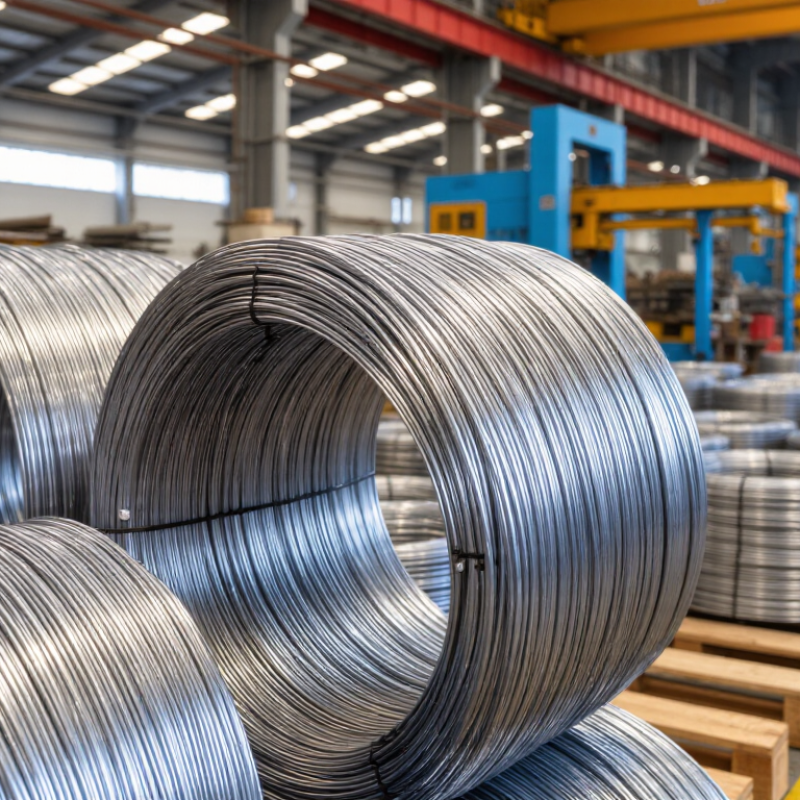
How Galvanized Wire Is Made: Drawing, Annealing, and Zinc Coating
Galvanized wire starts as steel rod, whose surface is cleaned before drawing. The rod passes through a series of hardened dies, each reducing its diameter. Lubricant limits friction and helps prevent scoring. The wire emerges thinner and longer, but drawing also increases its hardness. Small marks matter.
Annealing uses controlled heat to restore ductility and reduce internal stress. Temperature and exposure time depend on the steel grade and desired strength. The wire is then cleaned to remove oils and oxides before zinc coating. In hot-dip galvanizing, it passes through molten zinc; in electrogalvanizing, an electric current deposits zinc from a solution. These methods produce different coating characteristics, so the process should match the intended use.
Coating control involves more than a bright finish. Producers check zinc coverage, adhesion, and coating mass, while monitoring wire diameter and tensile strength. A glossy surface can still conceal thin spots, especially near bends or handling marks. There is no single ideal sequence: some products are galvanized before final drawing, which changes the balance between coating durability and wire strength. When comparing manufacturers, buyers can ask for process records and test results. Those details are useful, though they do not replace checking samples under actual working conditions.
How Galvanized Wire Is Made: Typical Process Temperatures
Wire is generally drawn cold, annealing temperatures depend on the steel grade and process, and hot-dip zinc is commonly maintained near its melting point. The ranges shown are typical examples, not fixed production specifications.
Key Specifications: 0.15–6.0 mm Diameter, Tensile Strength, and Zinc Mass
For galvanized wire from 0.15 to 6.0 mm, diameter alone says little about service life. Ask for the measured diameter and tolerance, tensile strength, and zinc coating mass in g/m². ASTM A641/A641M classifies zinc-coated carbon steel wire by coating and mechanical properties; ISO 7989-2 also sets requirements for metallic coatings on steel wire. These standards show why one zinc-mass figure cannot suit every diameter or application. Specify the coating class and test method.
Check the mill test certificate against the order. A fine 0.15 mm wire can be damaged by rough handling, while a 6.0 mm wire may need different tensile limits for forming or load-bearing use. Zinc mass should be verified by a stated test, not inferred from a bright surface. Ask for sample results across the production lot. Small detail. Also inspect a cut coil: patchy coating, bare spots, or brittle bends deserve a closer look. I would not compare suppliers using tensile strength alone; the best balance depends on drawing, bending, and exposure conditions. Even a clear specification can miss real handling problems.
Top 10 Galvanized Wire Manufacturers in China - Key Specifications: 0.15–6.0 mm Diameter, Tensile Strength, and Zinc Mass
The table below is a general product-specification reference, not a company ranking or a set of verified supplier-specific claims. Actual available ranges vary by product, coating class, applicable standard, and purchase specification.
| No. | Product Type | Typical Diameter Range (mm) | Indicative Tensile Strength (MPa) | Indicative Zinc Coating Mass (g/m²) | Common Applications |
| 01 | Fine galvanized wire | 0.15–0.60 | 300–550 | 10–60 | Light binding, small mesh, and precision wire products |
| 02 | General-purpose low-carbon wire | 0.60–3.00 | 350–600 | 20–150 | General fabrication, tying, and everyday industrial use |
| 03 | Soft galvanized binding wire | 0.30–2.00 | 300–500 | 20–100 | Manual tying and general-purpose binding |
| 04 | Mesh and weaving wire | 0.50–2.50 | 350–650 | 30–150 | Woven mesh, screening, and wire-net products |
| 05 | Fence line wire | 1.80–4.00 | 350–600 | 60–200 | Agricultural fencing and boundary lines |
| 06 | Barbed-wire strand wire | 1.60–2.50 | 350–600 | 60–200 | Barbed-wire line and fencing assemblies |
| 07 | Gabion and heavy mesh wire | 2.00–4.00 | 380–600 | 70–275 | Gabions, rock baskets, and heavy-duty mesh |
| 08 | High-tensile fencing wire | 1.80–3.50 | 1,100–1,770 | 150–300 | Long-span fencing and tensioned agricultural systems |
| 09 | Stay and support wire | 2.00–4.00 | 800–1,600 | 100–300 | Bracing, stays, and selected support applications |
| 10 | Heavy-gauge galvanized wire | 4.00–6.00 | 500–1,200 | 100–300 | Heavy fabrication and purpose-designed industrial components |
Specification note: Tensile strength and zinc coating mass are indicative ranges, not guaranteed limits. Confirm the test method, coating class, wire diameter tolerances, and minimum coating mass against the applicable product standard and supplier certificate before ordering.
Quality Standards: ASTM A641 and EN 10244-2 Zinc-Coating Classes
When comparing galvanized wire manufacturers in China, check whether the product is specified to ASTM A641/A641M or EN 10244-2. ASTM A641/A641M covers zinc-coated carbon steel wire and defines coating requirements by class and wire dimensions. EN 10244-2 uses its own coating classes and test methods. Do not assume that similarly named classes are equivalent. Ask for the exact standard edition, coating class, wire diameter, and required zinc coating mass.
Paperwork matters, but so does the test method. Request recent reports showing coating mass and adhesion results, alongside tensile strength and dimensional checks where relevant. A heavier zinc coating is not automatically better; it can affect forming and suitability for the intended application. Inspect sample wire for bare spots, uneven deposits, and damage after coiling. Small details count.
Compare the stated requirement with the actual test report, rather than relying on a general “ASTM-compliant” or “EN-compliant” claim. Certificates can look tidy while leaving key details unclear. That is worth questioning. Confirm batch traceability and how samples are selected, especially for repeat orders. Standards provide a useful common language, but the purchase specification should still state the coating class and acceptance criteria plainly.
Top 10 Chinese Manufacturers: Products, Production Capacity, and Export Markets
China’s leading galvanized-wire manufacturers serve buyers with different product mixes and production scales. Common offerings include low-carbon wire for fencing, binding, and mesh, alongside heavier-gauge wire for construction and agricultural use. Coating weight, tensile strength, wire diameter, and coil size can vary between production lines, so specifications matter more than a broad product label.
Many larger plants combine wire drawing, annealing, galvanizing, and rewinding on site. This can help maintain consistent diameter and coating across repeat orders. Their output capacity depends on line configuration, maintenance, and raw-wire supply; a large stated capacity does not guarantee immediate availability. Capacity figures can mislead. Ask for recent production records and samples, especially when ordering a new coating thickness or tight diameter tolerance.
Export markets commonly include Southeast Asia, the Middle East, Africa, Europe, and the Americas. Manufacturers may offer seaworthy packaging, palletized coils, or custom labels, but shipping arrangements differ. Check packing details before loading. Buyers should also compare inspection reports, sample results, and delivery records, rather than relying on a catalogue alone. I would treat any ranking cautiously: public data is uneven, and a capable factory may disclose less than expected.
How to Compare Suppliers: Certifications, Lead Times, and Quality Control
When comparing galvanized wire manufacturers in China, look beyond certificates displayed on a website. Ask who issued each certificate, when it expires, and which products or production sites it covers. A quality system certificate may not verify every wire grade or coating line. Request recent inspection records for the exact diameter and coating specification you need. Check coating mass, tensile strength, wire diameter, and adhesion. Details matter. Ask how measurements are taken and how often instruments are calibrated. A polished PDF alone proves little.
Lead times should be checked against production capacity, not just a sales estimate. Ask whether the quoted schedule includes coating, inspection, and export packing, then confirm how delays are communicated. For quality control, request a sample and compare its surface, coil weight, and packaging with the purchase specification. Ask how nonconforming batches are identified and recorded. Even a capable factory can miss a shipment or produce an uneven coil; clear records make problems easier to trace. I would still verify key claims independently, because supplier paperwork can be incomplete or out of date. Use the same checklist with each supplier, and keep answers in writing.