


NEWS at Quanex
See the latest news, posts and events from Quanex about our business, the industry, our people and more.
Best Outdoor Storage Cabinet Suppliers in China?
Choosing among the best Outdoor Storage Cabinet suppliers in China takes more than comparing catalog photos and quoted prices. A cabinet that looks sturdy online may wobble on uneven paving or let rain creep through a poorly fitted door. Buyers should check material specifications, joint construction, drainage details, UV resistance, hardware quality, and packaging protection. Small details matter.
Design researcher Don Norman wrote, “Good design is actually a lot harder to notice than poor design.” That principle is useful here: a well-made cabinet should feel simple to use, with doors that align, shelves that hold their shape, and handles that remain comfortable after repeated use. A supplier’s technical drawings and sample may reveal more than polished marketing images. Ask for clear dimensions, load limits, finish details, and documented quality checks. Then compare the answers, not just the prices.
This guide looks at supplier capabilities, product materials, customization, sample evaluation, and communication during production. It also considers export experience and protective packing, because a cabinet can leave the factory in good condition and still arrive with cracked panels or bent corners. No shortlist is perfect. Even a careful review cannot remove every risk, and that is worth admitting. Treat supplier claims as points to verify, request a sample when practical, and confirm specifications in writing before placing an order.
What Defines an Outdoor Storage Cabinet and Its Core Supplier Categories?
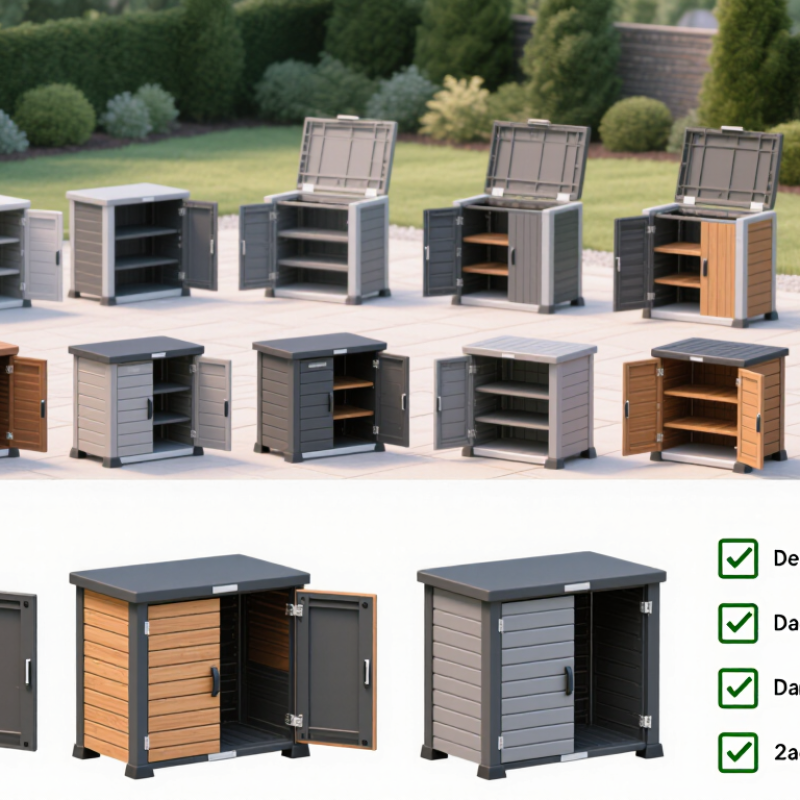
An outdoor storage cabinet is an enclosed unit for tools, cushions, or supplies kept outside. It should limit rain, sun damage, dust, and pests, while allowing trapped moisture to escape. Useful details include sloped roofs, raised feet, drainage openings, and corrosion-resistant hinges. These features matter more than a polished product photo.
China-based suppliers generally fall into three categories. Direct manufacturers produce cabinets in their own facilities and may offer closer control over materials, dimensions, and production checks. OEM or ODM suppliers can adapt designs or develop custom configurations, though minimum order quantities and tooling costs may apply. Trading companies connect buyers with factories and can simplify communication or product sourcing, but buyers should clarify who handles inspections and after-sales issues.
Compare suppliers using measurable evidence. Ask for material specifications, load limits, assembly instructions, and close-up photos of joints, seals, and hardware. Request samples when practical, and check whether the delivered unit matches the approved specification. A neat catalog is not proof. Not enough. Weather resistance also depends on installation, local exposure, and maintenance; a cabinet under a roof may perform differently from one facing wind-driven rain. Even capable suppliers can leave these limits unclear, so ask direct questions before placing an order.
Best Outdoor Storage Cabinet Suppliers in China? — What Defines an Outdoor Storage Cabinet and Its Core Supplier Categories?
An outdoor storage cabinet is a freestanding or wall-mounted enclosure intended to store items outdoors or in exposed utility areas. Its resistance to rain, UV exposure, humidity, and temperature changes depends on its materials, construction, seals, hardware, and installation—not on the product label alone.
| Supplier category | Typical cabinet construction | Common strengths | Potential limitations | Useful applications | What to verify |
|---|---|---|---|---|---|
| Plastic or resin cabinet manufacturers | Molded plastic panels or components, often assembled with shelves, doors, and plastic or metal fittings. | Low maintenance; no metal rust; lightweight construction; molded parts can support repeatable designs. | UV resistance, stiffness, and impact performance vary by resin, additives, wall design, and exposure. Lightweight units may need anchoring. | Garden tools, patio supplies, pool accessories, and general household storage. | Ask for material specifications, UV-weathering evidence, load limits, assembly instructions, and anchoring provisions. |
| Metal cabinet fabricators | Formed sheet metal, typically steel or aluminum, with a protective finish and assembled doors, shelves, and hardware. | Rigid construction; can support heavier loads when designed accordingly; fabrication can accommodate different sizes and layouts. | Steel can corrode if its coating is damaged or unsuitable for the environment. Metal cabinets can heat up in direct sun and may require drainage or ventilation details. | Utility areas, maintenance supplies, equipment storage, and locations needing a more rigid enclosure. | Check base-metal and coating specifications, corrosion-test reports where relevant, edge protection, weld quality, and stated shelf capacity. |
| Outdoor wood cabinet makers | Solid wood or wood-based panels with an exterior finish, plus doors, hinges, and sometimes a protective roof or base. | Natural appearance; designs can suit garden or patio settings; repairs and finish renewal may be possible. | Wood responds to moisture and temperature changes. Durability depends on species, panel construction, joinery, finish, and ongoing maintenance. | Covered patios, garden settings, and storage where appearance is a priority. | Confirm wood or panel type, exterior finish system, exposed-edge treatment, maintenance guidance, and whether the unit is designed for uncovered exposure. |
| OEM/ODM cabinet manufacturers | Products made to a buyer’s specification (OEM) or developed with the supplier’s design input (ODM); materials and processes vary. | May support custom dimensions, finishes, packaging, and product configurations, subject to tooling and production capability. | Customization can affect tooling cost, lead time, minimum order quantity, and sample approval. An OEM/ODM description alone does not confirm outdoor performance. | Projects requiring specified dimensions, private-label production, or coordinated product development. | Clarify design ownership, tooling charges, sample sign-off, change control, minimum order, and production quality checks. |
| Export-oriented sourcing or trading suppliers | May source cabinets from one or more factories; product materials, designs, and manufacturing arrangements depend on the specific item. | Can coordinate quotations, product options, export documentation, and consolidated orders across a supplier network. | The seller may not control production directly. Factory identity, specifications, and quality practices should be confirmed for each order. | Buyers comparing product ranges or seeking help coordinating international procurement. | Ask who manufactures the product, how specifications are controlled, who inspects it, and how defects or replacements are handled. |
Supplier evaluation note: These categories can overlap and are not a ranking. Compare suppliers using the same product specification, sample, stated load limits, outdoor-exposure requirements, inspection plan, packaging details, and written warranty terms. “Weather-resistant” does not necessarily mean waterproof; confirm the intended exposure and test evidence for the specific cabinet.