
NEWS at Quanex
See the latest news, posts and events from Quanex about our business, the industry, our people and more.
What Are the Top Types of Door Hardware?
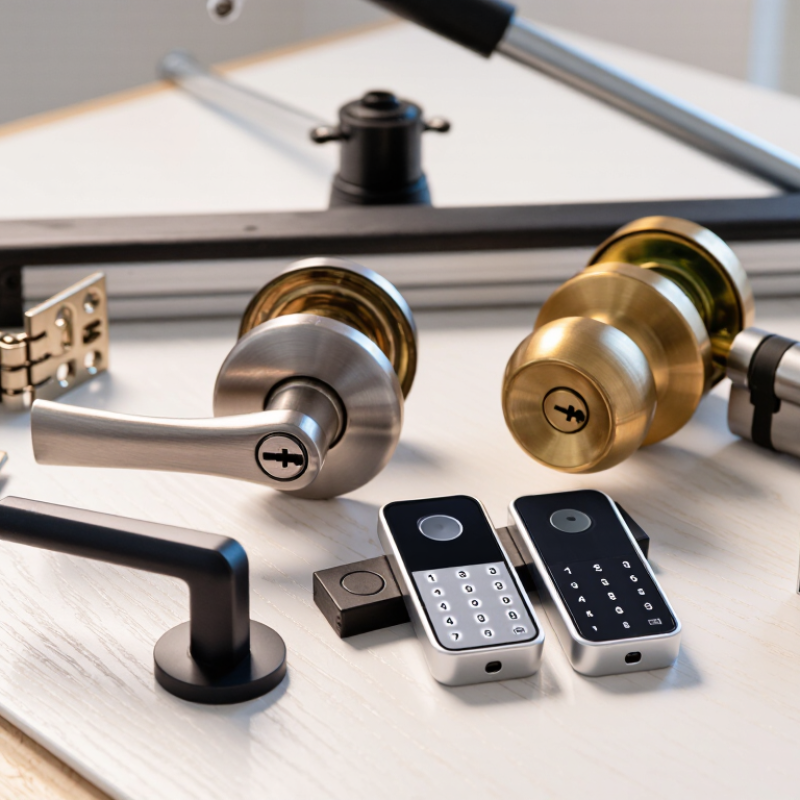
What Are the Top Types of Door Hardware? The answer depends on the door’s location, purpose, and daily traffic. A quiet bedroom may need a simple knob or lever. A busy office entrance may require a durable lever, deadbolt, closer, or pull handle. Each piece affects security, comfort, appearance, and maintenance.
This guide introduces common door hardware, including knobs, levers, handlesets, deadbolts, hinges, closers, exit devices, and smart locks. A lever usually helps people with limited hand strength. A deadbolt can provide stronger resistance than a basic latch. Hinges carry the door’s weight, while closers control movement and reduce slamming. Small differences matter. A heavy steel door needs different hardware than a lightweight interior door.
Practical selection requires more than matching finishes. Measure the door thickness, backset, handing, frame condition, and traffic level before purchasing. Check product instructions and consult qualified installers when fire ratings, accessibility, or commercial safety requirements apply. Local building requirements may also affect the choice. Trusted manufacturers provide tested specifications, warranty details, and installation guidance.
There is no perfect set.
Even experienced professionals sometimes overlook the frame. That mistake can cause rubbing, loose screws, or poor latching. This overview cannot solve every unusual door problem, but it can create a dependable starting point. By comparing each type of door hardware through function, durability, installation, and style, readers can make a more informed decision for homes, workplaces, and public spaces.
Door Hardware Basics and Its Role in Door Function
What Are the Top Types of Door Hardware?
Door hardware includes more than handles and locks. It is the working system that helps a door open, close, secure, and remain aligned. Common types include hinges, knobs, levers, deadbolts, door closers, stops, and threshold seals. Each part has a specific role. Hinges carry the door’s weight and control its swing. Locks manage access. Closers prevent doors from remaining partly open. Small parts matter.
During inspections, I check how these components work together. A handle may feel solid, yet a loose hinge can cause scraping near the floor. A lock may operate smoothly, but poor alignment can make the door difficult to secure. The frame, strike plate, screws, and door weight all affect performance. It must fit. Hardware should match the door’s material, traffic level, moisture exposure, and intended use.
Safety also influences selection. Some buildings require self-closing, emergency-release, or fire-rated hardware under applicable local requirements. Those details should be verified with qualified professionals and current building rules. I once judged a door by its attractive lever and missed the uneven threshold beneath it. That mistake changed my inspection habits. Good hardware is not only attractive; it should remain dependable after repeated use. Maintenance still matters, because dust, loose screws, and worn components gradually change the door’s behavior.
Knobs, Levers, and Pull Handles for Everyday Access
Knobs, levers, and pull handles shape how people enter, leave, and move through a space. Each option offers a different everyday experience. Door knobs work well on closets and low-traffic rooms. Their rounded form looks tidy, but wet or weak hands may struggle to grip them. Levers need less twisting. They suit bedrooms, kitchens, and accessible pathways, especially when carrying bags or holding a child. Pull handles create a clear hand position and a strong visual cue. They are practical on heavier doors, glass doors, and busy entrances.
In my installation experience, the best hardware feels natural before anyone studies it. A lever should return smoothly without scraping the plate. A pull handle should leave enough clearance for knuckles and coat sleeves. Small details matter. Measure the door thickness, backset, and handle height before ordering replacement hardware. Incorrect measurements can create loose fittings, uneven alignment, or repeated maintenance.
I have seen attractive handles fail because the fixing points were too weak for daily use. Appearance cannot replace proper support.
Finish and grip deserve equal attention. A smooth metal surface may become slippery near an entryway, while a textured finish can improve control. Rounded edges reduce uncomfortable pressure during frequent use. My first choice is not always the best choice; personal preference can overlook children, older users, or visitors carrying objects. Test a sample at standing height. Open the door with one hand. Listen for rubbing, and check whether the latch engages fully. Practical testing often reveals what a product photograph hides.
Locks, Latches, and Security Hardware for Protection
What Are the Top Types of Door Hardware?
Locks, latches, and security hardware protect more than a doorway. They control entry, support privacy, and help people exit safely. A deadbolt resists forced rotation, while a latch keeps the door aligned inside its frame. Mortise locks combine both functions in one deeper case. Cylindrical locks suit many commercial and residential doors, but installation quality still matters.
The MarketsandMarkets 2024 report projects the global access-control market will reach about $14.9 billion by 2028. That growth reflects demand for electronic locks, credentials, and monitored entry systems. However, mechanical hardware remains essential during power failures. The National Fire Protection Association reported approximately 1.5 million U.S. fires in 2023. Panic bars, exit devices, and code-compliant latches can support rapid evacuation. Security should never make escape difficult. I have seen installations focus heavily on intrusion resistance, then overlook door clearance and daily usability. That is a costly weakness.
Tips: Match the lock to the door’s material, traffic level, and risk. Check the strike plate, screws, hinges, and frame together. A strong lock on a weak frame offers limited protection. For electronic hardware, test battery warnings and emergency override procedures regularly. Review applicable standards, including ANSI/BHMA requirements and local fire codes, before specification. Professional inspection is worthwhile, especially for shared buildings. Even experienced installers should question whether a familiar solution fits the actual door.
Hinges, Closers, and Stops for Door Movement Control
Door hardware does more than attach a door to its frame. It controls movement, noise, safety, and daily comfort. Hinges carry the door’s weight and guide its swing. For a solid interior door, three durable hinges often provide stable support. Heavier doors may need reinforced hinges or additional support. I have seen poorly aligned hinges create a narrow scrape along the frame. That small mark usually signals a larger installation problem.
Door closers regulate how quickly a door shuts. A properly adjusted closer prevents slamming while keeping the door secure. In a busy hallway, closing speed matters near fingers, carts, and passing equipment. Many closers allow separate adjustments for general speed and final latching force. Small changes can make a noticeable difference. Too much force feels harsh. Too little force may leave the latch incomplete.
Stops protect walls, hinges, and nearby fixtures from excessive travel. A floor stop works well where the wall cannot absorb impact. A hinge stop can limit movement at the hinge side, but it may stress the hardware. Check the door’s weight, swing direction, frame condition, and traffic level before choosing one. Measurements should be taken carefully. I sometimes find that a stop solves one problem while creating another. Regularly inspect loose screws, worn pivots, and leaking closer fluid. Door movement is easy to ignore until it becomes disruptive.
Specialized Hardware for Glass, Sliding, and Exit Doors
What Are the Top Types of Door Hardware?
Specialized hardware makes glass, sliding, and exit doors safer and easier to operate. Glass doors often use patch fittings, pivots, pull handles, and compact locks. Clean lines matter. Every component must match the glass thickness, door weight, and opening direction. Accurate measurements are essential because a small mismatch can stress the glass or cause poor alignment. Installers should also check edge clearances, seals, and floor conditions before drilling or fitting hardware.
Sliding doors depend on smooth movement and stable guidance. Top-hung systems keep the floor clear, while floor-guided systems can support heavier panels. Strong rollers, adjustable tracks, and anti-jump features help prevent derailment. Soft-close mechanisms reduce impact near the frame. Small errors show. A slightly uneven track may create noise, drag, or premature wear. Regular cleaning around the track also matters, especially in entrances where dust and grit collect quickly.
Exit doors require careful hardware selection. Panic or exit devices should allow fast opening without complicated steps. Door closers must control speed without making the door difficult to use. Fire-rated openings need compatible hinges, latches, seals, and closing hardware. Local safety and accessibility requirements should guide the final installation. Do not guess here. I have seen attractive hardware fail because the door frame was weak or the closer was incorrectly adjusted. A qualified installer should inspect the complete assembly, not only the handle or lock.
What Are the Top Types of Door Hardware? - Specialized Hardware for Glass, Sliding, and Exit Doors
| Door Hardware Type | Typical Door or Application | Common Hardware Components | Common Materials | Main Benefits | Important Selection Considerations |
|---|---|---|---|---|---|
| Glass Door Hardware | Frameless glass doors, office entrances, storefronts, shower enclosures, and interior partitions | Glass door hinges, patch fittings, locks, handles, pulls, floor springs, and door closers | Stainless steel, brass, aluminum, and corrosion-resistant plated finishes | Maintains a clean appearance while providing controlled movement, latching, and access control | Verify glass thickness, tempered or laminated glass requirements, hole locations, load capacity, and edge clearances before ordering |
| Sliding Door Hardware | Interior room dividers, glass sliders, patio doors, barn-style doors, and space-saving entrances | Top-hung or bottom-rolling tracks, rollers, guides, stops, soft-close mechanisms, pulls, and locks | Steel, stainless steel, aluminum, nylon, and engineered polymer components | Saves swing space, supports smooth operation, and can accommodate wide openings | Check door weight, track length, wall structure, anti-jump protection, clearance, and whether the system is top-hung or floor-supported |
| Exit Devices and Panic Hardware | Exit routes, public buildings, schools, healthcare facilities, offices, and high-occupancy areas | Push bars, touch pads, rim devices, mortise devices, vertical-rod devices, outside trim, and alarm accessories | Steel, stainless steel, aluminum, and fire-rated metal assemblies where applicable | Allows rapid egress from the interior with one releasing motion when correctly installed | Confirm local code requirements, door handing, fire-rating requirements, mounting height, trim function, and compatibility with access-control systems |
| Commercial Door Closers | Aluminum, hollow-metal, wood, and glass doors in commercial and institutional buildings | Surface-mounted closers, concealed closers, overhead closers, arms, and hold-open or delayed-action options | Aluminum bodies, steel arms, hardened pins, and hydraulic components | Controls closing speed and latching while helping reduce drafts, noise, and damage from uncontrolled movement | Select the correct closing force for door size, weight, location, traffic level, accessibility needs, and fire-door requirements |
| Mortise Locks | Heavy-use commercial wood, metal, and aluminum-framed doors | Mortise lock case, latch bolt, deadbolt, cylinder, escutcheon, lever handle, and strike plate | Steel, stainless steel, brass, zinc alloys, and aluminum trim | Combines the lock mechanism and latch in the door edge for durability and versatile access functions | Match the lock case dimensions, door thickness, backset, cylinder type, handing, lever operation, and security requirements |
| Lever Locks and Cylindrical Locks | Offices, classrooms, apartments, interior commercial doors, and moderate-traffic areas | Levers or knobs, latch assemblies, chassis, cylinders, roses, strike plates, and privacy functions | Steel, brass, stainless steel, zinc alloys, and plated or powder-coated finishes | Provides practical everyday access with relatively straightforward installation and maintenance | Check door preparation, backset, latch type, lever accessibility, keying requirements, and duty rating |
| Hinges and Pivot Hardware | Wood, metal, aluminum, and glass swing doors in residential, commercial, and institutional settings | Ball-bearing hinges, spring hinges, continuous hinges, center pivots, offset pivots, and top-and-bottom pivot sets | Stainless steel, steel, brass, aluminum, and reinforced composite materials | Supports door weight, alignment, durability, and smooth opening over repeated cycles | Consider door weight, width, frequency of use, frame condition, hinge spacing, swing direction, and corrosion exposure |
| Access-Control Door Hardware | Controlled entrances, staff-only rooms, multi-tenant buildings, and security-sensitive facilities | Electric strikes, magnetic locks, electrified locks, card or credential readers, request-to-exit sensors, and power supplies | Steel, stainless steel, aluminum, copper wiring, and electronic components | Enables centralized access permissions, audit records, scheduled entry, and integration with security systems | Plan for power failure behavior, emergency release, fire and egress compliance, wiring pathways, door alignment, and system compatibility |
Selection should be based on door construction, dimensions, traffic frequency, accessibility requirements, security objectives, environmental conditions, and applicable building and fire-safety codes.
Related Posts
-
Top 10 Door Hardware Tips for Choosing and Installing the Best Options
-
China Best Door and Frame Solutions for Global Buyers?
-
Essential Tips for Choosing the Right Screen Door Frame?
-

Emerging Trends in Commercial Glass Industry Spotlighted at 2025 China Import and Export Fair
-
How to Choose the Right Exterior Door Casing for Your Home?
-
What is a Sliding Door Security Screen and How Does It Work?