
Contact Us

Filter Close

NEWS at Quanex

See the latest news, posts and events from Quanex about our business, the industry, our people and more.

What Is a PU Insulation Foam System?

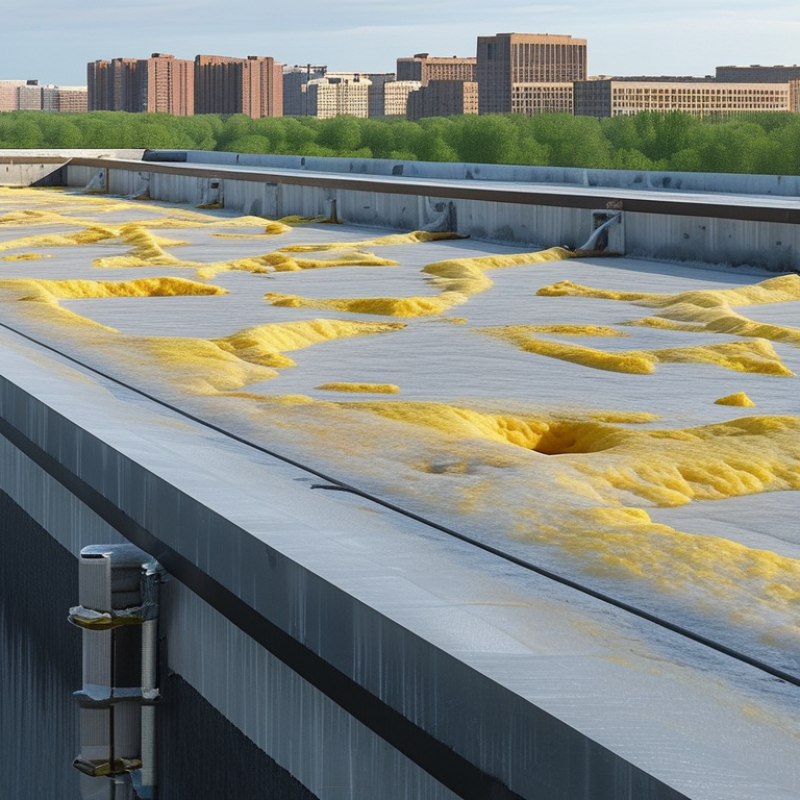
A Pu Insulation Foam System combines chemical components, application equipment, and installation controls to create continuous thermal protection. It commonly uses polyol and isocyanate materials, which react and expand into rigid foam. The result can fill narrow gaps around roof edges, wall joints, pipes, and service penetrations. Small details matter. A poorly sealed corner can weaken an otherwise efficient envelope.

The International Energy Agency reports that buildings consume about 30% of global final energy and produce roughly 26% of energy-related emissions. That pressure explains the growing interest in high-performance insulation. Grand View Research valued the broader global polyurethane foam market at approximately USD 48.9 billion in 2023, with continued growth projected through 2030. This figure includes furniture, automotive, packaging, and insulation applications, so it should not be treated as a pure PU insulation forecast. The distinction is important.

Building-science expert Joseph Lstiburek states, “Control rain, air, vapor, and heat.” His principle provides a practical test for every PU Insulation Foam System. It must do more than reduce heat flow. Installers should inspect substrate moisture, foam thickness, curing conditions, ventilation, and fire-protection details. A warm-looking surface is not proof of a reliable assembly. It may hide gaps, adhesion failure, or moisture movement.

This guide examines system components, performance data, installation practice, safety requirements, and lifecycle considerations. Reported savings can vary sharply between laboratory walls and occupied buildings. That gap deserves attention. A technically impressive foam system still depends on design discipline, trained installers, and honest verification.
What Is a PU Insulation Foam System?

Definition and Core Components of a PU Insulation Foam System

What Is a PU Insulation Foam System?

A PU insulation foam system is more than a can of expanding material. It is a controlled assembly that combines two liquid components, application equipment, additives, and a prepared substrate. The polyol blend contains catalysts, surfactants, flame retardants, and blowing agents. The isocyanate component reacts with it, creating a cellular plastic that expands and cures. The final structure may be open-cell or closed-cell, depending on formulation and use.

The proportioning unit is essential. It heats, meters, and mixes both components under controlled pressure. A spray gun then applies the reaction mixture onto walls, roofs, tanks, or irregular joints. Temperature, moisture, substrate cleanliness, and layer thickness affect adhesion and cell formation. Small errors can produce soft areas, shrinkage, or uneven insulation. This is where field experience matters. Laboratory performance is not always repeated on a cold, dusty surface.

Energy demand makes this system important. The United Nations Environment Programme reported in its 2023 Global Status Report for Buildings and Construction that buildings used about 30% of global final energy and created roughly 26% of energy-related emissions. Proper air sealing can reduce avoidable heat transfer. The U.S. Department of Energy estimates that air leakage may represent 25% to 40% of heating and cooling energy use in typical homes. However, foam is not a universal remedy. Ventilation, fire safety, moisture control, and workmanship must be assessed together. A thicker layer is not automatically a better system.

What Is a PU Insulation Foam System?

Polyurethane (PU) insulation foam is formed when a polyol blend reacts with an isocyanate. The reaction creates a cellular plastic structure that reduces heat transfer. Closed-cell PU foam generally provides higher thermal resistance per 25 mm than open-cell foam and many common insulation materials.

Core Components of a PU Insulation Foam System

Polyol blend: provides the resin side and may contain catalysts, surfactants, flame retardants, and blowing agents. Isocyanate: reacts with the polyol to form the polyurethane polymer. Blowing agent: creates the foam cells that provide thermal insulation. Catalysts and surfactants: control reaction speed, cell structure, expansion, and surface quality.

Values shown are representative midpoints of commonly published typical thermal-resistance ranges and are expressed as RSI per 25 mm of insulation. Actual performance varies with density, cell structure, temperature, moisture, and installation quality.

How PU Insulation Foam Is Produced and Applied

What Is a PU Insulation Foam System?

How PU Insulation Foam Is Produced and Applied

A PU insulation foam system combines two liquid components: a polyol blend and an isocyanate. When they meet, a controlled chemical reaction produces polyurethane foam. The reaction releases heat and creates gas cells, allowing the material to expand and harden. Cell structure affects insulation value, moisture resistance, and density. Some systems form open-cell foam, while others create tighter closed-cell structures.

The liquids are usually stored separately and delivered through heated, pressurized equipment. They mix at the spray gun or dispensing head. The applicator must control temperature, pressure, and mixing quality. Small changes matter. If the ratio is incorrect, the foam may remain soft, shrink, or lose adhesion.

Preparation starts with a clean, dry, stable surface. Dust, oil, loose coatings, and standing moisture can weaken the bond. Applicators normally test a small area before spraying the full surface. They build the foam in measured passes, checking thickness and surface texture between layers. Ventilation and suitable protective equipment are essential during application and curing. Nearby areas should be carefully masked.

Field conditions are rarely perfect. Cold substrates, high humidity, or poor equipment settings can affect performance. A finished installation should be inspected for gaps, cracks, uneven coverage, and weak adhesion. Fire performance also depends on the complete building assembly, not foam alone. Local construction requirements should guide the final design and protective layers.

Main Types of PU Insulation Foam Systems

What Is a PU Insulation Foam System?

Main Types of PU Insulation Foam Systems

A PU insulation foam system combines liquid components that expand and cure into rigid insulation. The selected type affects thermal performance, moisture control, installation speed, and long-term durability. On site, installers must check the substrate, air temperature, and surface dryness before application. Poor preparation remains a common failure point. Foam may look complete while hiding weak adhesion underneath.

Open-cell spray foam has a soft, sponge-like structure and expands significantly. It helps reduce air leakage in walls, ceilings, and irregular cavities. However, it offers limited moisture resistance and usually needs an additional vapor-control strategy. Closed-cell spray foam forms a denser layer with stronger resistance to water vapor. It also adds structural rigidity and provides higher insulation value within a thinner space. That trade-off matters.

Pour-in-place PU foam fills enclosed panels, gaps, and specially prepared cavities. It works well where controlled expansion is more important than fast surface coverage. One-component foam is practical for sealing narrow joints around frames and service penetrations. Large projects usually require two-component equipment and trained operators for consistent mixing. Ventilation, protective equipment, fire requirements, and local building codes must guide the work. No system is perfect. A careful specification should address movement, future repairs, and possible moisture exposure instead of focusing only on initial insulation values.

Insulation Performance and Key Technical Properties

What Is a PU Insulation Foam System?

Insulation performance depends on more than a foam’s advertised R-value. The U.S. Department of Energy reports typical closed-cell polyurethane foam at approximately R-6 to R-7 per inch. Open-cell foam usually provides about R-3.5 to R-4 per inch. Closed-cell foam also limits moisture movement and adds structural stiffness. Open-cell foam expands further and fills irregular cavities more easily. It remains less resistant to water vapor.

Air sealing matters greatly.

A 2023 International Energy Agency report identifies buildings as responsible for roughly 30% of global final energy use. Poorly sealed joints can weaken otherwise strong insulation. During site inspections, installers often check substrate temperature, foam lift thickness, adhesion, and missed edges. These details affect the final thermal result. A laboratory R-value is not the same as whole-wall performance. Thermal bridges, compression, gaps, and aging can reduce real efficiency.

Technical specifications should reference recognized testing methods, including ASTM C518 for thermal resistance and ASTM E2178 for air permeance. Density also deserves attention. Higher density may improve dimensional stability, but it does not automatically guarantee better installation. That assumption needs questioning. Moisture conditions, ventilation, curing time, and workmanship can change performance. Product data should therefore be reviewed alongside project measurements, climate exposure, and fire-safety requirements. A carefully installed moderate-R system may outperform a poorly applied high-R system.

Common Applications, Benefits, and Safety Considerations

What Is a PU Insulation Foam System?

A PU insulation foam system mixes chemical components on site, creating foam that expands and seals gaps. It is used in roofs, walls, floors, cold-storage rooms, pipes, and transport containers. Closed-cell foam offers strong moisture resistance and higher insulation value. The U.S. Department of Energy reports approximately R-6 to R-7 per inch for closed-cell spray foam. Open-cell foam usually provides about R-3.5 to R-4 per inch. These figures vary with density, temperature, and installation quality.

Common Applications, Benefits, and Safety Considerations

The main benefit is continuity. Foam can surround wiring, joints, and uneven surfaces where rigid boards may leave gaps. It also reduces air leakage, which can improve indoor comfort and lower heating or cooling demand. However, insulation savings depend on ventilation, building design, and workmanship. A perfect laboratory result is not guaranteed on a busy construction site. ASHRAE guidance emphasizes that moisture control and whole-building design matter as much as insulation value. PU foam must also be protected from heat and fire with approved coverings or barriers. During spraying, workers need suitable respiratory protection, skin protection, and controlled ventilation because isocyanates can irritate the lungs and skin.

Tips: Confirm the foam type, density, and tested R-value before purchase. Keep occupants away during application and follow the safety data sheet’s re-entry guidance. Check for missed edges after curing. Small gaps can become expensive problems.

What Is a PU Insulation Foam System? — Common Applications, Benefits, and Safety Considerations

Category Data Dimension Typical Value or Application Practical Description
System Overview Material type Polyurethane (PU) foam A polymeric insulation material formed by reacting Polyol And Isocyanate components. The chemical reaction creates a cellular structure that can reduce heat transfer.
System Overview Main foam forms Open-cell and closed-cell Open-cell foam contains interconnected cells and is generally softer and more vapor-permeable. Closed-cell foam has sealed cells, providing greater rigidity, lower vapor permeability, and better resistance to water absorption.
Thermal Performance Thermal conductivity Approximately 0.020–0.040 W/m·K The actual value depends on foam type, density, blowing agent, temperature, aging, and installation quality. Lower thermal conductivity indicates better insulation performance.
Thermal Performance Approximate aged R-value About R-3.5 to R-7 per inch Closed-cell products commonly provide a higher R-value per inch than open-cell products. The declared value should be taken from the product’s tested technical data and local building requirements.
Physical Properties Typical density range Open-cell: about 8–20 kg/m³
Closed-cell: about 30–60 kg/m³
Density varies by formulation and application. Higher density does not automatically guarantee better overall performance, because thermal, structural, moisture, and fire properties must be evaluated together.
Common Applications Roofing and roof decks Sprayed or board insulation Used to improve thermal continuity and help limit air leakage. Roofing assemblies must be designed to manage drainage, condensation, UV exposure, and fire requirements.
Common Applications Walls and building envelopes Cavities, sheathing, and continuous insulation Can reduce heat loss through walls and seal irregular gaps. Compatibility with cladding, vapor-control layers, electrical work, and structural components should be verified before installation.
Common Applications Attics and crawl spaces Air-sealing and insulation layer Spray foam may be applied to roof lines, rim joists, and other leakage paths. Moisture management and ventilation decisions should be addressed as part of the complete building design.
Common Applications Pipes, tanks, and equipment Rigid foam, molded parts, or spray systems Used for thermal insulation in refrigeration, hot-water systems, process equipment, and selected transport applications. The operating temperature range must match the foam specification.
Key Benefits Air leakage control High potential when properly installed Spray-applied foam can conform to complex surfaces and seal joints, penetrations, and gaps. It is not a substitute for a complete air-barrier design or for correcting major water leaks.
Key Benefits Moisture resistance Higher for closed-cell foam Closed-cell foam generally absorbs less water and has lower vapor permeability than open-cell foam. Neither type should be treated as a universal waterproofing system without assembly-specific testing and detailing.
Key Benefits Space efficiency High insulation value per unit thickness PU foam can provide substantial thermal resistance in relatively thin assemblies, which may be useful where framing depth or available insulation space is limited.
Installation Factors Substrate condition Clean, dry, and structurally sound Dirt, oil, dust, moisture, unsuitable temperatures, and incompatible coatings can reduce adhesion or affect foam quality. Surface preparation must follow the applicable technical instructions.
Installation Factors Application temperature Formulation-dependent; commonly controlled within a specified range Chemical temperature, ambient temperature, substrate temperature, humidity, and spray technique influence cell structure, yield, adhesion, and dimensional stability. Always follow the system’s technical data.
Safety Considerations Uncured chemical exposure Requires strict control During application and initial curing, isocyanates and other formulation chemicals may irritate the eyes, skin, and respiratory system. Unprotected occupants and non-essential workers should leave the area.
Safety Considerations Personal protective equipment Respiratory, eye, skin, and body protection Applicators should use PPE selected through a documented risk assessment, product safety data sheet, and applicable occupational regulations. PPE requirements vary with the product and work method.
Safety Considerations Re-entry and ventilation Follow the product-specific re-entry period The area should be isolated and mechanically or naturally ventilated as required. Re-entry time depends on formulation, application thickness, temperature, humidity, ventilation, and the manufacturer’s tested instructions.
Safety Considerations Fire performance Usually requires a protective covering PU foam is combustible and may require thermal or ignition barriers, such as approved wallboard or another code-compliant covering. Fire classification must be assessed for the complete assembly, not foam alone.
Safety Considerations Hot work and ignition sources Control during and after installation Keep flames, sparks, and hot work away from uncured foam and chemical containers. Follow site fire-control procedures and the specified period before heat-producing work is permitted.
Environmental Factors Blowing-agent impact Formulation-specific The climate impact of PU foam depends strongly on the blowing agent used. Product selection should consider declared global-warming potential, lifecycle information, and local environmental requirements.
Quality Control Performance verification Inspection, thickness checks, and adhesion review A quality review should check coverage, thickness, voids, shrinkage, pull-away, surface condition, and continuity around penetrations. Defects should be corrected before concealment.

Note: Values are representative industry ranges for orientation only. Actual thermal, fire, moisture, chemical, and health performance depends on the specific formulation, installation conditions, building assembly, applicable codes, and current technical documentation.

Scroll to Top