
Contact Us

Filter Close

NEWS at Quanex

See the latest news, posts and events from Quanex about our business, the industry, our people and more.

Why Choose a Machine Safety Fence for Your Factory?

A factory is full of moving energy. Robotic arms swing, conveyors pull materials, and cutting tools wait behind only a few seconds of carelessness. A Machine Safety Fence creates a clear physical boundary between people and hazardous motion. It can reduce accidental access, improve workflow visibility, and support a more disciplined safety culture.

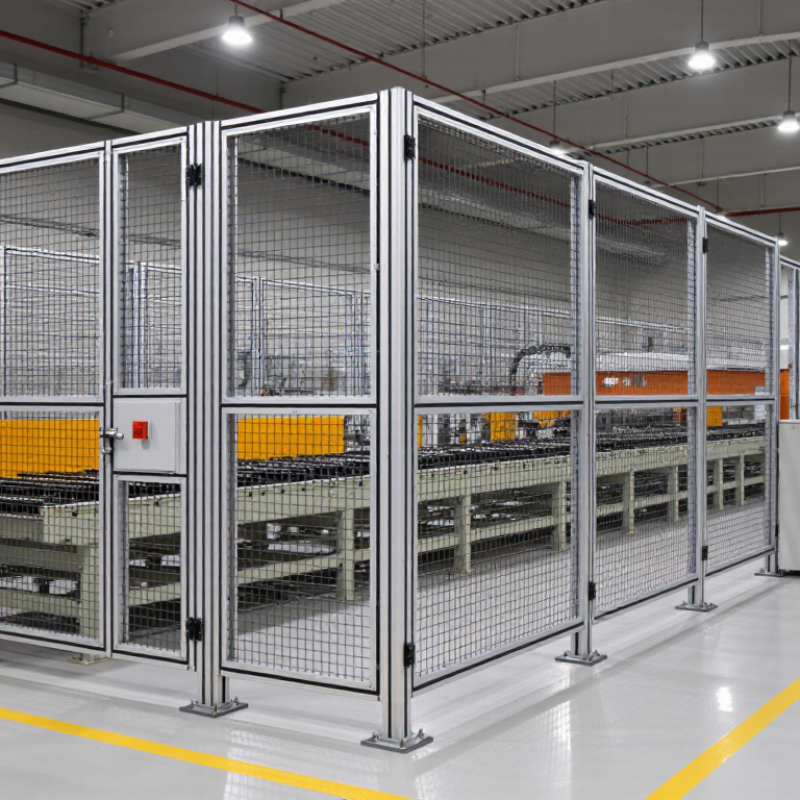
James Reason, a respected human-factors and safety expert, said, “We cannot change the human condition, but we can change the conditions under which people work.” His point applies directly to machine guarding. A well-designed fence does not rely on perfect attention. It uses steel mesh, secure posts, controlled access gates, and suitable safety switches to make unsafe entry more difficult. Operators can still see equipment through the panels. Maintenance teams can identify access points before work begins.

However, a Machine Safety Fence is not a magic wall. That matters. Poor spacing may leave reachable hazards. A damaged gate may remain unnoticed for weeks. A rushed installation can also create new obstruction risks around walkways and emergency exits. Effective protection begins with a documented risk assessment and continues through inspection, training, and maintenance. ISO 14120 can provide useful design guidance, but each machine and workplace requires professional evaluation.

Factory managers should therefore judge more than price. They should consider machine layout, access frequency, visibility, cleaning needs, future expansion, and the competence of the installer. The strongest solution is practical, inspectable, and understood by workers. It may not be perfect. It should be honest about its limits.
Why Choose a Machine Safety Fence for Your Factory?

What Is a Machine Safety Fence?

A machine safety fence is a physical barrier installed around hazardous machinery. It separates workers from moving parts, robots, cutting tools, and stored mechanical energy. Most fences use steel mesh panels, upright posts, access gates, and secure floor anchors. The mesh allows operators to see the process without reaching into danger.

Unlike a painted line or warning sign, a fence creates physical distance. It can surround a robotic cell, stamping press, conveyor transfer point, or automated assembly area. Access gates may include interlocking devices that stop equipment when opened. However, a fence alone cannot control every hazard. That limitation matters. A proper design also considers emergency stops, safe distances, material entry, cleaning, and maintenance access.

Choosing a machine safety fence requires more than measuring the machine. Engineers should identify possible reach-through points, falling objects, hot surfaces, noise, and unexpected movement. The fence should remain stable during vibration and resist casual climbing or removal. Clear visibility is useful, but it should not create distracting reflections or blind areas. Experienced maintenance teams also check whether technicians can work safely after isolating energy sources.

Even a well-designed fence can be inconvenient. If gates are poorly positioned, workers may bypass them. That is a design failure, not simply a worker problem. Regular inspections should examine loose fasteners, damaged mesh, worn hinges, and defeated interlocks. Factory conditions change, so the original risk assessment may need revision when equipment or workflows change.

How Machine Safety Fences Protect Factory Workers

Why Choose a Machine Safety Fence for Your Factory?

A machine safety fence creates a visible boundary around dangerous equipment. It helps prevent workers from reaching moving blades, gears, belts, and robotic arms. The Occupational Safety and Health Administration identifies these parts as major machine hazards. A properly designed guard also limits access to flying chips, sparks, and unexpected machine movement.

The International Labour Organization estimates that nearly three million workers die yearly from work-related accidents and diseases. Many more suffer non-fatal injuries. A fence cannot remove every risk, but it adds physical separation before an error becomes an injury. Interlocked access gates can stop machinery when opened. Clear panels improve visibility without inviting workers to step inside. During daily operations, this matters near loading points, maintenance areas, and noisy production lines.

Details decide whether protection works. The fence should match the machine’s stopping time, not only its height. Access doors need reliable latches and routine inspection. Warning signs should remain readable under oil, dust, and poor lighting. OSHA guidance also stresses that guards must prevent contact with hazardous motion while allowing safe maintenance.

A practical weakness is often overlooked. Workers may bypass a gate when production pressure rises. That behavior signals a design problem, not simply poor discipline. Factory teams should review near misses, observe real work habits, and adjust access points accordingly. The U.S. Bureau of Labor Statistics continues to report thousands of serious workplace injuries involving machinery each year, reminding managers that a fence needs training, inspection, and continuous improvement.

Key Features of an Effective Safety Fence

Why Choose a Machine Safety Fence for Your Factory?

Key Features of an Effective Safety Fence

A machine safety fence creates a clear physical boundary around hazardous equipment. In daily factory inspections, this boundary often prevents accidental entry during production. Effective fencing uses strong steel mesh or impact-resistant panels. The material should withstand vibration, minor impacts, and repeated cleaning. Open mesh is useful because operators can see moving parts without entering the danger zone. Visibility matters during shift changes and maintenance checks.

A reliable fence also needs secure doors and controlled access points. Self-closing gates reduce the chance of leaving an opening unattended. Interlocking switches can stop machinery when a gate opens. These systems require careful testing, not just installation. Emergency release features should remain accessible from inside the guarded area. Workers need clear warning signs, stable posts, and enough space to move safely around the equipment.

Good design supports real work instead of blocking it. Removable panels can simplify planned maintenance, while fixed sections discourage casual access. The fence should match the machine layout, floor condition, and cleaning routine. Poor measurements may leave gaps near conveyors or create awkward walking paths. That mistake is easy to overlook. Regular inspections should check loose bolts, damaged mesh, misaligned gates, and faulty switches. Even a well-built barrier can become unreliable when small defects remain unnoticed.

How to Choose the Right Fence for Your Factory

Why Choose a Machine Safety Fence for Your Factory?

A machine safety fence creates a visible boundary around moving equipment, robots, and automated lines. Choosing the right fence begins with a site-specific risk assessment, not a catalogue image. Observe the machine during loading, cleaning, adjustment, and maintenance. These moments often reveal hazards that normal production hides.

Measure the danger zone carefully. The fence should prevent workers from reaching rotating parts, crushing points, and discharge areas. Mesh size, panel height, and clearance must match the machine’s movement and nearby walkways. Keep sightlines open so operators can see warning lights and unusual movement. Visibility matters. A solid panel may block sound, light, or valuable visual cues.

Select gates according to real work patterns. A frequently used access point needs a strong hinge, a reliable latch, and controlled access. Where necessary, connect the gate to a safety interlock that stops hazardous motion before entry. Emergency exits should remain easy to identify and operate. Check the floor, posts, fasteners, and corrosion resistance, especially in wet or dusty areas. Noise matters. Loose panels can become a warning before failure, but relying on sound alone would be poor practice. Review the layout with operators and maintenance staff; their feedback may expose awkward gaps, blocked tools, or access routes that looked correct on paper.

Why Choose a Machine Safety Fence for Your Factory? - How to Choose the Right Fence for Your Factory

Selection Dimension Available Option or Typical Requirement Safety and Operational Value Best-Fit Factory Condition Important Selection Check
Primary Purpose Perimeter guarding for robots, presses, conveyors, machining centers, and automated production cells Creates a physical barrier that helps prevent unintended access to hazardous moving parts Areas where a risk assessment identifies access to danger zones as a foreseeable hazard Use the fence as part of a complete safeguarding system, together with safety-rated doors, interlocks, emergency stops, and safe control functions
Fence Panel Material Welded wire mesh, expanded metal, polycarbonate panels, or solid steel panels Wire mesh provides visibility and airflow; transparent panels improve observation; solid panels offer greater separation from sparks, chips, or splash Wire mesh for general automation; transparent panels for processes requiring continuous visual monitoring; solid panels for high-ejection or contamination risks Confirm resistance to impact, heat, chemicals, corrosion, and process-specific debris
Visibility and Ventilation Open mesh or clear-panel construction selected according to the process Allows operators to observe equipment status while maintaining airflow and reducing heat buildup around machinery Factories requiring frequent visual inspection, cooling airflow, or easy identification of machine faults Ensure openings do not allow a person to reach through or over the barrier into the hazard zone
Opening Size and Reach Distance Opening dimensions and fence location determined using the applicable safety-distance assessment Reduces the possibility of reaching through, over, under, or around the guard to contact hazardous parts All machinery with moving components, especially equipment with accessible pinch, shear, crush, cutting, or entanglement points Apply the current requirements of ISO 13857 or the applicable local regulation; do not select mesh size based only on appearance
Fence Height Common industrial layouts use approximately 1.4 to 2.0 m panels, subject to the hazard assessment Helps deter climbing and reaching over the barrier while maintaining practical access for maintenance planning Standard production cells, robotic work areas, and conveyor lines with normal floor-level access Calculate height and distance together; a taller fence may still be inadequate if the hazard is too close to the barrier
Access Control Hinged gates, sliding gates, lift-off panels, or controlled maintenance access points Permits authorized entry while limiting routine access to hazardous machinery Production cells requiring material loading, tool changes, cleaning, inspection, or maintenance Access gates should be monitored or interlocked when entry could expose personnel to hazardous motion
Interlock Compatibility Mechanical or electronic safety interlocks connected to the machine safety control system Can initiate a controlled stop when a protected gate is opened, helping prevent operation with the gate unsecured Machines where stopping the process before access is necessary to control residual or moving energy Verify stopping time, guard distance, reset location, fault monitoring, and the required safety performance level
Impact Protection Standard panels for normal conditions; reinforced panels or additional barriers for vehicle and material-handling areas Helps the guard withstand foreseeable contact from parts, tooling, pallets, or industrial vehicles Factories with forklifts, automated guided vehicles, heavy workpieces, or high-energy processes Separate pedestrian routes from vehicle routes where possible and assess impact loads before specifying posts and anchors
Corrosion and Hygiene Powder-coated or galvanized steel for general industry; stainless steel or suitable corrosion-resistant finishes for demanding environments Supports service life and simplifies cleaning when the fence is exposed to moisture, chemicals, dust, or washdown Food-related, chemical, outdoor, humid, or washdown production areas Check coating compatibility with cleaning agents, temperature, humidity, and process chemicals
Modularity and Expansion Bolted modular panels with adjustable posts, standard gates, and removable sections Allows layout changes, line extensions, and maintenance access without replacing the complete guarding system Factories with frequently reconfigured production lines or planned automation upgrades Confirm replacement-panel availability, connection strength, floor tolerances, and compatibility with future equipment
Installation and Floor Fixing Anchored posts installed on concrete floors using suitable mechanical or chemical anchors Provides stability and helps prevent panels from being displaced during normal operation or foreseeable contact Permanent machine cells and fixed production layouts Inspect the floor condition, anchor spacing, underground services, panel alignment, and required clearance from the machine
Compliance Framework Risk assessment supported by applicable requirements such as ISO 14120, ISO 13857, ISO 14119, and local workplace-safety regulations Helps ensure that the guard design addresses construction, reach prevention, access monitoring, and the intended safety function Factories supplying regulated markets or operating equipment with significant mechanical hazards Regulatory requirements vary by location; document the risk assessment, validation, inspection, and maintenance procedures
Recommended Choice for Most General Automation Cells Balances visibility, ventilation, maintainability, modularity, and physical separation The final design must still be verified against the machine’s hazards, stopping performance, access requirements, and applicable regulations

Installation and Maintenance Considerations

Why Choose a Machine Safety Fence for Your Factory?

A machine safety fence creates a clear physical boundary around hazardous equipment. Its effectiveness depends heavily on correct installation. Before positioning panels, assess moving parts, access points, maintenance routes, and visibility. Leave enough clearance for the machine’s full movement, including unexpected swing or material travel. Measure the floor carefully. Small height differences can make a long fence unstable. Use suitable anchors, rigid posts, and secure panel connections. Gates should close reliably and work with the machine’s safety control system. Never treat a gate as a simple doorway. It must prevent access during dangerous motion. Clear sightlines also help operators notice jams, leaks, or unusual movement.

Maintenance keeps the barrier dependable after installation. Inspect panels, posts, hinges, locks, and anchor points on a scheduled basis. Look for loose bolts, bent mesh, corrosion, and damaged coatings. Test access gates and safety devices during planned checks. Record each inspection and repair, including the person responsible. In practice, a perfect first installation is unlikely. Production changes may create new gaps or blocked access. Review the fence whenever equipment, tooling, or workflow changes. Ignoring these small changes can weaken the original protection.

Tips: Keep spare fasteners nearby. Mark inspection dates clearly. Clean around the fence base, where chips and dust often collect. Train maintenance workers to report defects immediately. A visual check alone may miss a poorly adjusted gate.

Scroll to Top