Why Choose Stainless Steel Syringes for Your Business?
For businesses that handle precise fluid transfer, the right syringe can affect workflow, consistency, and long-term costs. Stainless Steel Syringes are often considered where a durable barrel, controlled dispensing, and repeated cleaning matter. You may find them in laboratories, manufacturing settings, and other professional environments. Their value depends on the task, not just the material.
A metal body can resist wear better than some alternatives, but it does not make every syringe suitable for every fluid or process. Check the grade, seals, fittings, capacity, and manufacturer’s compatibility guidance before buying. Small details matter. A seal that degrades or a tip that does not fit can interrupt work and create avoidable waste. Reusable designs also require clear cleaning and inspection procedures. Follow the supplier’s instructions, and confirm that the syringe supports your intended cleaning method.
Cost deserves a closer look. A higher purchase price may be reasonable when a product lasts through demanding routine use, but service life varies with handling and maintenance. There is no universal best choice. Procurement teams should compare expected use, replacement needs, operator experience, and documented specifications. It is easy to focus on durability alone; I would not. This article examines where Stainless Steel Syringes can support business operations, what to verify before purchase, and which trade-offs deserve careful attention.
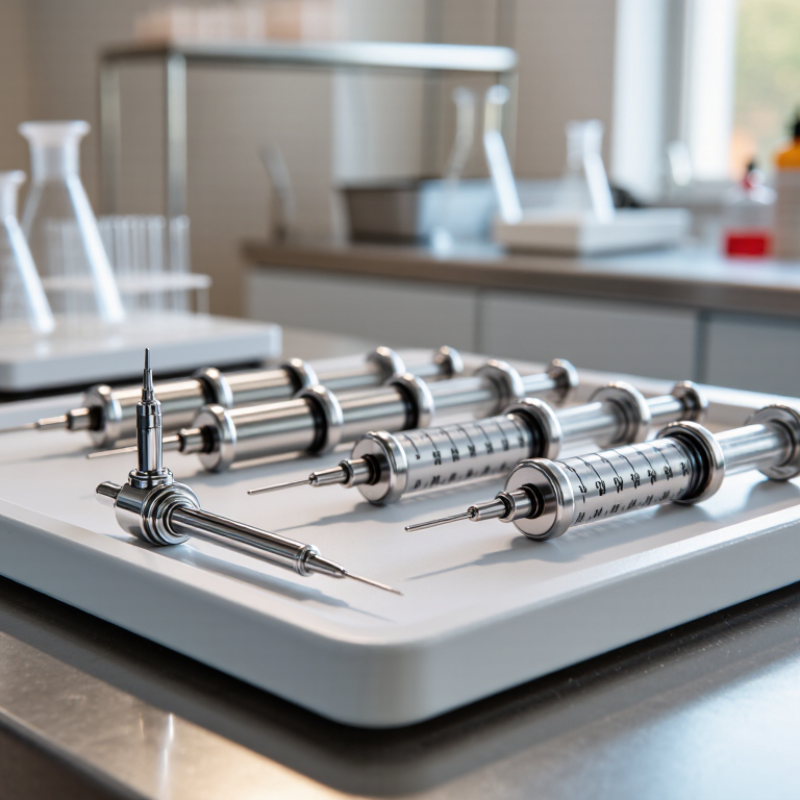
What Stainless Steel Syringes Are and Where Businesses Use Them
Stainless steel syringes are precision tools with a metal barrel and plunger, often paired with a removable tip or needle. They dispense measured amounts of liquid or paste. Unlike disposable plastic models, some are designed for repeated use, but only when their construction and cleaning process support it. That distinction matters.
Businesses use them in laboratories to transfer reagents, in workshops to apply lubricants, and in manufacturing to dose adhesives, inks, or cleaning fluids. A technician may use one to place a small bead of lubricant on a machine fitting, rather than coating nearby parts. The steel body can tolerate many routine solvents, but compatibility depends on seals, tips, and the fluid itself. It is not a universal tool. Some syringes also have graduations, though small volumes can be harder to read accurately.
Tips: Match the syringe material and seal to the fluid, then check the manufacturer’s specifications. Test dispensing with the actual substance before routine use. Clean and dry reusable parts fully, and inspect the plunger for wear. A stiff plunger is easy to overlook; it can affect control.
Why Choose Stainless Steel Syringes for Your Business?
Stainless steel syringes are reusable dispensing tools used in laboratories, pharmaceutical production, food and cosmetics manufacturing, and industrial applications. Their suitability depends on the syringe design, fluid, and cleaning requirements.
How to read this chart: It shows commonly used sterilization temperature setpoints for steam and dry-heat processes—not a performance rating for syringes. Always confirm that a specific syringe is compatible with the chosen process and follow its manufacturer’s instructions and validated procedures.
How 316L Steel’s 16–18% Chromium and 2–3% Molybdenum Resist Corrosion
For businesses selecting stainless-steel syringes, alloy chemistry matters at the barrel, tip, and plunger. ASTM A240/A240M specifies 316L with 16–18% chromium and 2–3% molybdenum. It also limits carbon to 0.03% maximum. These are composition requirements, not guarantees of service life. Small detail, big consequence.
Chromium helps form a thin passive oxide layer on the steel surface. Molybdenum improves resistance to pitting, a localized form of corrosion that can start around chloride residue or surface damage. That matters when syringes encounter cleaning fluids, saline traces, or repeated handling. However, 316L is not corrosion-proof. Poor rinsing, trapped moisture, and scratches can still create problems.
For a more reliable purchasing decision, ask suppliers for material certification and consider testing the finished syringe, not just the raw alloy. ASTM G48 provides methods for evaluating pitting and crevice corrosion in stainless steels. Results depend on the test conditions and surface finish. A polished surface may be easier to clean, but chemistry alone cannot confirm performance in your actual process. The alloy is a strong starting point, not the whole answer.
How Validated 121°C Steam Cycles Support Reusable Syringe Workflows
Stainless steel syringes can suit businesses seeking durable, reusable equipment, but reuse depends on the device’s design and care instructions. A 121°C steam cycle is not just a temperature setting. The validated process also defines exposure time, loading arrangement, and drying conditions.
That distinction matters.
Before sterilization, clean syringes thoroughly so residue does not shield surfaces from steam. Follow the manufacturer’s instructions for disassembly, packaging, and cycle selection; not every syringe or seal is suitable for the same process. Keep the sterilizer’s cycle records, and check that the load was processed as intended.
Small details matter. After cooling, inspect the barrel, plunger movement, graduations, and any seals for damage or wear. A syringe that sticks or has unclear markings should not return to service until assessed.
In busy workflows, staff may be tempted to treat a familiar cycle as automatically reliable. It isn’t. Validated procedures need periodic review, especially when equipment, packaging, or load patterns change.
How ISO 7886-1 Tests Syringe Leakage and Graduated Capacity
Why Choose Stainless Steel Syringes for Your Business?
ISO 7886-1 provides test methods and requirements for single-use, manually operated hypodermic syringes. Check its scope before applying it to a stainless-steel model; reusable products may need additional specifications. Leakage tests examine whether air or liquid passes the piston seal under defined pressure or suction conditions. Testers look for leakage and unwanted plunger movement.
Small differences matter. A seal that looks sound may still fail under pressure.
Graduated capacity is checked by comparing marked volumes with measured water volume. In a controlled gravimetric test, water is weighed and its mass is converted to volume, accounting for temperature. The plunger’s reference position matters; even a slight misalignment can affect the reading.
Not just appearance. For business buyers, ask for test records, calibration details, and clear identification of the syringe type tested.
Stainless steel alone does not prove measurement accuracy or leak resistance. A laboratory result is useful, but it cannot capture every condition in daily handling. That limitation deserves attention.
How Reuse, Reprocessing, and Service Life Shape Procurement Costs
For a business comparing syringe options, the purchase price tells only part of the story. A stainless steel syringe may cost more upfront, but repeated use can spread that expense across many jobs. The real value depends on how often it is used, how quickly it can be reprocessed, and how well it holds up. That varies by workplace.
Reprocessing takes labor, equipment, and time. Staff need to follow the manufacturer’s cleaning and sterilization instructions, then check that each syringe is ready for its next use. A narrow barrel or stubborn residue can slow the routine. Those minutes add up. If reprocessing interrupts production, a lower-cost disposable option may make more sense for that task.
Service life should be measured, not guessed. Keep simple records of use, maintenance, and replacements. Inspect barrels, graduations, plunger movement, and seals for damage or inconsistent dosing. Stainless steel can be durable, but it is not indestructible; seals may wear, and harsh handling can shorten useful life. It is easy to assume a reusable tool always saves money. Sometimes it does not. Compare the purchase price with reprocessing labor, downtime, and replacement parts before setting order quantities.