


NEWS at Quanex
See the latest news, posts and events from Quanex about our business, the industry, our people and more.
2026 Best Back Patio Doors for Global Buyers?
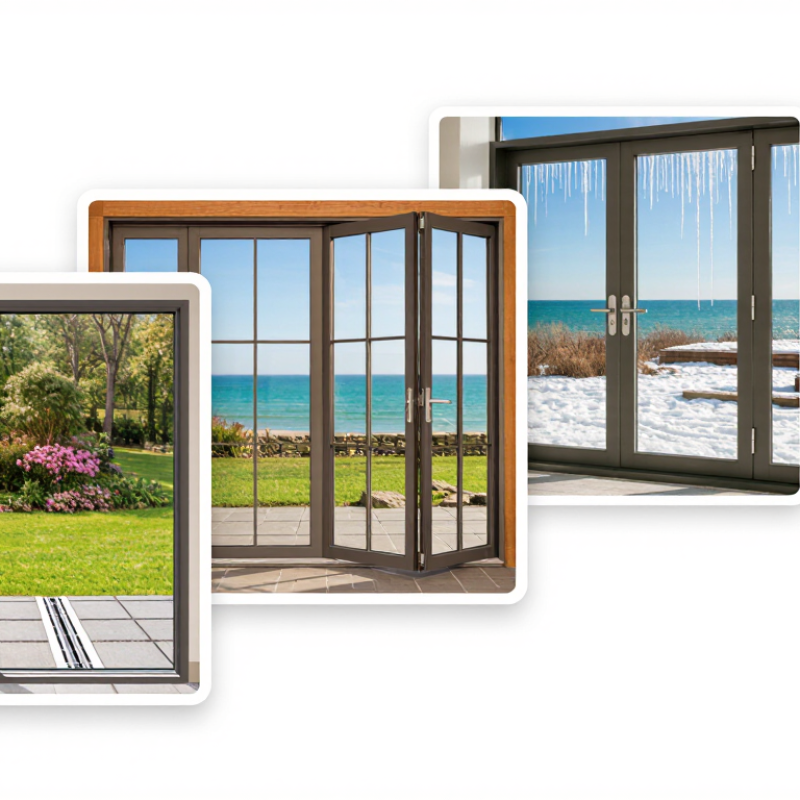
Choosing the right back patio doors in 2026 requires more than comparing glass sizes and showroom prices. Global buyers must consider climate, installation quality, security, accessibility, energy performance, and long-term maintenance. A coastal home in Australia faces salt air, while a northern property may need stronger insulation against freezing temperatures. One design cannot suit every location.
This guide examines sliding, folding, French, and multi-panel systems for practical residential use. It considers frame materials, glazing options, drainage details, threshold heights, hardware durability, and replacement-part availability. Clear manufacturer specifications matter. So do verified warranties and independent installer feedback. Buyers should also confirm local building requirements before ordering, because ventilation, safety glazing, wind ratings, and thermal standards differ between regions.
No door is perfect. A wide opening may provide beautiful garden views, yet it can reduce wall space for furniture. Large glass panels can brighten a room, but they may increase heat gain without suitable coatings or shading. That trade-off deserves honest attention. Product photos rarely show the difficult details, such as uneven thresholds, blocked drainage channels, or difficult-to-replace rollers. Reliable decisions come from comparing documented performance with real installation conditions. This overview aims to help homeowners, designers, and trade buyers ask better questions, avoid attractive but unsuitable features, and select back patio doors that remain practical beyond the first season.
What Defines a High-Quality Back Patio Door in 2026
A high-quality back patio door in 2026 should protect comfort, security, and long-term energy performance. The U.S. Department of Energy reports that windows can cause 25% to 30% of residential heating and cooling energy use. Large glass doors deserve similar attention. Look for low-emissivity glazing, insulated frames, warm-edge spacers, and tested weather seals. NFRC labels provide measurable U-factor and solar heat gain coefficient data. Lower U-factor usually means better insulation.
Real-world quality also appears in small details. A strong sliding panel should move smoothly without rattling. Multi-point locks, reinforced meeting rails, and corrosion-resistant hardware improve security. Water resistance matters near exposed decks. Air-leakage testing matters too, especially in windy coastal regions. ENERGY STAR performance requirements vary by climate zone, so one specification does not fit every country. A door designed for a cool mountain home may overheat a sunny tropical room. I would not judge quality by glass size alone.
Tips: Ask for NFRC or equivalent test data, not vague efficiency claims. Check the installation sill before choosing the door. Poor drainage can defeat excellent materials. Confirm replacement rollers and seals are available locally. Small gaps often become expensive problems. Also inspect the threshold with wet-weather performance in mind. In practice, perfect-looking doors sometimes reveal weak locks, noisy tracks, or condensation after installation. That is an uncomfortable reminder: product testing and careful installation must work together.
2026 Best Back Patio Doors for Global Buyers? - What Defines a High-Quality Back Patio Door in 2026
A practical specification guide for comparing sliding and hinged patio doors across different climates, building codes, and installation conditions.
| Evaluation Dimension | High-Quality 2026 Benchmark | Relevant Test or Reference | Why It Matters to Global Buyers | Recommended Buyer Check |
|---|---|---|---|---|
| Thermal Insulation | Whole-door U-factor of approximately 0.20–0.30 Btu/h·ft²·°F for high-performance products, where local code and climate make this level practical. | NFRC U-factor rating, or U-value reported in W/m²·K under the applicable regional method. Lower values indicate better insulation. | Reduces heat loss in cold climates and helps limit cooling loads in mixed or temperate climates. | Compare the complete door assembly, not only the center-of-glass value. Confirm whether the rating includes the frame, sash, hardware, and threshold. |
| Solar Heat Management | Select a solar heat gain coefficient suited to the climate: lower values for hot, sunny regions; moderate or higher values may benefit cold climates with useful winter sun. | SHGC under NFRC or g-value under European calculation methods. Values normally range from 0 to 1. | Controls unwanted summer heat while preserving daylight and, in some regions, passive solar gain. | Do not select glazing by U-factor alone. Review orientation, shading, latitude, and local cooling requirements. |
| Glazing Configuration | Low-emissivity double glazing as a practical baseline; triple glazing for severe cold, high altitude, or very low-energy projects. | Look for declared glass build-up, spacer type, gas fill, low-e coating position, and safety-glazing compliance. | Glazing is usually the largest thermal and acoustic area of a patio door. | Request the exact glass specification, including thickness, laminated or tempered construction, gas fill, and visible transmittance. |
| Air Leakage | A low tested air-leakage result appropriate to the local certification class; premium doors should demonstrate repeatable laboratory testing. | Air-infiltration testing may be reported under ASTM, EN, or other national methods. Test units and rating formats are not directly interchangeable. | Limits drafts, dust, humidity movement, and conditioned-air loss. | Ask for the test pressure, unit size, operating type, and laboratory report rather than relying on marketing terms such as “airtight.” |
| Water Resistance | A tested water-performance level suitable for the site’s rainfall, exposure, wind-driven rain, and installation height. | Water penetration may be evaluated under AAMA/WDMA/CSA, ASTM, EN, or local standards. | Patio doors are vulnerable to water entry at the sill, corners, interlocks, and transitions to the wall. | Confirm the tested water pressure, drainage design, sill pan requirement, and whether the test applies to the selected size. |
| Wind and Structural Performance | A declared design-pressure rating based on the project’s wind zone, building height, exposure, and opening dimensions. | Look for a regional structural rating such as design pressure, wind-load class, or equivalent declared performance. | Maintains operation and weather resistance during strong winds and pressure changes. | Provide the supplier with exact width, height, configuration, location, and floor level before requesting a quotation. |
| Security and Forced-Entry Resistance | Multi-point locking, reinforced keep areas, anti-lift protection, impact-resistant hardware, and security glazing where risk justifies it. | Depending on the market, relevant references may include EN 1627, PAS 24, ASTM impact testing, or local security requirements. | Large glazed openings require coordinated protection at the lock, frame, glass, rollers, and track. | Check that the active and fixed panels are secured, the lock is compatible with the frame, and the door cannot be lifted from the track. |
| Threshold and Accessibility | A low-profile, thermally improved threshold with effective drainage; use a flush or reduced-height transition where accessibility rules require it. | Review applicable accessibility provisions, local building regulations, and the door’s water-performance limitations. | Improves everyday usability for children, older adults, wheelchair users, and moving equipment across the opening. | Balance low-step access with weather resistance. Confirm finished-floor height, exterior drainage, and threshold detailing before installation. |
| Frame and Thermal Break | Thermally broken aluminum, engineered fiberglass, composite, or well-designed uPVC frames with continuous seals and stable corners. | Compare whole-product U-value, condensation resistance, material declarations, and frame-section details. | Frame material affects heat transfer, dimensional stability, corrosion resistance, and long-term operation. | For coastal or high-humidity locations, verify corrosion protection, fastener material, drainage paths, and finish warranty conditions. |
| Hardware and Operating Life | Smooth-running rollers or hinges, adjustable components, replaceable weather seals, and documented cycle testing. | Ask for hardware load capacity, cycle-test information, maintenance instructions, and spare-part availability. | Patio doors are frequently operated and can become difficult to move when rollers, tracks, or hinges wear. | Check the panel weight, roller material, adjustment range, track protection, and availability of replacement parts in the destination market. |
| Acoustic Performance | Use a tested OITC or Rw value appropriate to the noise source; upgraded laminated glazing is often more effective than simply adding glass thickness. | OITC is commonly used for exterior sound transmission in North America; Rw is used in many other markets. | Helps reduce traffic, aircraft, commercial, and neighborhood noise through large openings. | Request a complete-door acoustic rating. Glass-only values may overstate the performance of the assembled door. |
| Durability and Moisture Control | Stable materials, protected drainage channels, UV-resistant seals, durable finishes, and correctly isolated dissimilar metals. | Review finish testing, material declarations, corrosion testing where relevant, and installation-maintenance instructions. | International shipments may face strong sunlight, salt air, freeze-thaw cycles, monsoon rain, or high humidity. | Match the finish and seal package to the environment. Confirm cleaning frequency and whether drainage holes must remain unobstructed. |
| Installation Compatibility | A complete installation system including sill pan or drainage strategy, compatible flashing, anchoring guidance, and tolerances. | Installation should follow the applicable local building code and the manufacturer’s tested installation details. | Even a high-performing door can leak or lose its rating if the opening is out of square or the sill is poorly drained. | Confirm rough-opening dimensions, wall construction, exterior cladding, waterproofing sequence, sill support, and installer experience. |
| Environmental Documentation | Clear material information, recycled-content disclosures where applicable, low-emission interior materials, and documented end-of-life recyclability. | Environmental Product Declarations, responsible-sourcing documentation, and regional green-building criteria may be used where available. | Supports project sustainability goals and helps buyers compare environmental impacts beyond energy performance. | Ask for product-specific documentation rather than relying on general claims about “eco-friendly” materials. |
| Warranty and After-Sales Support | Separate, clearly written coverage for frame, glass, finish, hardware, seals, and installation; replacement parts should remain available. | Warranty terms vary by jurisdiction, product configuration, exposure, and installation method. | Cross-border buyers need predictable support when parts, glazing units, or service expertise are not locally stocked. | Check exclusions for coastal areas, oversized panels, commercial use, condensation, incorrect cleaning, and non-approved installation. |
| Best Configuration by Use Case | Sliding: limited swing space Hinged: stronger compression seals Lift-and-slide: large panels Multi-panel: wide openings | Performance depends on the tested configuration, panel count, panel size, threshold, and hardware package. | The best door type is determined by opening width, furniture layout, ventilation needs, weather exposure, and operating frequency. | Compare like-for-like tested assemblies. Do not transfer the performance of a two-panel unit to a larger multi-panel configuration without evidence. |
Related Posts
-
China Top 10 Patio Glass Doors Manufacturers?
-
What Is the Best Type of Patio Glass Door?
-
7 Essential Tips for Choosing the Perfect Patio Glass Doors for Your Home
-
The Ultimate Guide to Choosing the Best Exterior Sliding Glass Door in 2025
-
How to Choose the Best Back Patio Doors for Your Home?
-
Top 10 Back Patio Doors for Global Buyers in China?