Contact Us

Filter Close

NEWS at Quanex

See the latest news, posts and events from Quanex about our business, the industry, our people and more.

China Top Commercial Exterior Doors Manufacturers?

Choosing among China’s top commercial exterior doors manufacturers requires more than comparing catalog photos or export claims. A reliable review should examine thermal performance, air leakage, water resistance, wind-load testing, fire documentation, and after-sales support. These details matter at a hotel entrance, a warehouse loading bay, or a glass office lobby exposed to driving rain.

The International Energy Agency reports that buildings consume about 30% of global energy and produce roughly 26% of energy-related emissions. Exterior doors form only one part of the building envelope. They still influence infiltration, comfort, maintenance, and operational costs. Market research from Grand View Research and MarketsandMarkets also indicates continued growth in commercial door demand, driven by construction, renovation, security upgrades, and energy-efficiency requirements. Their market definitions differ, however. Direct comparisons can be misleading.

This guide evaluates Chinese suppliers through practical evidence rather than marketing language. It considers manufacturing experience, project references, export capability, testing records, customization, and replacement-part availability. Relevant benchmarks may include EN 14351-1, ASTM performance methods, local building codes, and documented fire-rating tests. ISO 9001 certification can support process control, but it does not prove that every door performs well. That distinction is easy to miss.

A strong supplier should explain frame materials, glazing specifications, hardware brands, drainage design, and installation tolerances. Ask for test reports tied to the actual model, not a similar sample. No ranking is perfect. Product quality may vary between factories, batches, and installation teams. The following overview therefore presents a practical shortlist of China’s leading commercial exterior doors manufacturers, while encouraging buyers to verify technical evidence before signing a contract.
China Top Commercial Exterior Doors Manufacturers?

What Defines a Top Commercial Exterior Door Manufacturer in China?

A top commercial exterior door manufacturer in China is defined by more than factory size or export volume.

Real expertise appears in how the team studies a building’s climate, traffic flow, security needs, and installation conditions. A coastal project may require corrosion-resistant hardware, while a busy retail entrance needs durable hinges, strong closers, and reliable weather seals.

Details matter.

Manufacturing control should be visible at every stage.

Engineers should verify frame thickness, thermal-break design, glass configuration, and drainage paths before production. Sample doors should undergo repeated opening cycles, water testing, air-leakage checks, and impact assessments where required. Clear test records are important. So is traceable material documentation. A capable supplier can explain why a specification works, not simply quote a low price.

Clear test records are important.

So is traceable material documentation.

Site experience also separates dependable manufacturers from ordinary factories.

Accurate shop drawings, protected packaging, installation guidance, and responsive replacement support can prevent expensive delays. Experienced teams usually ask difficult questions about wall tolerances, threshold height, wind exposure, and maintenance access. That takes time.

Yet no manufacturer is perfect. Small drawing errors or unclear handover notes can still occur, especially on complex projects. Reliable companies admit these weaknesses, correct them quickly, and improve their inspection process. Their authority comes from consistent evidence, practical communication, and doors that continue performing after installation.

Main Types of Commercial Exterior Doors Made in China

Main Types of Commercial Exterior Doors Made in China

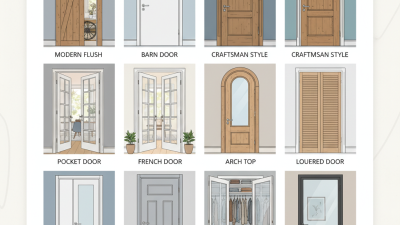
China’s commercial door manufacturers produce several practical exterior systems for offices, retail spaces, hotels, and factories. Aluminum framed glass doors remain common because they provide daylight, visibility, and a clean entrance. Thermal-break aluminum frames can reduce heat transfer, although performance depends on the frame design and installation quality.

Steel doors serve locations needing stronger impact resistance and controlled access. They may include insulated cores, panic hardware, or tested fire-rated assemblies. Specifications must be checked carefully. A fire-rated leaf alone does not make the complete entrance fire-rated. The frame, hardware, seals, and installation must match the approved system.

Automatic sliding doors support busy entrances and improve accessibility. Sensors, emergency release features, and regular maintenance matter more than appearance. Stainless steel doors suit hospitals, food facilities, and coastal areas where hygiene and corrosion resistance are important. Industrial sites may use sectional overhead doors or high-speed fabric doors for frequent vehicle movement.

Weather conditions should guide selection. Coastal projects need suitable coatings and corrosion-resistant fittings. Cold regions require effective seals and insulated glazing. Wind, rain, traffic flow, and security needs should be reviewed before ordering. A low quotation can hide weak hardware or unclear testing documents. No catalog is perfect. Request drawings, material details, test reports, and installation guidance from the manufacturer, then confirm them with the local project requirements.

Leading Chinese Manufacturers and Their Product Specialties

China’s commercial exterior door manufacturers cover several practical specialties. Many focus on aluminum-framed glass doors for offices, malls, and hotel entrances. These systems often combine slim profiles, insulated glass, and weather-resistant coatings. Other factories specialize in galvanized steel doors for warehouses, schools, and service buildings. Their strengths usually include reinforced cores, adjustable hinges, and durable powder finishes.

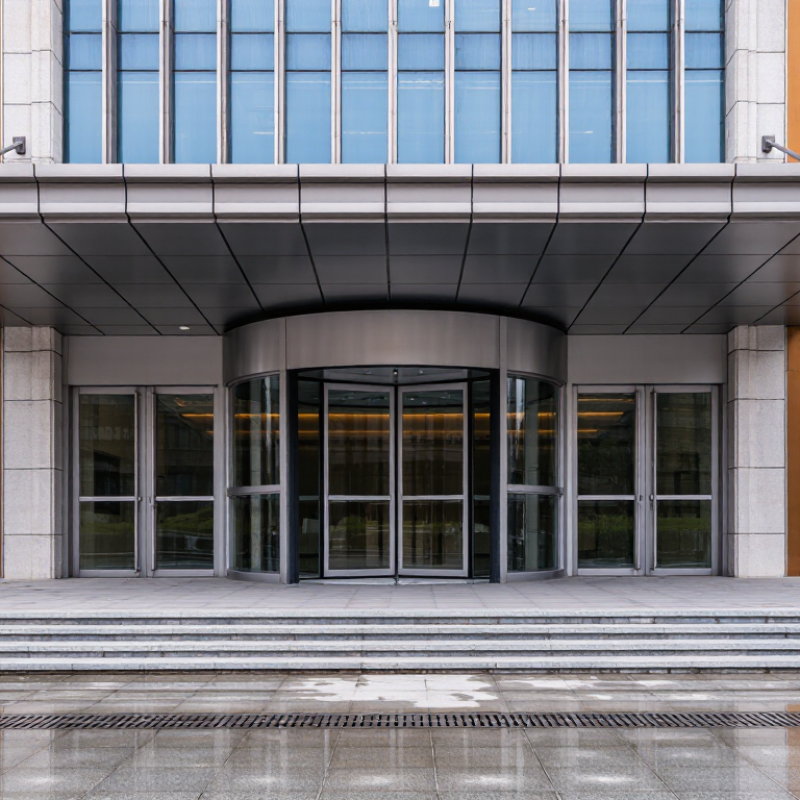
Some manufacturers produce stainless steel entrances for coastal projects and high-traffic areas. Others develop automatic sliding doors, revolving doors, and customized oversized systems. Reliable suppliers should provide material samples, hardware specifications, production drawings, and test records. Experienced buyers also inspect welding quality, corner joints, drainage paths, and seal compression. A polished showroom is not enough. Factory controls matter more.

Tips: Request a complete door schedule before comparing prices. Confirm opening size, wind exposure, fire requirements, glass type, and hardware grade. Ask for a physical sample when the project is complex. Check references from similar climates and building types. A cheap quotation may exclude installation details or protective packaging. No manufacturer is perfect, and even strong factories can miss small requirements. Careful drawings and repeated inspections reduce costly surprises.

China Top Commercial Exterior Doors Manufacturers? - Leading Chinese Manufacturers and Their Product Specialties

Manufacturer Category Primary Product Specialty Typical Materials Common Commercial Applications Customization Capability Relevant Standards or Tests
Profile A Aluminum-framed commercial entrance doors 6063-series aluminum profiles, tempered or laminated safety glass, stainless-steel hardware Office buildings, retail stores, hotels, schools, and public facilities Single or double leaves, sidelights, transoms, powder coating, anodizing, and project-specific dimensions EN 14351-1, ASTM E283 air leakage, ASTM E331 water penetration, and ASTM E330 structural performance where specified
Profile B Thermally broken aluminum doors Insulated aluminum profiles, polyamide thermal barriers, double or triple glazing Energy-conscious commercial buildings and façades in hot or cold climates Low-emissivity glass, insulated glazing units, weather seals, concealed drainage, and multiple thermal-break configurations Thermal transmittance calculations, air and water resistance testing, and project-specific energy-code requirements
Profile C Stainless-steel and steel commercial doors 304 or 316 stainless steel, galvanized steel, mineral wool cores, and safety glazing Coastal buildings, hospitals, laboratories, food-processing areas, and industrial facilities Brushed or polished finishes, corrosion-resistant hardware, vision panels, kick plates, and hygienic flush surfaces Corrosion-resistance requirements, impact testing, air and water performance testing, and applicable hygiene specifications
Profile D Fire-rated metal doors and frames Galvanized steel or stainless steel, fire-resistant core, intumescent seals, and certified hardware Stairwells, plant rooms, electrical rooms, corridors, warehouses, and commercial kitchens Single or double fire doors, vision panels, panic exit devices, smoke seals, and fire-rated glazing systems GB/T 12955, EN 16034, UL 10C, NFPA-related project specifications, and certified fire-resistance testing
Profile E Automatic sliding and swing entrance doors Aluminum profiles, laminated or tempered glass, stainless-steel components, and electronic operators Shopping centers, airports, hotels, hospitals, supermarkets, and office entrances Motion sensors, access-control integration, emergency break-out functions, safety sensors, and curved or telescopic layouts EN 16005, ANSI/BHMA A156.10, safety-force testing, emergency-operation requirements, and local electrical regulations
Profile F Hermetic, hygienic, and healthcare doors Powder-coated steel, stainless steel, aluminum, seamless panels, and flush-mounted hardware Operating rooms, cleanrooms, laboratories, pharmacies, and medical service areas Sliding or swing operation, airtight seals, vision panels, antimicrobial surface options, and automatic controls Air-leakage testing, cleanroom pressure-control requirements, hygienic design specifications, and project-specific healthcare standards
Profile G Commercial glass doors and frameless systems Tempered or laminated safety glass, patch fittings, stainless steel, and aluminum channels Showrooms, retail interiors, hotel lobbies, offices, restaurants, and reception areas Pivot, hinged, sliding, or telescopic configurations with etched, tinted, low-iron, or decorative glass options EN 12150 for thermally toughened glass, EN 14449 for laminated glass, safety-glazing rules, and hardware load testing
Profile H High-security and impact-resistant exterior doors Reinforced steel, stainless steel, laminated glass, multi-point locks, and heavy-duty hinges Financial facilities, data centers, government buildings, logistics sites, and restricted-access premises Access-control preparation, anti-pry frames, bullet-resistant glazing options, door closers, and customized security hardware EN 1627 resistance classes, ASTM F1233 where applicable, forced-entry testing, and project-specific security requirements

Note: Applicable certifications, performance ratings, and test results vary by model and project specification. Buyers should request current technical data sheets and third-party test reports for the exact door assembly.

Key Quality Standards and Manufacturing Capabilities to Compare

When comparing China’s top commercial exterior door manufacturers, start with measurable performance, not catalog images. Exterior doors face wind, rain, UV exposure, impact, and repeated daily cycles.

ASTM E283 evaluates air leakage, while ASTM E331 assesses water penetration under pressure. Request NFRC-certified U-factor and air-leakage results for thermal comparisons. Fire-rated assemblies should provide testing evidence under UL 10C or an applicable national standard.

Broad claims like “premium engineering” are not enough.

The International Energy Agency’s 2023 Global Status Report for Buildings and Construction states that buildings consumed about 30% of global final energy in 2022. They also produced approximately 26% of energy-related emissions. Door insulation and sealing therefore deserve serious attention.

Compare frame breaks, gasket materials, drainage design, hardware cycles, and corrosion resistance.

Manufacturing capability matters too. Check CNC accuracy, welding consistency, coating thickness, assembly inspection, batch traceability, and independent laboratory access.

Tips: Ask for complete test reports, not certificates alone. Visit the factory if possible. Inspect corner joints, seal compression, and drainage paths. Confirm sample performance matches mass production.

A polished sample can mislead. I have seen strong test data weakened by careless installation details. That is an uncomfortable but important limitation.

Also review lead-time records, replacement-part availability, and corrective-action procedures. A manufacturer that records defects openly may be more dependable than one claiming perfection.

How to Select the Right Chinese Commercial Door Supplier

Selecting the right Chinese commercial door supplier requires more than comparing online prices. In my sourcing experience, a factory’s production records reveal more than a polished catalog. Ask how long it has manufactured exterior doors, which materials it processes, and whether it controls welding, coating, and assembly in-house. A supplier should provide clear drawings, material grades, performance data, and traceable inspection reports.

Request a physical sample before approving a large order. Check the frame corners, hinge alignment, drainage paths, seals, and surface coating under natural light. Open and close the door repeatedly. Small weaknesses often appear there. Discuss wind loads, thermal movement, water exposure, hardware compatibility, packaging, and installation tolerances. A capable technical team should explain these details without vague promises.

Supplier verification also matters. Review business documents, quality procedures, factory photographs, and recent project references. When possible, arrange an independent factory audit or a live video inspection. Confirm who handles design changes, damaged deliveries, replacement parts, and warranty claims. Written communication is essential. One overlooked detail, such as the swing direction or threshold height, can delay installation for weeks. I have trusted attractive samples before, and the final batch needed correction. That experience changed my process: approve production only after signed specifications, pre-shipment inspection, and clearly recorded acceptance criteria.

Scroll to Top