NEWS at Quanex
See the latest news, posts and events from Quanex about our business, the industry, our people and more.
Why Is Screen Door Hardware Essential for Global Buyers?
For global buyers, screen door hardware is more than a collection of hinges, latches, rollers, and handles. It directly affects installation speed, user safety, product durability, and customer satisfaction. A screen door may look simple, yet a weak roller or poorly fitted latch can create returns within weeks.
Experienced purchasers examine the complete hardware system before approving a supplier. They compare metal thickness, surface treatment, screw quality, corrosion resistance, and compatibility with different door frames. A coastal project may require stronger protection against salt air. A dry inland market may prioritize dust resistance and smooth operation. Packaging also matters because loose screws and bent tracks often arrive after long transport.
Reliable sourcing requires more than reading a product catalogue. Buyers should request samples, installation instructions, material details, and consistent inspection records. Testing a latch repeatedly can reveal problems that photographs hide. Checking several production batches can expose uneven finishing or changing dimensions. Small parts matter. Details decide.
Still, not every purchasing decision is perfect. Some buyers focus heavily on unit price and overlook labor costs or replacement difficulty. That assumption can fail. A slightly higher-quality screen door hardware set may reduce complaints, installation delays, and after-sales pressure. Suppliers also need to communicate clearly about tolerances, packaging, and intended use. Practical evidence, transparent specifications, and responsive support help global buyers choose with greater confidence, even when market conditions and product requirements differ.
What Is Screen Door Hardware and What Does It Include?
Why Is Screen Door Hardware Essential for Global Buyers?
What Is Screen Door Hardware and What Does It Include?
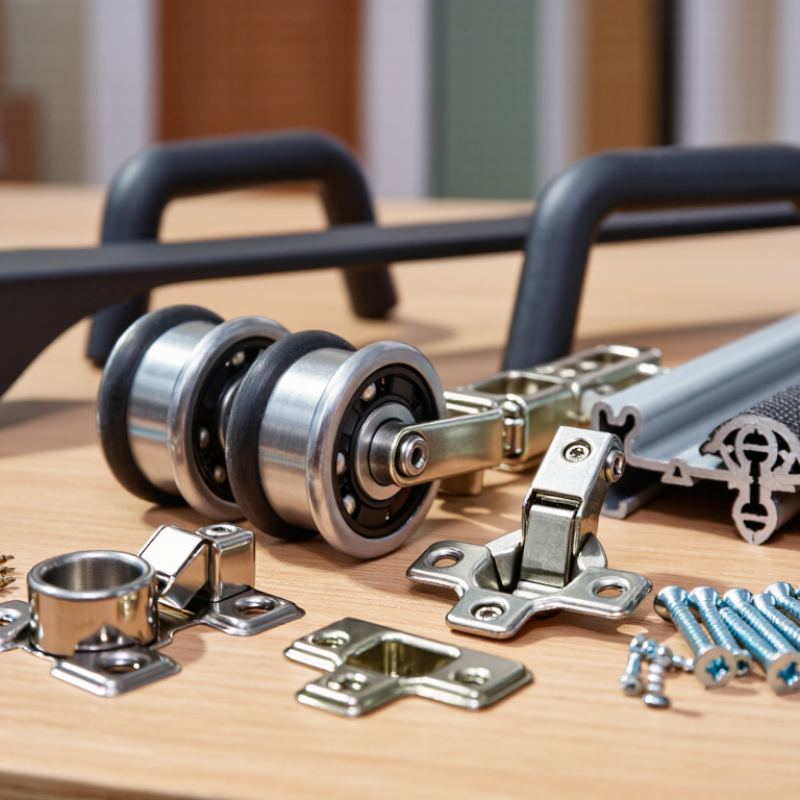
Screen door hardware is the working system behind a screen door’s movement, closure, and stability. It usually includes hinges, rollers, tracks, handles, latches, springs, closers, corner joints, screws, spline, and weather seals. Some product sets also include adjustable frames or replacement mesh accessories. The category is less tidy than many catalogs suggest. A roller kit may not fit every track.
For global buyers, specifications matter more than appearance. Aluminum and stainless-steel parts suit humid or coastal areas better than untreated steel. Nylon rollers can reduce operating noise, but they may wear faster under heavy use. A latch should match the door thickness and closing force. Small parts matter. Fit is everything.
The U.S. Department of Energy reports that windows can account for 25% to 30% of residential heating and cooling energy use. Screen doors are not primary insulation products, yet damaged seals and poor alignment can increase drafts around openings. The Freedonia Group’s door and window hardware analysis also identifies repair, replacement, and construction activity as major demand drivers. Buyers should therefore request load ratings, corrosion testing, dimensions, installation drawings, and spare-part availability. I have found that missing measurements create more problems than weak marketing claims. Still, even detailed specifications cannot replace a physical fit check.
Why Is Screen Door Hardware Essential for Global Buyers?
Screen door hardware is essential for global buyers because the door must perform beyond the showroom. Hinges, rollers, handles, and latches control daily movement. Poor hardware can cause dragging, rattling, or incomplete closing within months. Buyers should check material, load capacity, screw size, and compatibility before ordering.
Climate changes the decision. Coastal air may require corrosion-resistant metal. Humid regions can affect springs, tracks, and fasteners. Dry, dusty areas may need protected moving parts and simple cleaning access. Experienced installers also measure the frame carefully. A few millimeters can decide whether a replacement part fits properly. Packaging matters too, especially during long-distance shipping.
Reliable suppliers provide clear drawings, test information, and installation guidance. They should explain tolerances instead of promising universal compatibility. This detail builds trust. Still, specifications are not always enough. Real installation conditions can expose weaknesses that laboratory tests miss. Buyers may need sample units before placing larger orders. That extra step costs time, but it can prevent expensive rework, damaged screens, and frustrated installers. Good hardware should feel quiet, stable, and predictable during repeated use. Sometimes, the simplest design performs better.
Why Is Screen Door Hardware Essential for Global Buyers?
| Hardware Category | Typical Specification | Primary Function | Global Buyer Benefit | Key Quality Check |
|---|---|---|---|---|
| Door Hinges | Stainless steel, coated steel, or aluminum; common leaf thickness approximately 1.5–3.0 mm | Allows the screen door to open and close smoothly | Supports different door weights, climates, and installation methods | Check alignment, screw-hole spacing, load capacity, and resistance to rust |
| Spring-Loaded Hinges | Adjustable closing tension; commonly used on lightweight screen doors | Automatically returns the door to the closed position | Improves insect control and reduces energy loss from doors left open | Test spring consistency, adjustment range, and cycle durability |
| Handles and Pulls | Zinc alloy, aluminum, stainless steel, or reinforced polymer; center-to-center spacing often 70–100 mm | Provides a secure and comfortable grip | Allows buyers to match local door profiles and user preferences | Verify mounting dimensions, grip strength, surface finish, and included fasteners |
| Latch Sets | Mechanical latch with compatible strike plate; available for left- or right-hand installation | Keeps the screen door closed without requiring a key | Improves usability in residential, commercial, and rental properties | Check latch engagement, handing options, corrosion resistance, and fit tolerance |
| Sliding Door Rollers | Nylon, acetal, or metal wheel; common wheel diameters approximately 19–32 mm | Supports and guides sliding screen panels | Reduces operating effort and simplifies replacement maintenance | Measure wheel diameter, axle position, housing size, and track compatibility |
| Door Closers | Pneumatic or hydraulic models; adjustable closing speed on many designs | Controls closing motion and prevents uncontrolled impact | Enhances safety, ventilation control, and product service life | Assess closing force, temperature performance, mounting template, and leakage |
| Magnetic Catches | Magnet-and-strike construction; compact surface-mounted or recessed designs | Maintains light screen doors in the closed position | Offers simple installation for retrofit and replacement projects | Check magnetic holding force, air gap, alignment, and outdoor durability |
| Screen Retainer Spline | Flexible PVC, rubber, or thermoplastic spline; common diameters approximately 3.0–6.4 mm | Secures mesh inside the door frame groove | Enables local mesh replacement and reduces repair costs | Match spline diameter to groove width and confirm flexibility after aging |
| Corner Keys and Frame Connectors | Molded polymer or die-cast metal; designed for common frame profiles | Joins frame sections and maintains panel geometry | Supports modular production, flat-pack shipping, and field assembly | Verify profile dimensions, insertion depth, corner angle, and impact strength |
| Push Bars and Kick Plates | Aluminum or stainless steel protective components; thickness commonly about 0.8–1.5 mm | Protects the lower door area and provides a convenient push surface | Improves durability in high-traffic buildings and public facilities | Check edge safety, fastener position, surface finish, and panel compatibility |
| Fasteners and Installation Kits | Stainless steel or coated screws, clips, brackets, and spacers in metric or imperial sizes | Secures hardware to wood, aluminum, steel, masonry, or composite frames | Reduces installation errors across different regional construction systems | Confirm thread standard, screw length, coating, corrosion resistance, and kit completeness |
Note: Specifications shown are common industry ranges for purchasing comparison. Exact dimensions should be confirmed against the door profile, frame opening, installation environment, and applicable local building requirements.
How Do Materials and Designs Affect Hardware Performance?
Why Is Screen Door Hardware Essential for Global Buyers?
How Do Materials and Designs Affect Hardware Performance?
Material choice decides whether screen door hardware survives a coastal balcony, a humid warehouse, or a dry inland home. Stainless steel resists corrosion better than ordinary steel, while aluminum keeps weight low. Zinc alloy can provide strength and a smooth finish, but poor coating may blister under ultraviolet exposure. Nylon rollers reduce noise, although cheap nylon may deform under repeated heat. Small details matter.
The U.S. Department of Energy reports that windows account for about 25%–30% of residential heating and cooling energy use. Screen hardware does not create insulation, but accurate closing reduces gaps, rattling, and unwanted air movement around the frame. UNEP’s 2023 Global Status Report also states that buildings consume about 30% of global final energy. Better-fitting doors support practical efficiency, even if their effect is modest.
Design performance depends on geometry, not appearance alone. A correctly positioned hinge keeps the panel aligned after thousands of openings. Adjustable rollers compensate for uneven installation. Drainage paths prevent trapped water from attacking screws and springs. ASTM B117 salt-spray testing can reveal coating weaknesses, but it cannot predict every real climate. I would not treat test hours as absolute truth. Buyers should request material grades, load data, cycle testing, and replacement-part details. A beautiful handle is still a failure when the mesh frame sags after one wet season.
What Standards and Compatibility Factors Should Buyers Check?
Screen door hardware is a small component with a large effect on daily comfort. For global buyers, checking standards and compatibility should come before comparing prices. A handle may look universal, yet its screw spacing can differ by only a few millimeters. That small gap can stop installation.
Buyers should confirm the door’s material, frame thickness, opening direction, and existing mounting holes. Aluminum, timber, and composite frames often require different fasteners. Measure the stile width, hinge position, latch height, and clearance around the mesh.
Ask suppliers for dimensional drawings, installation instructions, and tolerance ranges. A useful check is whether the hardware supports the door’s weight without pulling the frame out of alignment.
Standards also need careful review.
Depending on the destination market, buyers may request evidence for corrosion resistance, cycle testing, load performance, and coating durability. Relevant regional or international standards can guide testing, but one certificate does not prove universal suitability. Salt spray exposure matters near coasts. Cold-weather performance matters in northern regions. Check whether the test method matches the real installation environment.
I have seen projects fail because buyers approved appearance samples without testing the full assembly. The latch worked on a workbench. It dragged after installation. That lesson is easy to miss.
Confirm mesh thickness, seal compression, screw type, replacement parts, and packaging protection. Compatibility is not just a product feature; it is a measured relationship between hardware, door, climate, and installer skill.
How Can Global Buyers Choose Reliable Screen Door Hardware?
Reliable screen door hardware matters because a weak hinge, latch, or roller can fail within months. In practical sourcing, buyers should inspect more than polished samples. Check the alloy, coating thickness, screw quality, closing force, and replacement availability. Small details matter. A latch that feels smooth in a showroom may loosen after repeated use, especially near humid coastlines.
The WHO World Malaria Report 2023 recorded 249 million malaria cases in 2022 across 85 countries. A screen door is not medical protection, but dependable hardware helps maintain a consistent physical barrier.
Buyers should request cycle-test records, corrosion-test results, dimensional drawings, and batch traceability. ISO 9227 salt-spray testing can help compare corrosion resistance, while ISO 9001 certification can indicate controlled processes.
However, certification alone proves little about a specific product. The ISO Survey 2022 reported more than 1.2 million ISO 9001 certificates worldwide. That number makes careful verification even more important.
Tips: Order pre-production samples and test them with the exact frame and mesh. Open and close each unit repeatedly. Check whether screws strip, rollers wobble, or springs lose tension. Ask for inspection photos and measurable acceptance limits. Confirm packaging for long-distance transport, including moisture protection and spare parts. A mistake I would reconsider is choosing the lowest unit price. Freight, returns, and installation delays can cost more than stronger hardware. Also compare local standards before approving the final specification.
Related Posts
-
How to Choose Screen Door Hardware in 2026?
-
How to Choose Window Components for Your Next Project?
-

China Top Commercial Entry Doors for Global Buyers?
-
Essential Tips for Choosing the Right Screen Door Frame?
-

China Top 10 Exterior Door Seal Manufacturers?
-
Best Screen Door Hardware Options for Your Needs?