NEWS at Quanex
See the latest news, posts and events from Quanex about our business, the industry, our people and more.
10 Best Exterior Sliding Glass Doors to Buy in 2026?
Choosing among the 10 best exterior sliding glass doors to buy in 2026 means looking beyond the glass. A door can feel effortless in a showroom, then drag when its track collects grit or its frame meets a damp, uneven opening. Frame material, glass options, weather seals, hardware, and installation all affect comfort and long-term performance. The right choice depends on your climate, home, budget, and how often the doorway gets used.
Carpenter and installation educator Gary Katz’s guidance can be paraphrased this way: “A sliding door performs only as well as its installation and the wall around it.” That point matters. Even an impressive product needs a properly prepared opening, careful flashing, and a level track. Look closely at published performance ratings, warranty terms, replacement-part availability, and the installer’s experience—not just the advertised glass area.
Small details count. A low threshold may ease access, while a sturdy screen can make summer ventilation more practical. Compare how smoothly each panel moves and whether the lock feels secure without force. No single model suits every home, and product specifications do not tell the whole story. This guide compares leading options by design, durability, efficiency, operation, and value, while noting where trade-offs remain. Check current specifications with manufacturers before buying; product lines and configurations can change.
What Exterior Sliding Glass Doors Are and How They Work
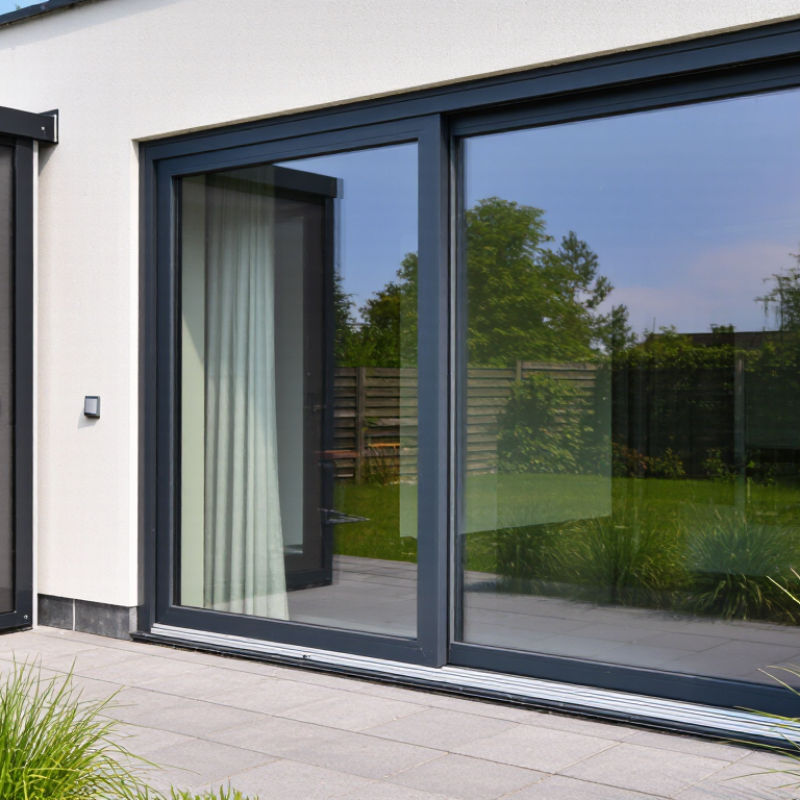
An exterior sliding glass door connects an indoor room with a patio, deck, or garden through large glazed panels. Unlike a hinged door, it opens by moving one panel sideways along a track. One panel usually stays fixed while the other slides past it. Some designs allow both panels to move.
The moving panel rides on small rollers beneath its frame. Turning an adjustment screw can raise or lower the panel slightly, helping it glide and meet the frame evenly. The track guides its path, while weather seals around the edges help limit drafts and rain. A latch holds the panels together when closed; it is not a substitute for checking that the door is properly aligned.
The glass brings in daylight. It also makes fingerprints and dust easy to spot. Many doors use insulated glass to reduce heat transfer, and safety glazing is commonly used in doors and nearby areas. Actual requirements depend on the building and location. Frame material, glass thickness, and installation quality all affect performance.
A small track problem can become annoying fast. Grit may make the door drag, while worn rollers can cause uneven movement. Keep the track clear and check the seals occasionally. Even a well-made door may feel stiff if its frame was installed out of square.
How to Evaluate Exterior Sliding Glass Doors in 2026
When evaluating an exterior sliding glass door in 2026, start with its verified performance label, not its frame color. The U.S. Department of Energy estimates that heat gain and loss through windows account for about 25–30% of home heating and cooling energy use. That figure covers windows broadly, not one door, but it shows why thermal ratings matter. Check the National Fenestration Rating Council label for U-factor and solar heat gain coefficient. Lower U-factor generally means less heat transfer; the right solar-gain rating depends on your climate and window orientation.
Then inspect the details a showroom display can hide. Open and close the door several times; it should glide without sticking or rattling. Look for continuous weatherstripping, a sturdy locking point, and a track with clear drainage paths. Ask for tested air-leakage and water-penetration results, plus the exact glass configuration. A low-rated door can still perform poorly if installed out of square. Installation matters.
Measure the opening yourself, then have the installer verify it before ordering. Check how the sill meets the floor, especially where wind-driven rain is common. Ask what maintenance the rollers and track need. Small details count. I would not choose by rating alone: real comfort also depends on exposure, shading, and workmanship, and those are easy to underestimate.
10 Best Exterior Sliding Glass Doors to Buy in 2026
The best choice depends on your climate, opening size, and daily use. In 2026, compare ten practical configurations: thermally broken aluminum, fiberglass, vinyl, wood-clad, and composite frames; double- or triple-pane glass; low-E coatings; laminated safety glass; multi-panel layouts; and accessible low-threshold designs. These are useful categories, not a universal ranking. A large glass panel can brighten a room, but it may also increase heat gain or reduce privacy. Check the published energy ratings and confirm that the door’s dimensions fit your existing opening.
Pay attention to more than appearance. Ask how the rollers, weather seals, and lock can be serviced. In a windy or rainy location, request performance details for air and water resistance. Verify the glass specification and frame finish with the seller, since product options can vary. One easy detail to miss is the screen: it should glide smoothly and be replaceable. A premium-looking finish is not always the most durable choice.
Tips: Measure the opening in several places, and note any unevenness. Compare installation costs, warranty coverage, and local service availability. If you can, slide a display door yourself. It should move without scraping, wobbling, or demanding a hard pull. I’d still leave room for doubt: showroom conditions rarely match a drafty, sunlit home.
Comparing Materials, Glass Types, Security, and Energy Efficiency
10 Best Exterior Sliding Glass Doors to Buy in 2026?
A good exterior sliding door should suit your climate, opening size, and daily use—not just its appearance. Vinyl frames are often low-maintenance, while fiberglass resists swelling and temperature changes. Aluminum offers slim sightlines, but its frame may transfer heat unless it includes a thermal break. Wood looks warm and feels substantial, yet needs more upkeep. There is no perfect material.
Glass choice affects comfort and safety. Double-pane units with low-emissivity coatings can reduce heat transfer; check the product’s rated performance for your climate. Tempered glass breaks into smaller pieces, while laminated glass holds fragments together after impact. Neither replaces a sound lock or careful installation. Look for secure, easy-to-operate locking hardware, sturdy rollers, and effective weather seals. Small details matter. A poorly aligned door can leak air or water, even when its glass performs well.
Tips: Measure the opening at several points, and ask how the installer will manage drainage and flashing. Compare performance ratings, not just glass descriptions. Test the lock and slide in person if possible. I’d also check the warranty’s exclusions; they can be easy to overlook.
Installation Costs, Maintenance Needs, and Selection Factors
Installation costs depend on opening size, frame material, glazing, and whether the existing frame can stay. Angi’s 2025 patio-door cost guide places many projects in the low-thousands, while larger openings, premium glass, or structural repairs can push the bill much higher. Ask for an itemized quote covering removal, flashing, insulation, disposal, and interior trim. A low bid may omit water-management details—the part you may regret later.
Energy performance deserves equal attention. The U.S. Department of Energy estimates that windows can account for 25–30% of residential heating and cooling energy use. Compare U-factor and solar heat gain coefficient, and check that ratings suit your climate. The National Fenestration Rating Council’s certified labels make product-to-product comparisons more reliable. For maintenance, inspect tracks and weep holes seasonally, clear grit with a soft brush, and check weatherstripping for cracks. Salt air and wind-driven rain can shorten hardware life.
Tips: Before buying, measure the opening at several points; older homes are rarely perfectly square. Get two or three written installation quotes, and ask how the installer will seal the sill and handle uneven framing. Keep a little budget for repairs. Existing rot is easy to miss until the door comes out.
10 Best Exterior Sliding Glass Doors to Buy in 2026? — Installation Costs, Maintenance Needs, and Selection Factors
| Door type | Typical configuration | Estimated installed cost (USD) | Maintenance needs | Best suited for | Key selection factors |
|---|---|---|---|---|---|
| 1. Standard two-panel patio slider | One fixed panel and one sliding panel; commonly available with vinyl, fiberglass, wood, or aluminum frames. | $1,500–$4,500 | Keep the track clear of grit; clean rollers and inspect weatherstripping periodically. | Typical patios, balconies, and homes replacing a similar-size door. | Confirm rough-opening dimensions, glass type, frame material, screen options, and whether the existing frame can be reused. |
| 2. Three-panel wide slider | Usually two fixed panels and one operating panel, or a configuration with two moving panels. | $3,000–$8,000 | Clean the longer track and inspect more panel seals than on a two-panel unit. | Rooms needing a wider view or a larger opening without a full multi-panel system. | Check available wall space, panel operating direction, structural support, and the clear opening when the door is open. |
| 3. Four-panel center-opening slider | Two fixed outer panels with two sliding center panels; often used for broad openings. | $4,500–$11,000 | More track and hardware require regular cleaning and adjustment checks. | Large living areas opening onto a deck or covered outdoor space. | Measure the full opening carefully and confirm that the floor and header can support the door system. |
| 4. Three-panel stacking slider | One or more panels slide and stack behind a fixed panel, creating a wider passage. | $6,000–$15,000 | Keep tracks free of debris; have rollers and alignment checked if panels become difficult to move. | Homes seeking a broad indoor-outdoor opening with fewer panels than a large multi-slide system. | Compare the open-panel stack location, threshold design, weather sealing, and required installation clearance. |
| 5. Four-panel multi-slide system | Multiple panels move along tracks and stack at one or both ends of the opening. | $8,000–$22,000+ | Tracks, rollers, interlocks, and seals need routine inspection; repairs can require specialist service. | Large remodels and new builds where maximizing the open area is a priority. | Budget for engineering, structural work, drainage, and installation; compare panel stacking layouts and locking points. |
| 6. Lift-and-slide door | Turning the handle lifts the panel slightly off its seals so it can roll; lowering the handle reseals it. | $7,000–$20,000+ | Clean the track and follow the hardware maker’s lubrication instructions; avoid forcing a misaligned panel. | Wide, heavy panels where smooth operation and strong closed-position sealing are important. | Check panel weight limits, threshold details, locking hardware, service availability, and the quality of installation. |
| 7. Pocket sliding glass door | The moving panel slides into a cavity within the adjacent wall. | $5,000–$15,000+ | Keep the exposed track clean; access to concealed rollers and hardware may be limited. | Projects where a clear, unobstructed doorway is more important than a simple replacement. | Typically requires wall and finish work. Check for utilities, structural elements, drainage, and access for future repairs. |
| 8. Impact-rated sliding door | Sliding unit tested for specified impact and pressure requirements; glazing and frame are designed as a system. | $3,000–$9,000 | Clean tracks and inspect seals; follow the specified care instructions for the glazing and hardware. | Coastal or storm-prone locations where local codes or project requirements call for impact-rated openings. | Verify local code requirements and the unit’s approved rating. Impact protection does not replace checking installation details or other required protections. |
| 9. Thermally improved aluminum slider | Aluminum frame with a thermal break to reduce heat transfer compared with a non-thermally-broken frame. | $2,500–$8,000 | Wash frame surfaces, clear tracks, and inspect seals; coastal exposure may call for more frequent hardware checks. | Contemporary designs and openings where slim frame profiles are preferred. | Ask whether the frame is thermally broken; compare whole-unit energy ratings, condensation performance, and local climate suitability. |
| 10. Fiberglass-frame sliding door | Two- or three-panel slider with a fiberglass frame; glazing options vary by product. | $2,500–$7,500 | Generally routine: clean the frame and track and inspect moving hardware and weatherstripping. | Homeowners seeking a low-maintenance frame and a balance of durability and energy performance. | Compare frame finish, glass package, available sizes, warranty terms, and the unit’s tested energy-performance ratings. |
Cost and buying note: Prices are broad U.S. planning estimates for 2026, not quotes. They can vary substantially with opening size, glass and frame specifications, removal and disposal, structural changes, finish work, location, and labor. For energy performance, compare whole-unit ratings and select glazing suited to your climate; verify applicable building and safety-glazing codes before ordering.
Related Posts
-
2026 Best Exterior Sliding Glass Door Options to Consider?
-
How to Choose Sliding Glass Door Systems?
-
What Is an Exterior Sliding Glass Door?
-
Unlocking the Benefits: How Sliding Glass Door Systems Enhance Modern Living Spaces
-
Why Choose an Exterior Sliding Glass Door for Your Home?
-
Top 10 Benefits of Exterior Sliding Glass Doors for Your Home?