


NEWS at Quanex
See the latest news, posts and events from Quanex about our business, the industry, our people and more.
How to Choose Window Systems for Global Sourcing in 2026?
Choosing window systems for global sourcing in 2026 requires more than comparing prices and profile colors. Buyers must connect climate data, building performance, manufacturing quality, and installation conditions. A window that performs well in a dry European warehouse may fail in a humid coastal project. Small details matter, including gasket compression, drainage paths, glass thickness, and packaging strength.
I have reviewed sourcing projects where attractive quotations hid costly weaknesses. One supplier offered excellent thermal figures, but the frames arrived scratched after a long sea journey. Another provided strong factory records but lacked consistent documentation for replacement parts. These experiences show why window systems should be assessed through samples, factory audits, test reports, and clear quality checkpoints. Ask for corner samples. Inspect the hardware. Test the packaging.
Performance claims also need careful interpretation. U-values, air leakage, water resistance, acoustic ratings, and solar control should match the project’s climate and intended use. Regional standards and certification requirements must be verified with qualified professionals before ordering. A reliable supplier should explain limitations, not only advertise strengths. That builds trust.
No sourcing model is flawless. Forecasts change. Ports delay shipments. Specifications can be misunderstood. A practical evaluation should therefore include lead times, minimum order quantities, warranty support, communication speed, and contingency planning. The cheapest option may become expensive after installation problems. Careful buyers compare total project risk, not just the purchase price, and keep written evidence for every critical decision.
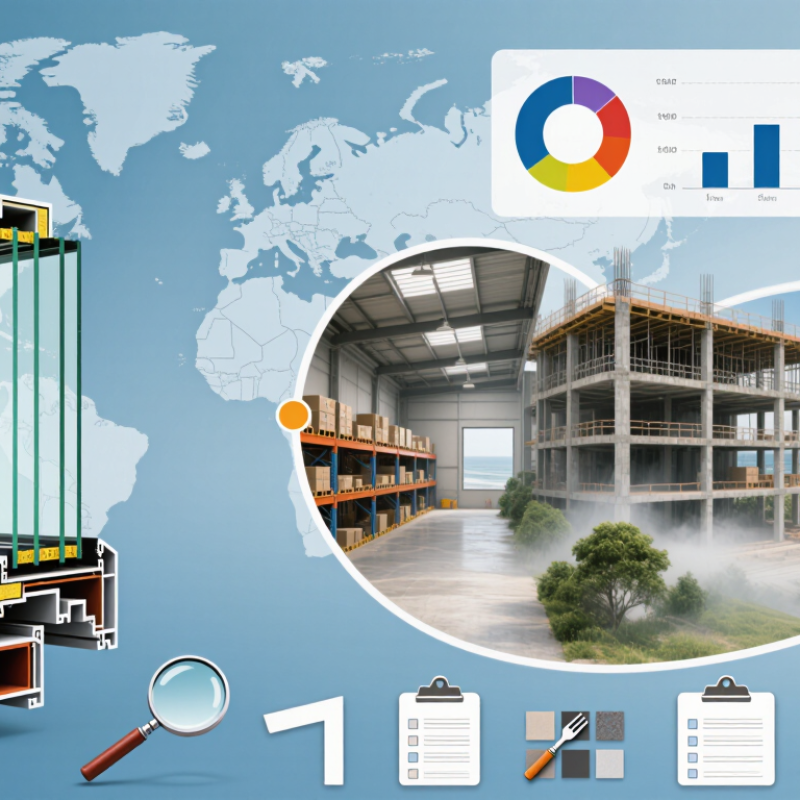
Window System Types and Their Global Sourcing Applications
Global window sourcing starts with the system type, not the lowest quotation. uPVC systems suit standardized residential projects and humid conditions, but profiles need careful UV and thermal testing. Thermally broken aluminum supports high-rise façades, slim sightlines, and stronger wind-load performance. Timber systems add warmth and insulation, although moisture control becomes critical. Hybrid systems can balance appearance, durability, and regional availability.
The application should guide the specification. The International Energy Agency reports that buildings consume about 30% of global final energy. The U.S. Department of Energy estimates that windows can cause 25–30% of household heating and cooling energy use. These figures make glazing, frame depth, air leakage, and installation quality commercial issues, not minor technical details. In hot climates, low-solar-gain glazing may reduce cooling demand. In cold regions, triple glazing and warm-edge spacers may perform better. Yet, triple glazing is not automatically superior. It can add weight, cost, and transport risk.
Tips: Request whole-window U-values, solar heat-gain data, air-infiltration results, and water-penetration tests. Check performance under the destination climate. Ask for production samples, not only catalogue drawings. Confirm spare gaskets and hardware before signing. A low-cost frame can become expensive after replacement parts, customs delays, or site rework. I have seen specifications fail because installers received beautiful units with unsuitable anchors. That weakness is easy to miss. Review packaging, stacking limits, and local installation skills with the supplier. Credible sourcing needs verified test reports, traceable materials, and a realistic correction plan.
How to Choose Window Systems for Global Sourcing in 2026? — Window System Types and Their Global Sourcing Applications
| Window System Type | Primary Frame Material | Typical Whole-Window Uw Range (W/m²K) |
Common Glazing Options | Best-Fit Climate or Building Use | Global Sourcing Applications | Key Sourcing Checks |
|---|---|---|---|---|---|---|
| Unplasticized PVC (uPVC) | Multi-chamber extruded uPVC profiles, usually reinforced where required | Approximately 0.8–1.6 | Double or triple insulating glass; low-emissivity coatings; argon-filled cavities | Cold, temperate and coastal residential construction; apartments and standard replacement projects | High-volume housing Replacement windows Standardized projects | Profile wall thickness, steel reinforcement, weld quality, weather seals, UV resistance, color stability and hardware compatibility |
| Thermally Broken Aluminum | Aluminum profiles separated by polyamide thermal barriers | Approximately 1.0–2.0 | Double or triple insulating glass; solar-control, low-e and laminated safety glass | Warm, temperate and high-rise environments requiring slim sightlines and structural strength | Curtain-wall interfaces High-rise buildings Commercial façades | Thermal-break width, alloy and temper, profile tolerances, powder-coating or anodizing quality, drainage design and salt-spray performance |
| Non-Thermally Broken Aluminum | Single aluminum profiles without a continuous thermal barrier | Approximately 2.5–5.7 | Single glass or basic double insulating glass | Warm climates, interior partitions, low-cost buildings and applications with limited thermal-performance requirements | Tropical projects Interior glazing Budget construction | Condensation risk, local energy requirements, corrosion protection, air leakage, glass retention and suitability for conditioned spaces |
| Timber Window System | Engineered or solid wood, commonly with factory-applied protective coatings | Approximately 0.8–1.6 | Double or triple insulating glass; laminated or acoustic glass where required | Cold and temperate climates; heritage-style, premium residential and low-carbon projects | Custom projects Heritage buildings Premium housing | Moisture content, wood species or engineered timber grade, coating durability, joint construction, maintenance requirements and legal timber documentation |
| Timber-Aluminum Composite | Interior timber frame with an exterior aluminum protective cladding | Approximately 0.7–1.4 | High-performance double or triple insulating glass; solar-control and acoustic configurations | Cold and temperate climates where interior appearance and exterior durability are both important | Premium residences Hotels Long-life façades | Movement allowance between materials, concealed drainage, cladding attachment, coating specification, corner details and repairability |
| Fiberglass-Composite | Glass-fiber-reinforced polymer profiles, often pultruded or molded | Approximately 0.7–1.4 | Double or triple insulating glass; low-e, laminated and solar-control glass | Cold, temperate and high-moisture climates requiring dimensional stability | Energy-efficient housing Coastal areas Low-maintenance projects | Profile straightness, resin and fiber content, surface finish, thermal expansion, corner bonding, fire behavior and local repair capability |
| Steel Window System | Formed or thermally improved steel profiles with corrosion-protection finishes | Approximately 1.4–3.0 for thermally improved systems; higher for basic systems | Single, laminated or insulating glass depending on profile depth and thermal design | Industrial, heritage, security-focused and architecturally slim-frame applications | Renovation Industrial buildings Slim sightlines | Steel gauge, weld quality, galvanizing or coating system, thermal bridges, rust protection, glass setting blocks and load capacity |
| Composite Hybrid System | Combined materials such as aluminum with uPVC, wood or reinforced polymer components | Approximately 0.6–1.4 | Triple insulating glass, laminated safety glass, acoustic glass and solar-control combinations | High-performance buildings, severe climates and projects balancing thermal efficiency, strength and appearance | Passive-house-oriented projects High-specification housing Mixed-climate developments | Material compatibility, differential thermal movement, interface seals, proprietary replacement parts, test evidence and installation tolerances |
Related Posts
-

Top 10 Window Components to Buy in China Now?
-
Top Exterior Window Screens for 2026 What to Know?
-
7 Best Sliding Door Security Screens for Global Buyers?
-
What are the Best Security Doors and Windows for Your Home?
-
Ultimate Guide to Choosing the Right Patio Door Seal for Energy Efficiency
-
How to Choose the Best Security Doors and Windows