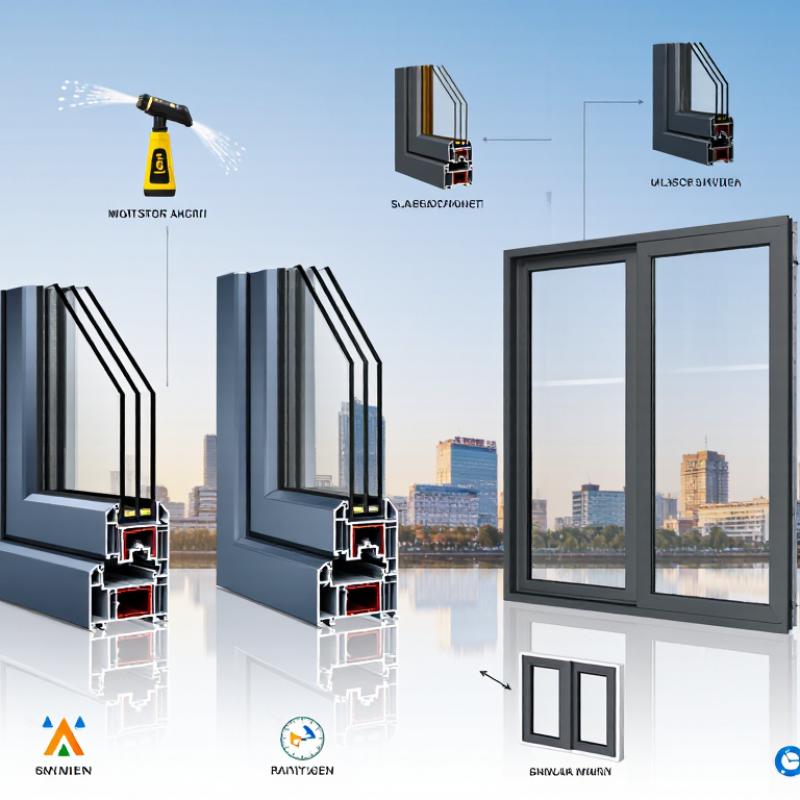
| Product Scope |
Ability to manufacture commercial aluminum windows, curtain walls, storefront systems, entrance doors, fire-rated doors, and associated hardware. |
A capable supplier should clearly define system types, compatible glass configurations, opening styles, maximum panel sizes, and application limitations. |
Current product catalogue, system drawings, technical data sheets, installation manuals, and completed project references without confidential client information. |
Confirm that the supplier’s normal production range matches the project specification rather than relying only on custom-development promises. |
| Aluminum Materials |
Alloy, temper, profile wall thickness, dimensional tolerance, surface treatment, and traceability of incoming materials. |
Common architectural aluminum alloys include 6063 for extruded profiles and 6061 for higher-strength applications. The required temper and profile thickness must follow the structural design. |
Material certificates, extrusion drawings, wall-thickness records, incoming inspection procedures, and batch traceability samples. |
Compare certificates with the bill of materials and verify critical dimensions through independent or witnessed inspection. |
| Thermal Performance |
Frame design, thermal breaks, insulated glass configuration, spacers, gaskets, and edge-seal quality. |
Performance should be assessed using U-value or U-factor, solar heat gain coefficient, visible transmittance, and condensation resistance. Target values depend on the project climate and building code. |
Whole-window or system test reports, simulation results, glass make-up, spacer specification, and thermal-break details. |
Do not accept center-of-glass data as whole-window performance. Require values for the exact frame, glass, and size combination. |
| Air, Water and Structural Performance |
Resistance to air leakage, water penetration, wind load, operating force, and deflection. |
Typical commercial testing uses recognized methods such as ASTM E283, ASTM E331, ASTM E330, EN 1026, EN 1027, and EN 12211, depending on the destination market. |
Laboratory reports showing tested product size, glass type, pressure levels, test configuration, pass/fail results, and report validity. |
Verify that the tested assembly is representative of the proposed product and not a smaller or materially different configuration. |
| Glass Configuration |
Glass thickness, heat treatment, lamination, insulation, coatings, safety classification, and edge-clearance requirements. |
Typical commercial insulated glass units use two panes separated by an air or gas-filled cavity. Safety glazing may require tempered or laminated glass according to local regulations and location of use. |
Glass build-up schedule, safety-glazing documentation, sealant compatibility data, spacer details, and factory inspection records. |
Check glass make-up against wind-load calculations, thermal requirements, acoustic targets, and local safety codes. |
| Surface Finishing |
Powder coating, anodizing, fluoropolymer coating, color consistency, pretreatment, film thickness, and corrosion resistance. |
Finish requirements should reference an applicable specification, color standard, coating thickness, gloss range, adhesion, and exposure category. Coastal or industrial locations generally require enhanced corrosion protection. |
Coating certificates, pretreatment process description, color panels, thickness records, adhesion results, and accelerated corrosion-test reports where applicable. |
Approve a physical color sample before mass production and inspect visible surfaces under consistent lighting conditions. |
| Hardware and Operating Life |
Hinges, locks, rollers, closers, restrictors, handles, multipoint mechanisms, and replacement availability. |
Hardware capacity must exceed the actual sash or door-panel weight. Commercial operating-cycle requirements should be defined by product type and project specification. |
Hardware schedule, load ratings, cycle-test results, corrosion classification, spare-parts list, and maintenance instructions. |
Confirm that hardware is commercially replaceable and that the supplier can maintain the same specification for future replacement orders. |
| Fire and Smoke Performance |
Fire-rated doors, glazing, frames, seals, panic hardware, closers, and complete assembly certification. |
Fire resistance is an assembly-level performance. The rating must cover the complete door or window assembly, including frame, glass, hardware, seals, and installation conditions. |
Valid fire-test and classification reports issued for the exact or approved configuration, plus installation and maintenance instructions. |
Reject component-only claims when the project requires a certified complete assembly. |
| Acoustic Performance |
Glass thickness, laminated interlayers, cavity width, frame seals, air leakage, and installation joints. |
Acoustic performance is commonly expressed using values such as Rw or STC. The result depends on the complete installed assembly and should not be judged from glass data alone. |
Laboratory acoustic report, tested frame and glass combination, perimeter-seal details, and installation recommendations. |
Compare the tested configuration with the project’s required sound-reduction target and surrounding wall construction. |
| Factory Capability |
Extrusion access, CNC machining, corner assembly, glass processing, powder coating, anodizing, assembly, packaging, and testing equipment. |
A reliable production system should have documented process controls, calibrated measuring equipment, defined inspection points, and sufficient capacity for the required quantity. |
Factory audit checklist, equipment list, process flow chart, calibration records, quality-control plan, and production-capacity statement. |
Conduct a live or third-party factory audit and compare declared equipment with actual operating equipment. |
| Quality Management |
Incoming inspection, first-article approval, in-process inspection, final inspection, nonconformance control, and corrective actions. |
ISO 9001 certification can support process credibility, but it does not replace product testing or project-specific quality verification. |
Quality manual, inspection and test plan, nonconformance records, corrective-action examples, internal audit schedule, and certificate scope. |
Assess whether procedures are actively used on the production floor rather than only maintained for certification purposes. |
| Customization and Engineering |
Ability to develop shop drawings, section details, structural calculations, BIM files, samples, mock-ups, and installation solutions. |
Commercial projects commonly require coordinated drawings, interface details, tolerances, drainage paths, flashing, anchors, and sequencing information. |
Anonymized shop drawings, engineering workflow, software capability, sample approval process, and responsibility matrix. |
Evaluate the technical team separately from the sales team and require a drawing-review milestone before production. |
| Production Lead Time |
Time required for technical confirmation, sample approval, material purchasing, fabrication, inspection, and export packing. |
Lead time varies substantially by system complexity, quantity, finish, glass type, and approval cycle. A written schedule with milestones is more useful than a single overall promise. |
Detailed production schedule, capacity plan, procurement timeline, sample-approval dates, and contingency plan for delayed materials. |
Use contractual milestone dates and require written notice for changes affecting delivery. |
| Packaging and Logistics |
Protection of glass and finished profiles during handling, container loading, inland transport, and ocean shipment. |
Packaging should prevent abrasion, edge damage, moisture accumulation, deformation, and movement. Export packaging must reflect the shipping route and storage conditions. |
Packaging drawings, loading photos, moisture-control procedure, container-loading plan, marking schedule, and damage-claim procedure. |
Approve packaging through a sample shipment or loading inspection before large-volume dispatch. |
| Testing and Inspection |
Factory inspection, pre-shipment inspection, dimensional checks, glass checks, finish inspection, hardware checks, and functional testing. |
Inspection should cover critical dimensions, diagonal measurements, profile condition, glass identification, seal continuity, hardware operation, and packaging condition. |
Inspection and test plan, inspection forms, calibration certificates, sampling method, and independent inspection option. |
Set measurable acceptance criteria and define who pays for rework, retesting, or replacement of nonconforming goods. |
| Compliance Documentation |
Destination-country building codes, product standards, energy requirements, safety rules, customs documents, and material declarations. |
Applicable requirements vary by market. Common documentation may include test reports, declarations of performance, certificates of origin, commercial invoices, packing lists, and structural calculations. |
Compliance matrix mapped to the project specification, current certificates, report numbers, laboratory details, and document revision history. |
Have the project’s architect, engineer, or code consultant review compliance before signing off the product. |
| Commercial Terms |
Quotation clarity, scope exclusions, tooling charges, sample charges, payment milestones, warranty, spare parts, and change-order rules. |
Pricing should identify profiles, glass, hardware, finish, packaging, testing, documentation, inland freight, export handling, and applicable trade terms. |
Itemized quotation, warranty document, pro forma invoice, payment schedule, tooling ownership terms, and change-order procedure. |
Compare total delivered cost and risk, not only the factory unit price. |
| After-Sales Support |
Technical response time, replacement parts, warranty handling, installation support, troubleshooting, and long-term product continuity. |
A practical support plan should define response channels, spare-parts availability, warranty exclusions, claim evidence, and expected resolution times. |
Warranty terms, spare-parts catalogue, service workflow, installation guidance, escalation contacts, and references from comparable projects. |
Include service obligations and replacement-part requirements in the purchase contract. |
| Supplier Risk Review |
Legal entity verification, manufacturing location, ownership of facilities, subcontracting, financial stability, export experience, and dependency on single sources. |
A supplier should be able to identify its legal entity, production address, major subcontractors, material sources, and escalation contacts. |
Business registration information, factory address, audit permission, export records, organizational chart, and subcontractor disclosure. |
Use independent verification, factory inspection, reference checks, and staged purchasing to reduce supply-chain risk. |