


NEWS at Quanex
See the latest news, posts and events from Quanex about our business, the industry, our people and more.
How to Choose the Best Commercial Glass Supplier?
Choosing the best commercial glass supplier affects more than appearance. It influences energy use, occupant comfort, safety, maintenance, and project schedules. The stakes are substantial. The IEA reports that buildings consume about 30% of global final energy. They also produce roughly 26% of energy-related emissions. Glass selection deserves careful scrutiny.
A reliable supplier should explain measurable performance, not merely promise “premium quality.” Ask for U-factor, solar heat gain coefficient, visible transmittance, acoustic ratings, and safety classifications. The National Fenestration Rating Council provides a recognized framework for comparing these values. ASHRAE Standard 90.1 also establishes energy-efficiency requirements for many commercial buildings. These references help turn a sales conversation into an informed technical review.
Experience matters on the jobsite. A capable supplier should discuss edge conditions, glazing tolerances, delivery protection, replacement procedures, and coordination with architects. Look for documented projects with similar climates, building sizes, and façade systems. The U.S. Department of Energy’s building-efficiency guidance repeatedly emphasizes that glazing performance depends on the complete window and façade assembly. A beautiful glass panel cannot correct a poorly designed frame or installation. That point is easy to overlook. Price still matters, but the lowest quotation may hide longer lead times, weaker warranties, or costly rework. No supplier is perfect. The better choice is one that shares test reports, answers difficult questions, and admits limitations before production begins. This guide explains how to compare commercial glass suppliers with evidence, practical judgment, and fewer expensive surprises.
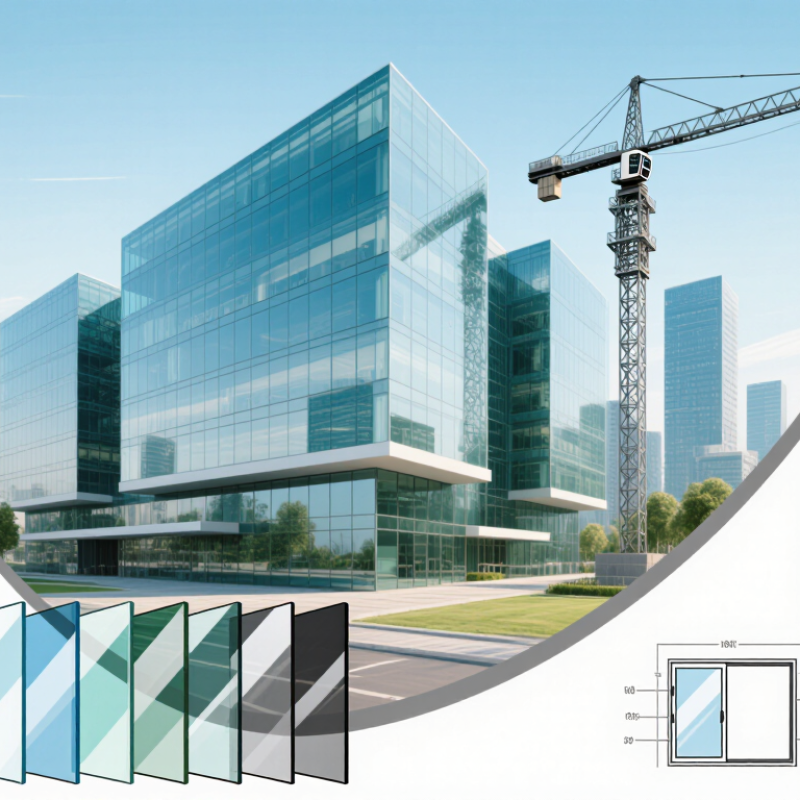
Define Your Commercial Glass Project Requirements
Choosing the best commercial glass supplier begins with a precise project brief. Define the glass location, dimensions, quantity, and installation conditions. A lobby screen needs different performance than an interior office partition. Record each opening carefully, including wall thickness, floor levels, and nearby doors.
Specify the required glass type and performance. Consider tempered or laminated safety glass, insulation, solar control, privacy, sound reduction, and fire-rated requirements where applicable. Mention the building’s climate and daily occupancy. On active sites, dust, vibration, and limited storage can affect delivery and installation. Include edge polishing, holes, notches, hardware clearances, tolerances, and finishing details. Small omissions can create expensive delays. I have seen projects focus on glass appearance while overlooking access routes and fitting space. That mistake is easy to repeat.
Tips: Send accurate drawings, site photos, and a written scope to each supplier. Request physical samples when color or reflection matters. Ask how measurements are verified before fabrication. Confirm production lead time, packaging, replacement procedures, and inspection standards. A reliable supplier should explain limitations clearly, not simply promise the lowest price. Compare quotations line by line. Check whether cutting, delivery, unloading, and installation are included. Keep a small allowance for measurement changes; commercial sites rarely remain perfectly unchanged. When uncertain, ask for a technical review before approving shop drawings.
How to Choose the Best Commercial Glass Supplier? – Define Your Commercial Glass Project Requirements
| Project Requirement | Key Data to Define | Typical Commercial Options | Recommended Selection Guidance | Supplier Verification Point |
|---|---|---|---|---|
| Building Application | Where the glass will be installed | Facade, curtain wall, storefront, entrance, office partition, balustrade, skylight, or interior display | Select glass based on exposure, occupancy, impact risk, and whether it forms part of the building envelope. | Ask for previous experience with the same application and installation environment. |
| Glass Type | Basic glass construction | Annealed, heat-strengthened, fully tempered, laminated, insulated, wired, patterned, or low-emissivity glass | Use safety glass where required by applicable building codes, human-impact risk, or overhead installation conditions. | Confirm product descriptions, processing capabilities, and applicable test documentation. |
| Safety Performance | Breakage and fall-protection needs | Tempered safety glass, laminated safety glass, or laminated tempered glass | Laminated glass is generally appropriate where retaining broken fragments or fall protection is important. | Verify safety-glazing compliance, interlayer specification, and edge-quality requirements. |
| Thermal Performance | Energy and indoor-comfort targets | Single glazing, double insulating glass, triple insulating glass, low-emissivity coating, solar-control coating | For exterior glazing, compare U-value, solar heat gain coefficient, visible transmittance, and local climate requirements. | Request tested or calculated performance values for the exact glass make-up. |
| Acoustic Performance | Noise-control objective | Standard insulating glass, laminated acoustic glass, asymmetric insulating glass, or thicker glazing combinations | Define the target sound reduction rating and identify the dominant noise source before choosing the glass build-up. | Request acoustic test data for the complete assembly rather than relying only on a single-pane value. |
| Dimensions and Tolerances | Panel size, thickness, shape, and allowable deviation | Standard rectangular panels, oversized panels, holes, notches, cut-outs, polished edges, or shaped glass | Provide final dimensions, edge details, hole locations, radius requirements, and permissible tolerances before production. | Confirm maximum processing sizes, dimensional tolerances, inspection methods, and drawing approval procedures. |
| Appearance | Color, transparency, reflection, and visual quality | Clear, low-iron, tinted, reflective, frosted, acid-etched, ceramic-fritted, or digitally printed glass | Define acceptable color variation, roller-wave limits, coating uniformity, scratches, inclusions, and viewing distance. | Request representative samples and written visual-quality acceptance criteria. |
| Edge and Surface Processing | Fabrication required before delivery | Arrissed edges, flat polish, beveling, drilling, waterjet cutting, CNC shaping, or screen printing | Complete all cutting, drilling, and edgework before tempering because tempered glass cannot normally be cut afterward. | Confirm processing sequence, edge finish, hole tolerances, and inspection controls. |
| Lamination Requirements | Interlayer type and durability | Clear polymer interlayer, acoustic interlayer, colored interlayer, or structural interlayer | Choose the interlayer according to safety, acoustic, UV-exposure, moisture, color, and structural requirements. | Verify interlayer thickness, compatibility, environmental resistance, and delamination-control procedures. |
| Insulating Glass | Spacer, cavity, and gas-fill configuration | Air-filled cavity, inert-gas-filled cavity, warm-edge spacer, desiccant, or stepped insulating unit | Specify cavity width, spacer material, gas fill, sealant system, and expected service conditions. | Ask about seal durability, gas-retention testing, condensation resistance, and warranty coverage. |
| Standards and Compliance | Regulatory and project-specific obligations | National building codes, safety-glazing rules, facade specifications, environmental requirements, and project testing standards | Identify the governing jurisdiction and project specification before requesting quotations. | Require current certificates, test reports, declarations, and traceability records relevant to the project. |
| Quantity and Packaging | Order volume and handling conditions | Prototype, small batch, standard production run, phased delivery, or large-volume project supply | Match the supplier's production capacity and packaging method to the panel size, weight, fragility, and delivery schedule. | Confirm crate design, protective materials, labeling, loading method, and damage-reporting procedures. |
| Installation Conditions | Site access and glazing system compatibility | Structural glazing, captured framing, point-fixed fittings, dry glazing, wet glazing, or mechanical fixing | Coordinate glass thickness, edge clearances, setting blocks, sealants, fittings, and movement allowances with the system designer. | Ensure the supplier reviews approved shop drawings and confirms compatibility with adjacent materials. |
| Lead Time | Required production and delivery dates | Sample approval, engineering review, fabrication, quality inspection, packing, shipping, and site delivery | Build approval time, production capacity, transport time, and potential remake time into the project schedule. | Request a written schedule with milestones, order cut-off dates, and notification procedures for delays. |
| Quality Assurance | Inspection and defect-control process | Incoming-material inspection, dimensional inspection, visual inspection, coating checks, seal inspection, and final release inspection | Use measurable acceptance criteria and require inspection records for critical or high-value orders. | Ask about quality-control procedures, nonconformance handling, batch traceability, and corrective-action processes. |
| Commercial Terms | Total delivered cost and contractual protection | Glass price, processing charges, packaging, freight, taxes, installation support, replacement policy, and warranty | Compare complete delivered cost and technical compliance instead of comparing the glass unit price alone. | Obtain a detailed quotation that clearly lists inclusions, exclusions, payment terms, warranty limits, and replacement conditions. |
Related Posts
-

Why Choose Commercial Glass for Your Business Needs?
-
The Ultimate Guide to Choosing the Best Exterior Sliding Glass Door in 2025
-
What Is the Best Type of Patio Glass Door?
-

China Top Commercial Exterior Doors Manufacturers?
-
Top China Commercial Windows and Doors Suppliers?
-

How to Choose Commercial Entry Doors