NEWS at Quanex
See the latest news, posts and events from Quanex about our business, the industry, our people and more.
China Top 10 Exterior Door Casing Manufacturers?
Choosing an exterior door casing manufacturer in China involves more than comparing catalog photos and quoted prices. The right supplier must deliver consistent dimensions, clean corner joints, durable finishes, and dependable packaging. Small defects matter. A warped profile or chipped edge can delay installation and increase site waste.
This guide introduces ten manufacturers for buyers to investigate, not a universal ranking of factory quality. It considers product range, material options, customization, production experience, quality-control practices, and export support. Buyers should confirm whether a supplier makes wood, MDF, PVC, composite, or metal casing, since each material performs differently in humid, coastal, or high-traffic settings. Ask for current specifications, finish samples, production lead times, and clear details about minimum order quantities. Where available, review relevant test reports and inspect a sample before placing a large order.
A polished website is useful, but it is not proof of reliable production. Request close-up photos of miters, surface coatings, and protective packaging; then compare them with the delivered sample. Factory visits or independent inspections may provide further confidence. Still, no shortlist can replace project-specific checks. Product availability and capabilities can change, and the same profile may vary between production runs. This overview offers a practical starting point for narrowing options and preparing better questions. Careful verification remains essential.
Exterior Door Casing: Functions, Materials, and Common Profile Types
Exterior door casing frames the opening and covers the narrow joint between the jamb and wall finish. It can help limit drafts when paired with sound weatherstripping and careful installation. At exposed edges, casing may shed light rain, but it cannot replace proper flashing. A crooked reveal shows quickly.
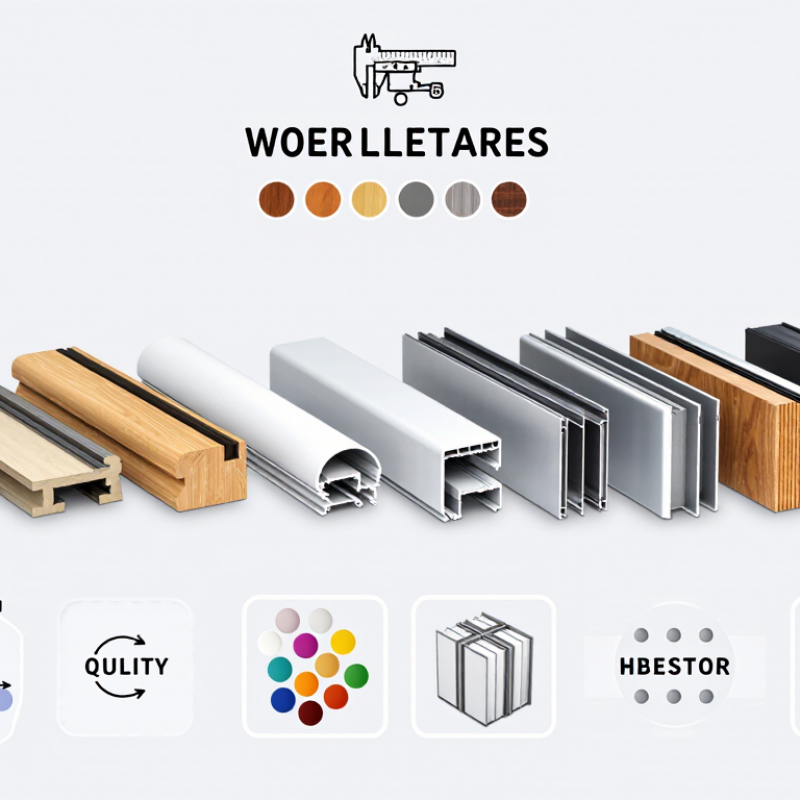
Material choice depends on exposure, upkeep, and the wall assembly. Solid wood is easy to cut and repair, yet repeated moisture can swell it or split its end grain. PVC and cellular composites resist moisture, though heat movement and fastening details still matter. Fiber cement offers a stable painted surface but requires suitable tools and sealed cuts. No material is maintenance-free.
Common profiles include flat stock, brick mould, backband, and stepped or colonial designs. Flat casing suits simple façades; brick mould provides a wider face at masonry transitions. Backband adds depth, while stepped profiles create stronger shadow lines. Check the profile against the door’s scale and nearby window trim. Small samples help. A profile that looks crisp indoors may feel oversized on a narrow entry. Older walls are rarely perfect, so allow room for measured adjustments.
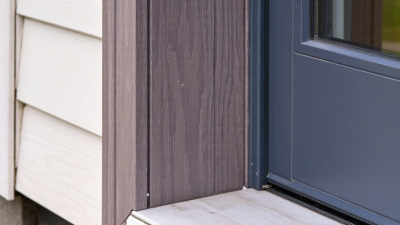
China’s Top 10 Manufacturers: Products, Markets, and Company Profiles
A credible comparison of China’s ten leading exterior door casing manufacturers should look beyond production capacity. It should describe each company’s product range, target markets, and ability to meet project specifications. Common offerings include PVC, composite, and metal casing, with different profiles, finishes, and installation methods. Compare profile depth, trim width, corner joints, and color consistency. Details matter.
Company profiles should explain whether manufacturers focus on residential renovations, new construction, or commercial projects. Some may serve domestic buyers and export markets across several regions, while others concentrate on a narrower customer base. Ask about sample availability, packaging, production lead times, and customization options. For a fair comparison, request matching specifications from each supplier; otherwise, prices can be misleading.
Practical checks help separate a promising catalog from dependable production. Review material data, finish samples, and inspection procedures, then confirm that measurements match your door system. A glossy brochure proves little. Factory scale alone is not enough, either. Even experienced buyers can miss small differences in profile shape or surface texture. Comparing those details against an actual sample may take extra time, but it can prevent an expensive mismatch on site.
Supplier Screening: Capacity, Certifications, Export Reach, and Quality Data
For “China Top 10 Exterior Door Casing Manufacturers,” screen suppliers with records, not polished brochures. The World Bank’s 2023 Logistics Performance Index ranked China 19th among 139 economies. That offers useful export context, but it cannot verify an individual factory’s shipping reliability. Ask for recent destination markets, shipment records, and on-time delivery data. Check that certificates name the producing site and cover the relevant processes. ISO 9001 certification indicates a quality-management system; it does not prove that every casing meets your specifications. Paper is not proof.
Capacity needs similar scrutiny. Request line-level output, shift patterns, equipment lists, and production records for the exact casing material and profile. Compare quoted monthly volume with dated orders and actual dispatches. I would not treat a high output figure as gospel; product mix, downtime, and seasonal labor can distort it. Ask for recent inspection logs, defect and rework rates, dimensional checks, and coating or weather-resistance test reports where relevant. ISO’s Survey of Management System Standard Certifications is useful for understanding certificate coverage, but certificates alone cannot establish product performance. Keep the raw data. A small, traceable sample can reveal gaps that a factory tour misses.
Compare Finished Door Systems Using GB/T 7106-2019’s 3 Performance Metrics
When comparing China’s exterior door casing manufacturers, look beyond the visible trim. GB/T 7106-2019 evaluates finished exterior window and door systems through three performance measures: air permeability, watertightness, and resistance to wind pressure. A casing alone cannot establish these results; the tested frame, sash, seals, hardware, and installation details all matter.
Ask for test reports that identify the complete specimen and its measured results. Air permeability indicates how much air passes through gaps under a stated pressure difference. Watertightness testing applies water spray and pressure to reveal leakage points. Wind-pressure testing checks deformation and possible damage under load. Details matter. Compare equivalent configurations and specimen sizes, since different setups may produce results that are hard to compare directly. For a site-level check, inspect the corners, threshold, and seal contact; a small visible gap can undermine an otherwise well-made assembly.
The standard provides a testing framework, not a guarantee that every installed door will perform identically. Request the report’s date, test conditions, and product configuration, then confirm these match the system being quoted. I would also ask how joints between the casing and wall are sealed. That detail is easy to overlook, and test results do not always explain it clearly.
China Exterior Door Casing: Compare Finished Door Systems Using GB/T 7106-2019
GB/T 7106-2019 covers three performance dimensions for doors and windows. This chart shows the standard’s test scope, not manufacturer rankings or product test results.
For a meaningful comparison of finished door systems, use comparable test reports for the same configuration and compare the reported air permeability, water tightness, and wind load resistance results. The standard itself does not rank manufacturers.
Buyer Checklist: Verify Samples, Test Reports, MOQ, Lead Time, and Warranty
China Top 10 Exterior Door Casing Manufacturers?
Before comparing suppliers, request a physical sample in the intended finish and substrate. Check the profile, corner joints, coating, and how the casing meets the door frame. A small chip can hide uneven paint or weak edges. For solid-wood trim, the USDA Forest Products Laboratory’s Wood Handbook reports roughly 2–8% radial and 4–15% tangential shrinkage from green to oven-dry, with variation by species. Ask how the supplier controls moisture and packaging. MDF, PVC, and composite products need different checks. A sample is useful, but it cannot prove consistency across a production run.
Request test reports that identify the tested product, dimensions, hardware, laboratory, and test date. ASTM E283, E331, and E330 address air leakage, water penetration, and structural performance for assemblies; a casing-only report does not establish whole-door performance. Check that the report matches your intended application. Then obtain written MOQ, production lead time, shipping assumptions, and warranty coverage. Clarify remedies for finish defects, warping, or transit damage, and ask whether replacement costs are included. Small detail. Lead-time promises can exclude tooling, sample approval, or peak-season delays, so record each milestone. A polished sample helps, but it is not a substitute for clear evidence.
China Top 10 Exterior Door Casing Manufacturers? - Buyer Checklist: Verify Samples, Test Reports, MOQ, Lead Time, and Warranty
Use these ten verification checks to compare candidate suppliers. No supplier-specific ranking or performance claims are made here; complete each item using current samples, documents, and written quotations from the supplier.
| No. | Evaluation Check | Evidence to Request | How to Verify | Record |
|---|---|---|---|---|
| 1 | Product and material definition | Written specification identifying the casing material, profile, dimensions, finish, and intended exterior application. | Compare the specification with the purchase requirements and the item shown on the quotation. | Pending supplier evidence |
| 2 | Physical sample | Production-representative sample with stated material, finish, dimensions, and sample identification. | Measure the sample and inspect its finish, edges, joints, and visible defects against the approved requirements. | Pending sample inspection |
| 3 | Sample-to-production consistency | Written confirmation that the approved sample and production order use the same specified construction and finish. | Ask the supplier to identify any permitted production tolerances or substitutions in writing. | Pending written confirmation |
| 4 | Test reports | Complete reports relevant to the product and its intended use, including the tested sample description, test method, laboratory, and report date. | Check that the report covers the quoted product and verify its authenticity with the issuing laboratory when necessary. | Pending document review |
| 5 | Moisture and weathering suitability | Product-specific test evidence or technical documentation supporting the supplier's claims about moisture and exterior exposure. | Confirm that the evidence applies to the specified material, finish, and installation conditions; do not assume one product's results cover another. | Pending claim verification |
| 6 | Minimum order quantity (MOQ) | Written MOQ for the exact profile, dimensions, finish, packaging, and order configuration requested. | Confirm whether the MOQ is per profile, finish, size, or shipment and ask about any setup or tooling charges. | Enter quoted MOQ |
| 7 | Production and shipping lead time | Written schedule stating the production lead time, its starting point, and the estimated shipping or dispatch time. | Confirm whether the schedule begins after deposit, drawing approval, or sample approval, and whether transit time is included. | Enter confirmed schedule |
| 8 | Packaging and damage handling | Packaging details for the quoted order and written instructions for reporting shortages or transit damage. | Check that the packaging is suitable for the product and shipment route; agree on inspection and claim deadlines before ordering. | Pending confirmation |
| 9 | Warranty terms | Written warranty stating duration, coverage, remedy, claim procedure, and exclusions. | Confirm when coverage begins and whether installation, maintenance, moisture exposure, or finish changes affect coverage. | Pending terms review |
| 10 | Final quotation and order records | Quotation and order documents showing product specifications, quantity, price basis, delivery terms, payment terms, and agreed inspection requirements. | Ensure the approved sample, technical documents, quotation, and purchase order refer to the same product configuration. | Pending document match |
Comparison note: MOQ, lead time, test coverage, and warranty terms depend on the exact product and order. Record them from current supplier documents rather than assuming a universal industry value.